After after two years of COVID-19 shutdowns & false starts, live music is beginning to return. Let’s celebrate the power & importance of live music by looking back at a critical moment in history:
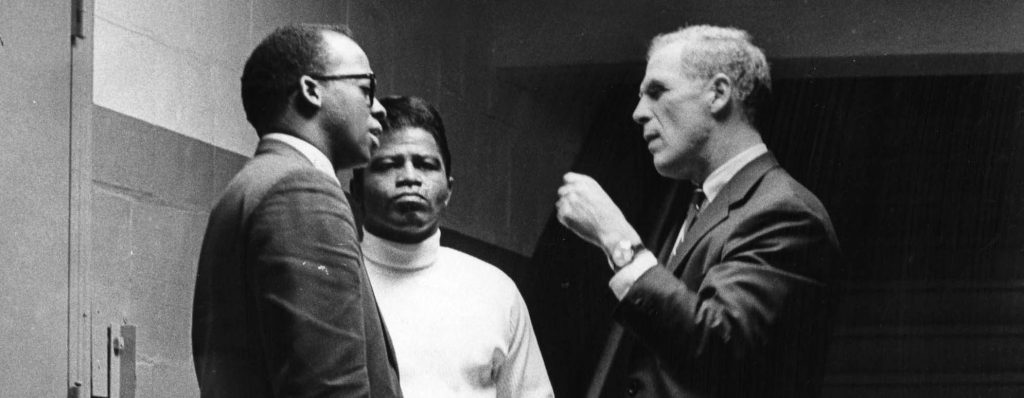
April 5, 1968: Martin Luther King, Jr. was assassinated the day before. America was on edge and riots were breaking out in cities across the country. But the city of Boston, MA held it together. Why? Because the Godfather Of Soul– James Brown— was in town.
(Above Photo: Thomas Atkins (left) and Kevin White (right) speak with James Brown at the Boston Garden, April 5, 1968. It was one day after the assassination of Dr. Martin Luther King Jr. and Atkins, Brown and White are credited with keeping the city quiet in the aftermath.)
— This show is one of many great music-related podcasts on the Pantheon network. You should check them out! And remember to follow this show, so you never miss an episode.
Frankenstein" (Edgar Winter) Copyright 1972 EMI Longitude Music
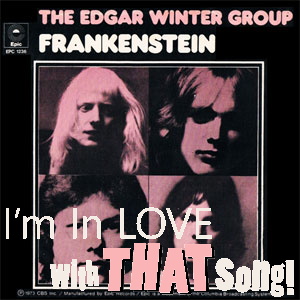
In our previous episode, we looked at the history of instrumental songs that topped the pop charts. For my money, there’s never been a more unlikely hit instrumental than the synth-infused, riff-heavy stomper that is Edgar Winter’s “Frankenstein”. This episode, we break down this instrumental classic featuring Edgar Winter on keyboards, sax and drums.
“Frankenstein” (Edgar Winter) Copyright 1972 EMI Longitude Music
— This show is part of the Pantheon podcast network — THE place for music junkies, geeks, nerds, diehards and fans!
Years ago, instrumental songs were everywhere– on the radio, the jukebox, and the Billboard Hot 100 chart. But over time, the instrumental faded from mainstream popularity. When was the last time you heard a new instrumental, or saw one topping the charts? In this episode– our 100th show— we explore the history of the pop instrumental as we ask the question. “Whatever happened to the instrumental hit song?“
— This show is just one of many great music-themed podcasts on the Pantheon network. Check them out! And remember to follow this show, so you never miss an episode.
The “Albums That Made Us” series continues as Brian Jacobs (Pods & Sods contributor, and one of the most thoughtful music-lovers I know) joins us with a look at two central albums that have grown with us over the years. The older we get, the better these albums get: “Shoot Out The Lights” by Richard & Linda Thompson, and Bob Dylan’s “Blood on The Tracks“.
— This show is just one of many great podcasts on the Pantheon Podcasts network. There’s something there for every rock fan!
"In the Meantime/Some Other Time" (Mike Gibbins, Joey Molland) Copyright 1974 WB Music Group ASCAP
Nothing came easy for Badfinger. Though they had success with their first few albums (all of them are must-have classics), they soon had a tough time, thanks to terrible management, record label indifference and bad timing. In 1974, worn-down & exhausted from the non-stop touring/recording/touring again grind, they dragged themselves into the studio… and, with help from producer Chris Thomas, made one of their best albums. Many fans say it IS their best. Unfortunately, few people heard it as it was withdrawn from stores shortly after its release, thanks to legal shenanigans. Things only got worse after that. But this record is a masterpiece; let’s celebrate it with a look at the song “In the Meantime/Some Other Time”.
“In the Meantime/Some Other Time” (Mike Gibbins, Joey Molland) Copyright 1974 WB Music Group ASCAP
Oh, I can’t live if living is without you friends– this is the “I’m In Love With That Song” podcast on the Pantheon Podcast Network. I’m your host, Brad Page, and this episode, we’re digging into a deep track back by Badfinger: “In The Meantime/Some Other Time”.
Most people, if they know Badfinger at all, it’s from their Beatlesque power pop hits like “Baby Blue”, “No Matter What”, “Come And Get It”, and “Day After Day”. We covered “Day After Day” on this show, way back in episode number nine. But Badfinger had a heavier side too, late in their career. After they had fallen off the pop charts, they released one of their best albums. And we’re going to listen to a track from that album, actually a blend of two songs called “In The Meantime/Some Other Time”.
Rock history is littered with artists who suffered bad management, financial disasters, misfortune and untimely death. But by any measure, the story of Badfinger may be the most tragic. It’s the one that breaks my heart the most. With Badfinger, everything that could go wrong did go wrong. And yet they managed to leave behind some incredible music.
The story of Badfinger begins in 1961 with a band called the Iveys. After years of paying their dues, in 1968 they signed to the new record label started by the Beatles, Apple Records. In fact, they were the first act signed to Apple. Pete Ham and Tom Evans on guitars, Ron Griffiths on bass and Mike Gibbons on drums, and all four members shared vocals. The Iveys recorded a couple of singles and an album, but they didn’t have much success. In 1969, Paul McCartney agreed to contribute three songs to the film “The Magic Christian”, starring Ringo Starr. McCartney had written one song for the film already, “Come And Get It”. And he offered that song to the Iveys. They recorded their version of it and it was featured in the film, along with two of their original songs. Before the songs were released, the band changed their name to Badfinger.
The first Badfinger album was issued in January 1970, and it included the three songs from the film, some other new material, and some tracks recycled from that previous Ivey’s album. After the release of that record, Ron Griffiths was pushed out of the band. Tom Evans switched to playing bass, and Joey Molland joined on guitars and vocals. This would be the classic Badfinger lineup. In November 1970, they released their next album, “No Dice”. “No Dice” is one of my favorite albums; it shows all the strengths of this band. All four members could write and all four members could sing. Pete Ham in particular was really coming into his own as a songwriter and singer during this period.
But 1970 also saw the band signing on with a new manager, Stan Polley. This turned out to be a bad move. Polley got them to sign a series of bad deals that would eventually cost the band everything. But the music kept getting better.
In May of 1971, they started work on their next album, and though they had to change producers three times before the album was done, “Straight Up” was released in December 1971, and it was their biggest success yet. “Straight Up” is universally considered a classic, and it spawned two big hits: “Day After Day,” which we talked about on the show before, and “Baby Blue”.
Unfortunately, in a case of one step forward and two steps back, they couldn’t capitalize on the success of the album, because Apple Records was falling apart. The Beatles had split, everyone was suing everybody else, and the cash dried up. Apple wasn’t able to promote the album. Whole situation was just a bummer.
But Badfinger was still under contract for one more album for Apple, so they recorded their last Apple album in 1972. They called that album “Ass”, as in “jackass”. But this time, the album was tied up in legal issues at Apple and it was put on hold. Stan Polley set them up with a new recording contract at Warner Brothers with a $3 million advance. Polley told them that they were all going to be millionaires, and it sounded great to them… unless you looked at the details. They were committed to do six albums in three years. That meant a new album every six months– a punishing schedule, and they had to pay to produce each of those albums out of that advance money. So after you deducted Polley ‘s cut as the manager, there was barely anything left for the band.
Six months after finishing the “Ass” album, they went back into the studio to make their first album for Warner Bros, simply titled “Badfinger”. That album was released in February 1974. But right before that album was released, Apple finally issued the “Ass” album, essentially putting two new Badfinger albums on sale at the same time… which confused everyone, including the buying public, which pretty much ensured that both albums were a commercial disappointment. Still, there were gigs to perform and contracts to fulfill, so after a US tour, the band headed back into the studio again, completely exhausted to work on another album. With no time to prepare new material, they barely had any finished songs, just a bunch of fragments and ideas. Thank God for producer Chris Thomas.
This would be Thomas’ third time working for Badfinger. He had produced the last two albums. He had also worked with the Beatles, Pink Floyd and Roxy Music. Chris Thomas knew what he was doing, so he sat down with the tired and dejected members of Badfinger and said, “the only way to beat this is to make the best album that anyone has ever made in the history of the world”. And damned if they didn’t come close.
Thomas worked with each band member to put the songs together. He asked them for any and every idea they could come up with. Partly inspired by side two of Abbey Road, he took different song ideas and worked out how to combine some of them. And that’s how we ended up with the song we’re going to listen to today. Drummer Mike Gibbons had an unfinished song called “In The Meantime. Guitarist Joey Molland had some fragments for a song he was calling “Some Other Time”. Producer Chris Thomas took those two ideas and found a way to blend them into one coherent song. It’s a masterful work of arranging.
Chris Thomas brought in Anne Odell to write string arrangements for some of the tracks, including this one. Odell created a dramatic crescendo to open.
Now we build to the first part of the song, Mike Gibbons contribution, “In The Meantime”. Pete Ham plays some nice lead guitar fills over an insistent piano part that’s filled with nervous energy. The vocal in this section is sung by Mike Gibbons.
Let’s stop to take a look at the music underneath the vocal here. The drums are doing a typical beat snare on the two and four. The bass is playing one note on each beat. The piano is playing two notes for every beat, twice as many as the bass. And then there’s a guitar hitting one chord every four beats. All of this mathematical playing gives the sense of an unrelenting movement forward, just like time itself. An unstoppable march forward like the ticking of a clock.
On top of that, the strings move in and out, swirling in the currents of time. Intricate little guitar part, before we return to the main section, Pete Ham on lead guitar. Now that guitar part returns to lead us to a new, much slower section.
Badfinger always had great vocal harmonies. Let’s see if we can bring those up in the mix a bit and listen to that again.
I love that arpeggiated guitar part there.
Nice little guitar part there, but it’s buried in the mix. Let’s listen to an alternative mix of this track where we can hear that a little clearer. There’s so much going on in this track, it’s easy for parts like that to get lost. This is one of those songs where every time you listen, you can hear something new.
There’s another variation of that guitar part in the background there.
Now the tempo rises and we’re introduced to a new section of the song. Listen for what sounds like castanets in the center, right. Such a great guitar. If there’s actually two guitars there, one playing a high part and one playing a lower part, that’s kind of hard to hear. Let’s bring both of those to the front section from earlier in the song.
Listen to how the strings embellish this section from earlier. You’ll hear a slight change in the guitar riff as we transition to the second part of the song.
Low in the mix there the backing vocals sing hold on echoing the lead vocal.
And here comes the big finale.
And some backwards guitar.
“In The Meantime/Some Other Time” by Badfinger.
The band released this song, along with eight other tracks, on an album called “Wish You Were Here”. Not to be confused with the Pink Floyd album of the same name, Badfinger’s “Wish You Were Here” was released in November 1974, and this album is a masterpiece.
But the Badfinger bad luck struck again. A large amount of cash that Warner Brothers had provided had gone missing. And Stan Polley was not responding. So, Warner Brothers sued the band’s management and then pulled the album out of the stores before it even had a chance to catch on. That just killed the album.
That was enough for Pete Ham. He quit the band. He eventually returned, but then Joey Molland quit, and they tried to make another album, but that wasn’t released.
By March 1975, all of their paychecks were bouncing, and Pete Ham was told that all his money was gone. On April 25, Tom Evans and Pete Ham went out for drinks. When Pete got home, he went out to his garage and hung himself. He was 27. He left a suicide note that read, “Stan Polley is a soulless bastard”.
The band eventually reformed and released a couple more albums that are pretty good, but just not the same without Pete Ham. There was conflict within the band, and at one point both Tom Evans and Joey Moland fronted two competing versions of Badfinger.
In November 1983, angry and frustrated, Tom Evans took his own life. He hung himself, too, just like Pete Ham. Two great singers, two brilliant songwriters and two good friends, both crushed by the heartlessness and cruelty of the business part of the music business.
Drummer Mike Gibbons went on to do quite a bit of studio work and released four solo albums. He died from a brain aneurysm in 2005.
Joey Moland is still out there. I saw him perform a set of Badfinger material a couple years ago. That was a great show. These songs, though, they carry the heavy weight of history. It’s hard to imagine a band with more heartbreak and tragedy than Badfinger. But the songs– the songs rise above it all. If you don’t have Badfinger’s “Wish You Were Here” album in your collection, go get it now. You will not be disappointed.
That’s it for this episode of the “I’m In Love With That Song” podcast. What’s your favorite Badfinger song? Visit our Facebook page to post your comments and feedback. Just search for the “I’m In Love With That Song” podcast and you’ll find us there. Or share on our website, lovethatsongpodcast.com.
We are part of the Pantheon Network of podcasts; check out some of their other shows when you get a chance.
Thanks again for listening to this episode on Badfinger and “In The Meantime/Some Other Time”. We’ll see you next time.
RESOURCES:
Badfinger https://en.wikipedia.org/wiki/Badfinger
Pete Ham: https://en.wikipedia.org/wiki/Pete_Ham
Apple Records https://www.applemusic.com
The Magic Christian (Film) https://www.imdb.com/title/tt0064622/
Paul McCartney https://www.paulmccartney.com
The Beatles https://www.thebeatles.com
Warner Brothers Records https://www.warnerrecords.com
Stan Polley: https://en.wikipedia.org/wiki/Stan_Polley
Chris Thomas (Producer) https://www.allmusic.com/artist/chris-thomas-mn0000775910
Anne Odell (String Arranger) https://www.discogs.com/artist/
"Kings And Queens" (Tom Hamilton, Joey Kramer, Steven Tyler, Brad Whitford and Jack Douglas) Copyright 1977 Daksel Music Corp. and Song And Dance Music Co. All rights administered by Unichappel Music, Inc.
Aerosmith was a band on the brink of self-destruction when they set up in an old convent to record their next album in 1977. But despite the tension, drug abuse and general bad behavior, they managed to lay down a few great tunes, including “Kings And Queens“. Let’s dig into this Aerosmith classic.
“Kings And Queens” (Tom Hamilton, Joey Kramer, Steven Tyler, Brad Whitford and Jack Douglas) Copyright 1977 Daksel Music Corp. and Song And Dance Music Co. All rights administered by Unichappel Music, Inc.
TRANSCRIPT:
Welcome, jesters, minstrels, and Knights of the Round Table. This is the “I’m In Love With That Song” podcast on the Pantheon Podcast Network. I’m your host, Brad Page, and on this episode, we’ll be traveling back through the mists of history to the time of “Kings And Queens” with Aerosmith.
Aerosmith and I have one small thing in common: I was born in New Hampshire and grew up in Massachusetts– and you could say the same thing for Aerosmith. The band members met around Lake Sunapee, a vacation area in New Hampshire where families from the Boston area, and as far away as from New York, would vacation for the summer. In the 1960’s, with all the teenagers in town just looking for something to do, the area became a place where a half-decent band could get steady gigs during the summer, and that’s where Joe Perry, Tom Hamilton, and Steven Tyler met. They eventually moved to Boston, Massachusetts, and over time, Joey Kramer and Brad Whitford joined the band, and that became the classic lineup of Aerosmith.
By 1977, Aerosmith was one of the biggest rock bands in the country. The days of struggling to make it, sharing a house together, and scrounging up enough cash just to get by– those days were over, but success brought with it a whole bunch of other problems, especially the drugs.
When Aerosmith began work on what would be their new album, the situation was not great. From the start, Joey Kramer, Tom Hamilton, and Brad Whitford had spent a month prior doing some pre-production, working up new material and some ideas. But Steven Tyler and Joe Perry were nowhere to be found. They never showed up.
Looking to try something different, to get out from the traditional studio into a different environment, the band rented an estate in New York, an isolated place in the mountains on 100 acres with a half mile long driveway. It was called The Cenacle. Built in the 1920s, it had been most recently used as a convent.
Tom, Brad, Joey, along with producer Jack Douglas, moved into the house, and eventually Joe and Steven showed up separately, and promptly disappeared into their rooms and didn’t come down for days. For the recording, Jack Douglas set up each band member in a different space in the house; Joey’s drums were set up in the chapel. Joe Perry’s guitar was recorded in a big walk-in fireplace, and Steven Tyler’s vocal booth was on the second floor. But not a lot of work was getting done. The days were spent shooting guns, driving their cars around the area at dangerous speeds, and just getting loaded. Cocaine and heroin were the drugs of choice.
The fractures were clear. Joey Tom and Brad, who did more than their share of partying, would still be able to pull it together enough in the evenings to work on recording, but Joe and Steven would rarely show up. Joe Perry was clearly dopesick. He’d work for a couple of hours and then disappear back to his room for days at a time. In later years, Joe Perry would describe this period as “we were drug addicts dabbling in music, rather than musicians dabbling in drugs”.
After six long weeks of recording at The Cenacle, the album was still unfinished, but the band packed up and headed home. On the way back to Boston, Joey Kramer crashed his Ferrari doing 135 on the highway, and shortly after Joe Perry crashed his Corvette. That’s what life was like for Aerosmith in the late seventies, like a series of car wrecks.
They would eventually finish the album at the record plant in between gigs. One of the songs that they worked on at the Cenacle and would finish later was “Kings And Queens”.
Now, most of the classic Aerosmith songs were written by Joe Perry and Steven Tyler, but “Kings And Queens” was written by Brad Whitford, Tom Hamilton and Joey Kramer. Later, Steven Tyler and Jack Douglas would come up with the lyrics together. So all five of them share writing credit. But it was really Whitford, Hamilton and Kramer that put the music together back at The Cenacle when Steven and Joe were nowhere to be found– Joe Perry is barely on the track at all.
So, let’s get into the song. It begins with the main riff: classic guitar, bass and drums.
Build into the first verse.
First, let’s look at Steven Tyler’s vocals here. I think he sounds great on this song. Some of his best work is when he’s singing lyrics that are on the darker side. He’s really able to nail that eerie, foreboding mood here.
This song doesn’t have a traditional song structure. There’s no chorus really. And this next line is one of the few times he actually uses the song title. It comes around at the end, but there it’s buried in the mix. This is the only time “Kings And Queens” is up-front in the mix.
Let’s take a listen to some of the other things going on in this track. The bass part couldn’t be more simple. It doesn’t sound like much on its own, but when you combine that with the drums, guitars and other parts, it creates the essential foundation for the feel of the song. Other bass players wouldn’t be able to resist the temptation to gussy up their part. But Tom Hamilton surrenders his ego for the benefit of the song. And as we’ll hear later on, he gets his moment to shine.
Besides the guitar, bass and drums, there’s some other instruments here too. Most interesting, I think, is the banjo, played by Paul Prestopino.
Now, one instrument I don’t associate with medieval England is the banjo, but they really make it work here. For those of you already familiar with this song, I wonder how many of you noticed the banjo before?
And notice they’ve added harmony vocals here.
Another instrument in the mix is a mandolin, played by producer Jack Douglas. It’s a little harder to hear in the mix, but you can kind of pick it out. Listen to the channel on the right.
At this point, the main riff returns and this time, they’ve added a screeching guitar part on top of it. It’s reminiscent of that classic soundtrack to the movie “Psycho”.
In concert, Joe Perry would play that part. I’m not sure who plays it on the recording. And if you listen closely, it sounds to me like Steven Tyler is also singing that note.
Check out this great drum fill by Joey Kramer. As the drum fill reaches a crescendo, a new element is added, a string section. The chord changes are also a little different.
In this next verse, let’s hear what one of Brad Whitford’s guitars is doing under this.
And if we take the guitars and the bass out of the mix, you can hear a little more clearly what the string section is doing.
Brad Whitford doubles Tyler’s vocal line there.
I love the way that guitar slides up into that riff.
That little pinging sound there, that’s Brad Whitford’s guitar. He’s doing some nice stuff that’s deep in the mix here. Let’s listen to some of that.
And now, here’s where things get even more interesting. Almost a little bit of Prog Rock, Aerosmith-style. I love this section.
The song breaks for an interlude that features the bass and a piano, which is an instrument we haven’t heard up until this point. Let’s just listen to Tom Hamilton’s bass part.
Now let’s go back and listen to the piano part. It’s Steven Tyler playing the piano here. Notice how it’s recorded. The high notes played with the right hand are in the right channel. The low notes played with the left hand are in the left channel.
You can hear how the low notes on the piano are duplicating exactly what the bass guitar is doing. By doubling those up, it really punches up both parts. They’re stronger together than each part playing individually. Let’s listen to the finished mix here.
Then the whole band comes in for a very ethereal solo section. Now, Joe Perry is lauded as the guitar hero in Aerosmith, but Brad Whitford is always overlooked and underrated. He may be overshadowed by Joe Perry’s rock stardom, but Whitford is every bit an equally talented player. It’s Whitford who takes the solo on this song. And it’s a great one.
Brad Whitford. That’s a great solo. It’s an interesting guitar sound too. A notched EQ tone. If I had to guess, I’d say he’s probably using a wah-wah pedal in a fixed position to get that tone. Something that David Bowie’s guitarist Mick Ronson used to do all the time. It’s what they call a “cocked wah” tone coming out of the guitar solo.
The band plays this cool little passage leading into the next section. After the guitar solo, we enter the final section of the song where Steven Tyler sings kind of a vocal round as the band churns away underneath.
And let’s take a closer look at the arrangement here, especially the layers of guitars. Here are the drums, vocals and at least two guitar tracks panned left and right.
And then we have these guitar tracks layered on top. Let’s bring everything back into the mix.
Aerosmith – “Kings And Queens”.
Steven Tyler said “the band comes up with the licks and then the music talks to me and tells me what it’s about.This one was just about how many people died from holy wars because of their beliefs or non-beliefs. With that one, my brain was back with the knights of the roundtable and all that.”
Well, thanks for joining me for this epic journey into a great song. We’ll be back in two weeks with another episode. Be sure to join me on Facebook, just look for the “I’m In Love With That Song” podcast, where you can keep up with what’s happening on the show. And if you’d like to leave a review or a comment on the show, head over to podchaser.com. Podchaser is the best place to leave your feedback. Of course, all our past episodes are available there and on our website, lovethatsongpodcast.com.
We are also just one of a bunch of amazing podcasts on the Pantheon Podcast Network. Whatever music you’re into, there’s more great podcasts for you on Pantheon, so check them out.
As I head back into my castle and pull up the drawbridge behind me, I’ll leave you with one last look at “Kings And Queens” by Aerosmith.
If you’re anything like me, after listening to a deep dive like this, you’ll want to hear the whole song again. So go buy the album or the CD, or the MP3 files and support the music you love.
"Ninety-Nine And A Half (Won't Do)" (Eddie Floyd, Steve Cropper, Wilson Pickett) Copyright 1966 Irving Music and Pronto Music Inc.
Wilson Pickett only recorded 9 songs during his time at Stax in Memphis, but they were defining records. “Ninety-Nine And A Half (Won’t Do)” is the last of those singles, released in May 1966. Though not as well-known as “In The Midnight Hour”, “634-5789” or “Mustang Sally”, this song is a stone-cold classic in my book. Let’s see what it’s made of.
“Ninety-Nine And A Half (Won’t Do)” (Eddie Floyd, Steve Cropper, Wilson Pickett) Copyright 1966 Irving Music and Pronto Music Inc.
— This show is one of the many great podcasts on the Pantheon Podcasts network. Check ’em all out!
After 50 years locked away in a vault, the world finally got to see and hear some of the abandoned footage from the Beatles “Let It Be” sessions. The new documentary “Get Back” gives us almost 8 hours of never-before seen film and an unprecedented look at The Beatles at work. It was worth the wait. On this Special Edition of the podcast, we’re joined by 3 of the biggest Beatle fans I know– Ken Mills, Craig Smith and Brian Jacobs— to discuss this fascinating look at the most important band in rock history.
— This show is one of many great music-related podcasts on the Pantheon network. You should check them out! And remember to follow this show, so you never miss an episode
"Sister Change" (Frank Marino) Copyright 1979 Daksel Music Corp BMI
When Frank Marino announced his retirement in 2021 due to a medical condition, his fans were shocked. “Tales Of The Unexpected”, indeed. So let’s take a few minutes to appreciate this great guitar player with a look at one of his funkiest tracks.
“Sister Change” (Frank Marino) Copyright 1979 Daksel Music Corp BMI
— This show is just one of many great Rock Podcasts on the Pantheon Podcasts network. Get ’em while they’re red hot!
"How Do You Spell Channukkahh?" (Adam Gardner & Dave Schneider) Copyright 2005 Gyro Spit Music/Jewshi Music (BMI)
It’s our annual Bonus Holiday show– This year, we’re celebrating Hanukkah with a song that also doubles as a great Power Pop song any time of the year. Happy Holidays, everybody!
“How Do You Spell Channukkahh?” (Adam Gardner & Dave Schneider) Copyright 2005 Gyro Spit Music/Jewshi Music (BMI)
— This show is one of many podcasts on the Pantheon podcast network — THE place for music junkies to get your fix. Check ’em out!
Contains information related to marketing campaigns of the user. These are shared with Google AdWords / Google Ads when the Google Ads and Google Analytics accounts are linked together.
90 days
__utma
ID used to identify users and sessions
2 years after last activity
__utmt
Used to monitor number of Google Analytics server requests
10 minutes
__utmb
Used to distinguish new sessions and visits. This cookie is set when the GA.js javascript library is loaded and there is no existing __utmb cookie. The cookie is updated every time data is sent to the Google Analytics server.
30 minutes after last activity
__utmc
Used only with old Urchin versions of Google Analytics and not with GA.js. Was used to distinguish between new sessions and visits at the end of a session.
End of session (browser)
__utmz
Contains information about the traffic source or campaign that directed user to the website. The cookie is set when the GA.js javascript is loaded and updated when data is sent to the Google Anaytics server
6 months after last activity
__utmv
Contains custom information set by the web developer via the _setCustomVar method in Google Analytics. This cookie is updated every time new data is sent to the Google Analytics server.
2 years after last activity
__utmx
Used to determine whether a user is included in an A / B or Multivariate test.
18 months
_ga
ID used to identify users
2 years
_gali
Used by Google Analytics to determine which links on a page are being clicked
30 seconds
_ga_
ID used to identify users
2 years
_gid
ID used to identify users for 24 hours after last activity
24 hours
_gat
Used to monitor number of Google Analytics server requests when using Google Tag Manager
1 minute
Marketing cookies are used to follow visitors to websites. The intention is to show ads that are relevant and engaging to the individual user.
Facebook Pixel is a web analytics service that tracks and reports website traffic.

 Click here to play the episode