"In The Basement (Part 1)" (Billy Davis, Raynard Miner & Carl Smith) Copyright 1966 Chevis Music Inc BMI
Sugar Pie DeSanto (born Umpeylia Marsema Balinton) was a ton of dynamite in a tiny 4′ 11″ frame… and still is, at the time of this recording. Let’s have a listen to this super-fun classic track, recorded with the great Etta James in 1966.
“In The Basement (Part 1)” (Billy Davis, Raynard Miner & Carl Smith) Copyright 1966 Chevis Music Inc BMI
TRANSCRIPT: Welcome to the party, friends! This is the “I’m In Love With That Song” podcast, coming to you on the Pantheon Podcast Network. I’m your Master of Ceremonies, Brad Page, and on this episode we’re tossing out all the pretensions and going to the place where we can dance to any music we choose– “In The Basement” with Sugar Pie DeSanto
Umpeylia Marsema Balinton was born in Brooklyn New York in 1935, to a Filipino father and an African-American mother. Her mom had been a concert pianist, so she had music in her blood. Her family moved to San Francisco when she was four. She was close friends with Jamesetta Hawkins, who was discovered by Johnny Otis and renamed Etta James. Umpeylia won a number of talent contests in San Francisco and LA, and eventually Johnny Otis turned his sights to her, signing her in 1955 and changing her name to Sugar Pie DeSanto.
Sugar Pie stood only 4 feet 11 inches tall, but she packed an explosive amount of talent in that small frame. She had a giant voice and boundless energy, doing backflips on stage. Her first hit came in 1960 with “I Want To Know”, which reached number 4 on Billboard’s R&B chart.
[Music]
Sugar Pie moved to Chicago and signed with Chess Records, where she recorded more singles. Her biggest hit with Chess was a track called “Soulful Dress” in 1964.
[Music]
In 1966, she reunited with her friend Etta James for a duet called “Do I Make Myself Clear”:
[Music]
After the success of that single, Sugar Pie and Etta James went back into the studio in ’66 to cut another song together: “In The Basement”.
“In The Basement” didn’t turn out to be a big hit, but I think it’s one of the all-time great dance party songs– right up there with “Dancing In The Street”. “In The Basement” was written and produced by Billy Davis, Raynard Miner and Carl Smith. The song kicks off with a snare drum hit, then a classic bass guitar riff, doubled on the piano:
[Music]
You can tell the party’s already started with the crowd noise in the background. After two bars of the intro riff, there’s a short one-beat pause then the intro riff transitions into the main riff. It is a bit of a different riff, and that’s where the guitar joins in.
[Music]
This is where the first verse comes in, and to set the stage, here’s what Etta James said about the recording of this track:
“I flew up to Chicago where I recorded with my old friend from San Francisco, nutty wild-ass Sugar Pie DeSanto. I dug singing “Into The Basement”, a song that took us back to when we were kids; cutting up, smearing on lipstick, kissing on boys, being bad gang girls with our homemade tattoos and floppy jeans. With happy voices chattering in the background, the record is an all-night-long party, with funky music blaring.”
That pretty much says it all. Here’s the first verse:
[Music]
“Where can you go when the money gets low? In the basement.” Kids with no money, no transportation, too young for the clubs… what do you do? You get together in a friend’s basement where you can turn up the music and have a space of your own.
Now, granted, we were suburban white kids, far from the inner city where I grew up, but we did basically the same thing; hanging out in the basement, playing tunes. A couple times a year, we’d set up our guitars and drums in a friend’s basement and play a show for a dozen of our closest friends. Those moments of escape, freedom and promise… pretty universal experience for most American teenagers, I think.
"Where can you dance to any music you choose,
you got the comforts of home and a nightclub, too.
There's no cover charge or fee,
and the food and drinks are free,
down in the basement."
That’s the second verse.
[Music]
I love the scream and the backing vocals here.
Let’s bring up the vocals on this last verse
[Music]
“In The Basement” by Sugar Pie DeSanto and Etta James.
Sugar Pie, like so many artists, never made it to the big-time commercially. She’s had to eke out a career over 50 years now, but she kept on going. In 2008, she received the Pioneer Award by the Rhythm And Blues Foundation. At the ceremony, she performed “I Want To Know”, her first hit. And in the middle of the song, she got down on the floor and did a backward somersault.
At the time of this recording, Sugar Pie DeSanto is 85 years old, still going strong. She’s overcome a lot in her life: drugs, alcohol, and tragedy– she was married five times, twice to the same man, Jesse Davis, who died in a fire at their apartment in 2006. Sugar Pie said “He saved my life, but he couldn’t save his own”.
If you’d like to hear more of Sugar Pie DeSanto, there’s a great compilation CD called “Go Go Power: The Complete Chess Singles” that I highly recommend.
Thank you for being a part of this episode. The “I’m In Love With That Song” podcast will be back again soon! Find us on Facebook, where you can write a review or leave a comment; you can find all of our previous episodes on our website, lovethatsongpodcast.com.
This show is part of the Pantheon Network of podcasts, where you’ll find discussions and conversations on all the great bands and artists. Thanks again for listening, and let’s keep the party going with “In The Basement” by Sugar Pie de Santo.
It’s our annual Bonus Holiday Episode – This time, we travel back in time & around the world for a truly psychedelic Christmas trip with the He 5. See you on the other side!
"The Green Manalishi (with the Two-Prong Crown)" (Peter Green) Copyright 1970 Palan Music Publishing Ltd.
There’s never been any shortage of drama with Fleetwood Mac… long before the soap opera of Rumours, there was the psychodrama of Peter Green (and Jeremy Spencer, and Danny Kirwan…). The saga of how Peter Green– one of the brightest guitarists to come out of ’60’s Britain, right up there with Clapton/Beck/Page– was lost to a drug-fueled spiritual black hole is one of the great “if only…” tales in Rock History. When he passed away in July 2020, I knew it was time to tackle a Green-era Mac classic… I just had to gin up the courage to revisit the nightmare that awaits in “The Green Manalishi (with the Two-Prong Crown)”
“The Green Manalishi (with the Two-Prong Crown)” (Peter Green) Copyright 1970 Palan Music Publishing Ltd.
— This show is one of the many great podcasts on the Pantheon Podcasts network. Check ’em all out!
"I Heard It Through The Grapevine" (Norman Whitfield & Barrett Strong) Copyright 1966 Jobette Music Co, Inc., BMI
Hard to believe now, but Motown resisted releasing this song as a single. Marvin’s version sat on a shelf for months before being relegated to an album track– until some DJ’s discovered it, and the rest is history. It became Motown’s biggest selling hit at that time. And it’s a true classic. In this episode, we’ll look at how the track was put together and marvel at Marvin’s performance. One of the greats.
“I Heard It Through The Grapevine” (Norman Whitfield & Barrett Strong) Copyright 1966 Jobette Music Co, Inc., BMI
Use discount code “lovethatsong” to get 15% all kinds of cool music merch at OldGlory.com
"Listen Listen!" (Emitt Rhodes) Copyright 1968 Thirty Four Music/La Brea Music Inc (ASCAP)
Emitt Rhodes had an extraordinary gift as a songwriter, a fantastic voice and was a remarkable musician– he was one of the first artists to record by himself, playing every instrument on his albums. He passed away in July 2020, leaving behind a small but significant collection of albums. In tribute to this under-appreciated talent, I’ve selected a song from his most successful band, The Merry-Go-Round, a song that itself is a celebration of great music & great bands. Psychedelic ’60’s pop never got better than this.
“Listen Listen!” (Emitt Rhodes) Copyright 1968 Thirty Four Music/La Brea Music Inc (ASCAP)
— This show is one of many great podcasts on the Pantheon Podcasts network. Collect ’em all!
Small Faces - "Tin Soldier" (Steve Marriott, Ronnie Lane) Copyright 1967 EMI United Partnership Limited
The best British band from the ’60’s that never hit the bigtime in America– Small Faces. Steve Marriott, Ronnie Lane, Kenny Jones and Ian McLagan would become rock legends due to their future projects (Humble Pie, The Who, The Faces, etc) , but it all started for them here. Small Faces recorded a number of psychedelic pop gems, but “Tin Soldier” may be the pinnacle. Shall we have a listen?
Small Faces – “Tin Soldier” (Steve Marriott, Ronnie Lane) Copyright 1967 EMI United Partnership Limited
Inspired by Andrew Grant Jackson's book, "1965: The Most Revolutionary Year In Music"
For the 50th episode of the podcast, we’re mixing it up a bit. I just finished reading a fascinating book by Andrew Grant Jackson where he lays out his opinion that 1965 was “The Most Revolutionary Year In Music”. Let’s have a listen to some of the sounds from ’65 and see if we agree. The Beatles, the Stones, the Byrds, James Brown, Marvin Gaye, Motown… it’s all here in 1965.
— This show is just one of many great music-related podcasts on the Pantheon network. Check them all out!
"Gimme Shelter" (Mick Jagger & Keith Richards) Copyright 1969 ABKCO Music Inc.
There’s no shortage of great songs in the Rolling Stones catalog, but “Gimme Shelter” may be the song that tops them all. Dark and foreboding as only the Stones can do, this track has all the hallmarks of the Rolling Stones at their best: iconic guitar riffs by Keef, Jagger at the top of his game, and the Watts/Wyman rhythm section doing what they do best (plus Nicky Hopkins on piano). But what pushes this one from merely brilliant into sublime is the vocal performance by Merry Clayton– for my money, one of the greatest moments on record. All together, this one belongs on the Mount Rushmore of Rock.
“Gimme Shelter” (Mick Jagger & Keith Richards) Copyright 1969 ABKCO Music Inc.
TRANSCRIPT:
We all need someone we can lean on, and if you want it, you can lean on the “I’m In Love With That Song” podcast. I’m Brad Page, your host, and each episode, I pick one of my favorite songs and we listen to it together– uncovering the elements that make it a great song. Maybe you’re a musician or a music lover, or just a casual fan; we all get to be musical explorers on this show, discovering something new each time we listen.
On the previous episode of this podcast, we talked about The Beatles, so I think it’s only fair that this time we tackle The Rolling Stones and one of their greatest moments on record: “Gimme Shelter.”
(Music)
1969 was a rough year for the Rolling Stones. They fired Brian Jones in June, and one month later he was dead. Mick Jagger’s relationship with Marianne Faithful took a turn for the worse when she attempted suicide with an overdose on sleeping pills that left her in a coma for a week. Earlier in the year, Jagger had an affair with Keith Richards’ girlfriend, Anita Pallenberg, and I’m sure that didn’t help Mick and Keith’s relationship.
The band was anxious to get out of their agreement with their manager, Allen Klein, and then in December of ‘69, the Stones were at the center of the disastrous concert in Altamont, California, where four people died, including Meredith Hunter, who was stabbed to death.
There was one upside, though, to 1969 for the Stones. It was the year they released the album, Let it Bleed. A masterpiece that’s a nearly perfect album, chock full of some of the Rolling Stones’ best work. The album opens with the apocalyptic “Gimme Shelter”.
The song was largely composed by Keith Richards in the apartment of Robert Fraser, where Keith was living with his girlfriend, Anita Pallenberg. “Gimme Shelter” is the first song on the album, so both the song and the album open with the sound of Keith Richards’ guitar. Keith plays all of the guitars on this song. This was recorded after they had fired Brian Jones, but before they hired his replacement, Mick Taylor, so Keith handled all the guitar parts on this song.
His guitar comes in softly, like someone tiptoeing in the dark, afraid of what might be waiting for them in the darkness.
(Music)
If you listen to Keith Richards’ guitar part, you’ll notice that there’s a subtle, but significant, change in what he plays during the intro. He starts by playing the part like this.
(Music)
But after a couple of times around, a few passes through the changes, he adds a few more notes, part gets a little bit more complex.
(Music)
By constantly tweaking the part, evolving it every few iterations, it’s a subtle but effective way of keeping it fresh throughout the song. So let’s pick it up where we left off, with the introduction.
(Music)
Here’s what we’ve got so far. The rhythm guitar, which I believe he’s playing in open E tuning, with a lot of reverb on it, and also a tremolo effect.
(Music)
The drums also come in, but they’re holding back a bit, and there’s a lead guitar part that’s added.
(Music)
It’s a very simple part when you hear it on its own, but it’s so effective when you hear it in the mix.
(Music)
There’s also some percussion, and a female vocal off in the distance.
(Music)
The bass comes in here as well, and he’s only playing one note.
(Music)
Some deep and ominous piano chords played by Nicky Hopkins.
(Music)
The drums come in with a beat, and we head into the first verse.
On this song, Keith was using guitar amplifiers made by a company called Triumph, and they discovered that if you got these amps to overheat, on the verge of burning out, they produced this fantastic guitar sound. The amps had lights along the top that would start to dim as the amplifiers overheated, so they would watch those lights to gauge when the amps were ready to be recorded.
(Music)
In the first verse, Mick sings about a storm that’s brewing. When Keith came up with the song, sitting in that apartment, he was watching out the window at people scurrying to get out of a rainstorm, so that’s where the idea of the storm came from, but the song evolved to become about so much more.
(Music)
“Gimme Shelter” features one of Mick Jagger’s all-time greatest vocal performances. Let’s listen to the vocal track for this verse.
(Music) Oh, a storm is threat’ning My very life today If I don’t get some shelter Oh, yeah, I’m gonna fade away
Here’s the first chorus: “War, children, it’s just a shot away.” I think that resonates more now than it did in ‘69.
(Music)
Originally, the Stones planned to release two albums in 1969, but with the end of the year approaching, and a U.S. tour starting on November 7th, they barely had time to finish one album. They were out of time. Most of the album, including the tracks for “Gimme Shelter”, had been recorded in England, but now with the U.S. tour looming, they moved to a recording studio in Los Angeles for the final stages of recording.
One of the last things to be recorded were the backing vocals for “Gimme Shelter”. Mick Jagger asked the recording engineer, Bruce Botnick, if he knew any singers, and Bruce recommended Merry Clayton. That’s Merry, m-e-r-r-y, not Mary. On some pressings of the album, they misspelled her name as Mary.
Merry Clayton’s vocals are so crucial to this song. We’re going to focus on them a lot as we listen to this song. Here’s the second verse.
(Music)
They’re using that tried-and-true vocal arrangement technique of: first line – lead vocal by itself; second line – backing vocal joins in; third line – lead vocal by itself again; and the fourth line – the backing vocal joins in once more. You’ve heard this a million times in a million songs, but it’s super effective.
(Music) Ooh, see the fire is sweepin’ Ooh, our very street today Burn a red tool carpet, mad bull lost his way
Let’s listen to what the lead guitar and the piano are doing behind that verse. Nicky Hopkins’ piano is mixed pretty far down, it’s hard to hear in the final mix, but it’s a really driving part.
(Music)
All right. Let’s hear that second chorus.
(Music) Oh, oh, oh, child It’s just a shot away It’s just a shot away Oh, oh, oh, child It’s just a shot away It’s just a shot away Yeah!
Mick Jagger plays some great blues harp harmonica on this track. That gritty, distorted sound was produced by playing the harmonica into a microphone plugged into a Dynacord tape loop machine, and then overdriving that amp. Then they run it through some studio limiters to compress it, and squeeze it, to get that really intense sound.
(Music)
Nice little guitar solo from Keith Richards. Remember, he’s playing all the guitars on this track.
(Music)
Now, they let Merry Clayton step to the front for what I think is one of the greatest vocal performances ever recorded.
When they called Merry Clayton to come down to the studio that night, it was late, and she was very pregnant. She was getting ready for bed, she had curlers in her hair. They get her on the phone and say, “We need you to come down to the studio and do some vocals,” so she goes down to the studio, with her silk pajamas on and a scarf around her head. She did one take, and it was great. Mick Jagger said, “Do you want to have another go?”, and she said, “Sure, I’ll do a second take.”, and in her head, she says to herself, “I am going to blow them out of this room.”, and so she sang this part.
(Music) Rape, murder! It’s just a shot away! It’s just a shot away! Rape, murder! It’s just a shot away! It’s just a shot away! Rape, murder! It’s just a shot away! It’s just a shot away! Yeah, yeah, yeah!
Listen to how her vocals get more intense each time around. Let’s listen to just her vocal track. Listen to how each time she sings the chorus, she pushes her voice harder, until it starts to crack. This is raw emotion. Rape, murder, you can feel the weight of those words in this performance.
(Music) Rape, murder! It’s just a shot away! It’s just a shot away! Rape, murder! It’s just a shot away! It’s just a shot away! Rape, murder! It’s just a shot away! It’s just a shot away! Yeah, yeah, yeah!
I want to go back and play that last chorus when Merry hits the word “murder” with such intensity that her voice cracks for the second time, and you can hear Mick Jagger let out a “whoo”. He, he clearly can’t help himself, she’s so good. And then at the end of the line, as she finishes, you can hear another “whoa!” from someone in the studio. They are clearly blown away. Can you imagine standing next to Merry Clayton as she’s singing this part?
(Music) Rape, murder! It’s just a shot away! It’s just a shot away! Rape, murder! It’s just a shot away! It’s just a shot away! Yeah, yeah, yeah!
Remember, this is Merry Clayton in the middle of the night, pregnant in her pajamas, singing a song that she’s never heard before, with a band she’s never met. This is among the most thrilling 30 seconds of music you will ever hear in your life.
(Music) Rape, murder! It’s just a shot away! It’s just a shot away! Rape, murder! It’s just a shot away! It’s just a shot away! Rape, murder! It’s just a shot away! It’s just a shot away! Yeah, yeah, yeah! The third and final verse.
(Music) Flood is threat’ning My very life today Gimme, gimme shelter Or I’m gonna fade away (Singing with enthusiasm)
This dark song ends on a more hopeful note as Mick and Merry tell us that “love is only a kiss away.”
(Music) I tell you love, sister It’s just a kiss away It’s just a kiss away It’s just a kiss away It’s just a kiss away It’s just a kiss away It’s just a kiss away It’s just a kiss away Yeah!
“Gimme Shelter” by the Rolling Stones. Epic!
The legendary music critic, Greil Marcus, said “Gimme Shelter may well be the greatest single rock and roll performance.”
There’s a documentary called 20 Feet from Stardom about the lives and careers of background singers. It includes some of the greatest backing vocalists of all time, including a great segment on Merry Clayton. It’s a fantastic documentary. If you’ve never seen it, go watch it, right now. I’m not kidding– do it.
I’d also like to acknowledge a book by Sean Egan, called Rolling Stones and the Making of Let it Bleed. It’s part of the Vinyl Frontiers book series, and I used that for quite a bit of research on this episode, so thank you, Sean Egan.
To learn more about the show, check out our Facebook page, and to hear more episodes of the podcast, just search for the “I’m In Love With That Song” podcast. And please, post a review for the show. The more five-star reviews we get, the easier it becomes for more people to find the show, so I really appreciate your reviews and your comments.
I’ll be back in two weeks with another episode. Until then, thanks again for listening to the Rolling Stones and “Gimme Shelter”.
(Music)
Go listen to the whole song by downloading it, or buying it, or streaming it from your favorite source of legit music. Always support the music that you love!
“Rain” was the first glimpse of The Beatles exploration of psychedelia. Perhaps more than any other Beatles track, this song highlights the rhythm section with brilliant performances by Ringo Starr and Paul McCartney. Add Lennon’s lyrics and great vocals, and you’ve got one of the best songs to come out of the trippy, mind-expanding ’60’s. On this episode, we take a closer look at the individual performances and studio trickery– backwards, forwards, sped up & slowed down– that went into this classic track.
"Autumn Almanac" (Ray Davies) Copyright 1967 Davray Music Ltd. Carlin Music Corp.
The Kinks earned their place in Rock History on the basis of “You
Really Got Me”, “All Day & All Of The Night”, and “Where Have All
The Good Times Gone” alone. But it didn’t take long for Ray Davies to
stretch out beyond riff-driven, teenage anthems to write songs that
could only have come from his imagination. “Autumn Almanac” is one of
the first Kinks songs to show Davies reaching for a whole new level of
songwriting– both musically and his interest in writing about
characters, which would become the focus of his songwriting over the
ensuing years.
“Autumn Almanac” (Ray Davies) Copyright 1967 Davray Music Ltd. Carlin Music Corp.
Contains information related to marketing campaigns of the user. These are shared with Google AdWords / Google Ads when the Google Ads and Google Analytics accounts are linked together.
90 days
__utma
ID used to identify users and sessions
2 years after last activity
__utmt
Used to monitor number of Google Analytics server requests
10 minutes
__utmb
Used to distinguish new sessions and visits. This cookie is set when the GA.js javascript library is loaded and there is no existing __utmb cookie. The cookie is updated every time data is sent to the Google Analytics server.
30 minutes after last activity
__utmc
Used only with old Urchin versions of Google Analytics and not with GA.js. Was used to distinguish between new sessions and visits at the end of a session.
End of session (browser)
__utmz
Contains information about the traffic source or campaign that directed user to the website. The cookie is set when the GA.js javascript is loaded and updated when data is sent to the Google Anaytics server
6 months after last activity
__utmv
Contains custom information set by the web developer via the _setCustomVar method in Google Analytics. This cookie is updated every time new data is sent to the Google Analytics server.
2 years after last activity
__utmx
Used to determine whether a user is included in an A / B or Multivariate test.
18 months
_ga
ID used to identify users
2 years
_gali
Used by Google Analytics to determine which links on a page are being clicked
30 seconds
_ga_
ID used to identify users
2 years
_gid
ID used to identify users for 24 hours after last activity
24 hours
_gat
Used to monitor number of Google Analytics server requests when using Google Tag Manager
1 minute
Marketing cookies are used to follow visitors to websites. The intention is to show ads that are relevant and engaging to the individual user.
Facebook Pixel is a web analytics service that tracks and reports website traffic.

 Click here to play the episode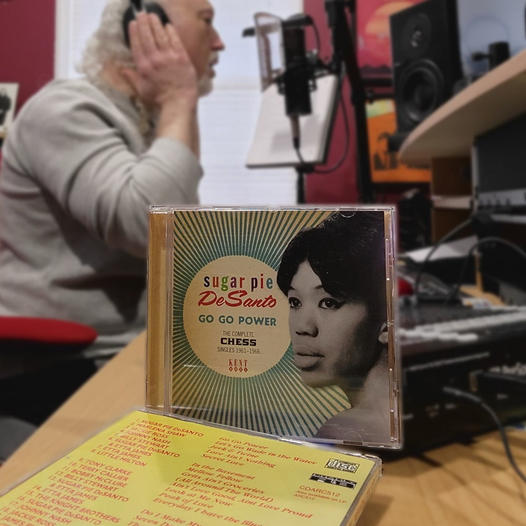
 Click here to play the podcast