"Real Man" (Todd Rundgren) Copyright 1975 Warner-Tamerlane Publishing Corp and Humanoid Music
Todd Rundgren never became a household name, but he has legions of fans around the world. I’m one of ’em. What has always drawn me to Todd, then and now, is not just his way with a tune and a willingness to do anything musically– it’s his search for something deeper, more meaningful, than your typical pop song. This is a prime example of melding melody and message, producing pop with purpose. What does it mean to be a “real man”? Todd answered that question in 1975.
“Real Man” (Todd Rundgren) Copyright 1975 Warner-Tamerlane Publishing Corp and Humanoid Music
— This is one of the many great podcasts on the Pantheon Podcast network, the place to be for music-obsessed listeners like you & me!
John Lennon & Paul McCartney Copyright 1968 Northern Songs Copyright 1968 Sony/ATV Music Publishing LLC
It’s nearly impossible to pick the “best” Beatles song, but by nearly every measurement– sales, chart success, cultural impact– it’s hard to beat “Hey Jude”. Author James Campion‘s new book, Take A Sad Song, is an in-depth look at the history and legacy of “Hey Jude”. He joins us on this episode for a deep dive into this legendary, iconic song. A true classic.
John Lennon & Paul McCartney Copyright 1968 Northern Songs Copyright 1968 Sony/ATV Music Publishing LLC
If you enjoyed this episode, please check out these other Beatles-related episodes:
Time for another edition of the “I’m In Love With That Song” podcast, right here on the Pantheon Podcast Network. I’m your host, Brad Page, and on this episode, I’m joined by author James Campion. He has a new book out called “Take A Sad Song” that’s an in-depth analysis of the Beatles song “Hey Jude”. So I invited James onto the show to talk about this song and this book. This is one of the longest shows we’ve ever done, but if any song warrants this kind of attention, it’s this one. So, without any further ado, here’s my conversation with James Campion on “Hey Jude”.
Brad Page: Well, James Campion, welcome to the “I’m In Love With That Song” podcast. You’ve got a new book out called “Take A Sad Song” that’s an in-depth look at the Beatles song “Hey Jude”. You really take a look at this song from every possible angle. I thought the book was a fascinating read.
And the main thing we do here on this podcast is to take a deep dive into an individual song, just to try to understand what makes it work, why it’s such a great song. And I truly do love this song. But to be honest, I’ve been almost too intimidated to cover this song on this show. It just seems almost too… too big, like, I’d just be biting off more than I could chew. So that was almost too much for me to handle. So, when I heard about your book, I really had to invite you on the show to talk about this song, so we could do it together. I feel like I need your expertise here to tackle this amazing song. So let’s get into it.
I assume most Beatles fans know the history of the song, but for those that don’t know the story, maybe you can just give us the background, tell us the origin story of the song, how it came to be written.
James Campion: Many people know this, that originally the song, or the melody that Paul had in his head was, “Hey Jules”. And the way the story goes is, Paul is 26 years old; he’s on top of the world, really. Biggest man in the world. He’s the most eligible bachelor in the world. He just meets Linda, for all intents and purposes. A couple of months earlier, he’s driving out to comfort Cynthia Lennon and Julian Lennon, wife, soon to be ex-wife, and son of John Lennon, who has just met the woman he will live with until his death in 1980. Yoko Ono. All of this is happening within weeks of each other in 1968.
And what rock star on top of the world is going out to drive an hour out of his way to comfort the ex-wife of his partner and best friend since he was 15 years old? And then to write a song and to have this song to sing to Julian? And although Julian for years had no idea the song was about him, and when John first heard the song after Paul wrote it, he’s like, “wow, this song’s about me meeting Yoko”. And Paul’s kind of like, “Well, I wrote it. It’s kind of like me meeting Linda”. But the origins of the song in that little melody, because Paul McCartney is a melody machine, he wrote the song driving with his Astron Martin up to visit Julian. And it’s a fascinating story, just on the origin of the song itself.
Brad Page: Yeah, absolutely. A few facts about the song: It was released August 6, 1968, almost 54 years ago. It was number one in 18 countries, stayed on the top of the US charts at number one for nine weeks. It was the Beatles biggest selling song of 1968. Really their biggest hit ever. Right?
James Campion: In America. Yeah. It’s nine weeks and at number one 19 weeks overall. Internationally, I think it was number one in more countries than any other Beatles song, which is fascinating in itself, Brad, because we’re talking about 1968, and part of the reason why I loved working on this book and researching it; ‘68 is such a seminal moment in American and international history, but it is a very significant moment in the history of the Beatles, because for the first time in their career, since 1962, they were going up, up, up and up, and they just kind of hung out in the middle there. After ‘67, they weren’t going up anymore. They were just kind of part of the pop pantheon. But “Hey Jude”, of course, is the exception to that.
Brad Page: It was the first single on Apple Records, which that’s pretty significant. I mean, what a way to launch your record label! Unfortunately, it was kind of all downhill from there in a lot of ways. But, man, just as a Double-A side single, it’s totally killer.
James Campion: Yeah. “Hey Jude” and “Revolution”, of course. And again, the yin and the yang of the Beatles, the John and the Paul. But also, you mentioned it again, I tried to write about this in the first chapter, all the things that it’s the first of, and it is still to this day– the largest selling debut single for a record label. And why wouldn’t it be, right? The Beatles just were already on top of the world.
Brad Page: And it’s also, I believe, the longest in terms of actual song length of any number one pop single. Is that still true today?
Speaker A: That isn’t technically. So, as you know, in the last couple of months, Taylor Swift re-released her Red album. And, one of the songs on there, and the name escapes me, I’m sorry, the title was the ten minute longer version of that song. And that came in at number one. Before that, “American Pie” technically is longer. And that was released in 197—’71, ‘72. However, as you might remember, Brad, they split that song up. Side A was three and a half minutes or something, and Side B was four minutes. So, it wasn’t a side, a single. They fit all seven minutes and 11 seconds of “Hey Jude” on the a side of that a-b single. So up until a couple of months ago, when Taylor Swift swooped in with a ten-minute song that made it to number one, yes, “Hey Jude” was the longest running number one song ever.
They went to a different studio, not Abbey Road. They went to Trident Studios in London and recorded it on the only eight-track player recorder in London. It’s really a sonic marvel. And some of the greatest engineers and of course, George Martin produced and engineered this thing to get it to be the wonderful record. Because it’s not only a great song, it’s not only written by a great songwriter, it’s not only played by an excellent and one of the greatest bands, but it’s a great record– because there is a distinction between how good a song is or how good a record sounds. You know what I mean?
Brad Page: Right, right, yeah. Trident would later become one of the most famous recording studios in the world, but at that time, I believe they were practically a brand new studio. Right?
James Camption: They were.
Brad Page: Yeah, yeah. They were breaking them in. And as you point out in the book, the piano that McCartney plays on this track was like the house piano there at Trident. It would later go on to be performed by Rick Wakeman on Bowie’s “Life On Mars”. I believe Queen recorded “Bohemian Rhapsody” on the same piano. Is that correct?
Speaker A: That is correct, yeah.
Brad Page: So, well, let’s get into the song. The song famously opens with just Paul’s vocal and piano. In fact, the very first note that we hear is just Paul’s voice. No reverb, just really dry, which I think that just makes it really intimate. It’s like he’s right in your ear. Talking right in your singing, right in your ear.
Brad Page: On that second line, where he sings the word “bad”, he actually drops that. It’s like the lowest note that he sings, I believe, in the song. And I absolutely think that’s not a coincidence; entirely intentional, that the words he chooses to use when he sings that lowest note tend to be, like, the bummer words of the song.
James Campion: Right, right. And you hit it right on the head. Think about this: this is 1968. This is AM radio. Because that’s where you played all the big hits and the sound effects and the booming DJ’s and all the traffic reports and the sports news and the car rumbling down the street that you’re listening to this, this song, you know? And here comes Paul, completely cold, out of the blue. Literally. And he sings the title and the melody of the song. I interviewed dozens of songwriters for the book: Musicologists, psychologists, sociologists, Beatle biographers, writers, music journalists… Almost every person, too, that I interviewed said, think about when you ask someone, how does “Hey Jude” go? What do you say? “Hey Jude, don’t make it bad”. There it is. There’s the song. He’s telling you the title, he’s telling you where he’s going. It’s amazing artistry, amazing craftsmanship. And by the way, The Beatles did that better than anyone. And I went through The Beatles catalog, and you probably know this as well, Brad, how many great Beatles songs start with just their voices telling you the title?
Brad Page: Right!
James Campion: “Help”. “Nowhere Man”, “She Loves You”. I mean, there’s at least 15. And it comes right out, “Hey Jude”, he’s telling you it all right now. It’s brilliant. And getting to the second part, you were saying about the song going down and up? Some of the musicologists I interviewed said this makes it a classic lassic ballad in the American, in the great American songbook– or in the case of Paul, the great British songbook, in the sense where you have the lilting of the voice go up and back down again, up and back down again. And the words seem to reflect that.
Brad Page: Yeah, I love the way, “don’t make it bad”, and then “take a sad song”, and he goes up. He’s literally taking a bad moment or a bad feeling and making it better as he’s singing those actual words.
Brad Page: And then he hits the word remember, and then there’s a pause.
Brad Page: That’s so conversational I think, in the way that it’s like… I mean, if I say to my kids, “remember to take out the trash”, that’s one thing; If you say, “Remember– take out the trash”. That pause in there. To me, that whether it’s intentional or not, it hits you in a very specific way.
James Campion: Again, all the musicologists that I spoke to, and some of the songwriters I spoke to, pointed out that very point. Remember, this song is written in the second person. He is talking to someone. I think a lot of listeners hear him kind of talking to them like, “buck up, it’s going to be great.” But he’s talking to someone we know; he’s talking to Jules. If we look back, but he’s talking to the thematic Jude. And by doing that, he’s bringing you in slowly. And the way George Martin arranged this, along with The Beatles, where each instrument, an acoustic guitar comes in, the tambourine, and the height and those beautiful fills by Ringo, it’s just an incredible way of arranging this conversation that Paul is having with you.
Brad Page: And then you get the line “let her into your heart, then you can start to make it better.” So you get that internal rhyme there, which is just classic old school songwriting.
Brad Page: And like you said, he’s having a conversation, relatively specifically between two men. It doesn’t exclude a conversation with a woman; but this comes up in your book, right?
James Campion: I want to give credit where credit’s due. The great Beatle musicologist and author Tim Riley, who gave me hours of his time, had this incredible light bulb go off. And Tim said, there is definitely a line to be drawn between “She Loves You” and “Hey Jude”. And “She’s Loves You”, it’s two young men, a young man telling another young man, “hey, you better get on this because she really loves you, and you’re blowing it. Okay?” And then, “Hey Jude”, here he is, a little older, a little wiser, and he’s saying the same thing to someone. “You found her, now go and get her.” “Don’t hold back. If you’re cold, you’re only making your world colder.” This is Paul’s way of communicating again. And I love the fact that we have that lineage in the way The Beatles communicate.
Brad Page: Yeah. I mean, there have been songs of two guys sort of fighting over a girl; you know, that sort of, “well, if you don’t take her, I’m gonna.” “If you don’t treat her right, I’m gonna take her”. Neither of those songs are that. [Referring to “She Loves You” and “Hey Jude”.] Both of these songs are one friend encouraging another friend to make a move, you know, to think positive.
That’s fairly unique, I think, in sort of the macho rock and roll culture, right?
James Campion: Totally unique. And one of the things that I used to love when I was a kid is when he says, you know, “it can’t be bad”. He’s saying, “she loves you and it can’t be bad.” Now, I believe that because Paul and John both lost their mothers at a very young age. Paul, over the years, because he has lived into his seventies, he’s said many times that they got each other through. That’s the bond that they had. And I really do believe that that sentiment, that empathy that those guys put in those songs is real.
Brad Page: The acoustic guitar comes in on the stereo version. That’s in the left channel. I believe the drums are also in the, primarily in the left channel. And there’s an overdubbed tambourine. Now, there’s an interesting history of the stereo mix, right? That the stereo mix– correct me if I’m wrong, but I believe the stereo mix wasn’t done until, like, a year later or something?
James Campion: Yeah. When they were doing the Alan Klein “Hey Jude” record, which is just a bunch of singles that didn’t come out in America on a record. But interestingly enough, when they did the mono mix of “Hey Jude”, they did it from the original stereo acetate. It’s very odd– they did a stereo mix, but they didn’t do a true mono mix. They had to do a mono mix from the stereo, two tracks. And then that later was made a true… not “true”, but you know what they used to say, “fake stereo”, but, right, there was no official studio stereo version or mix of that until, like, 1970, almost when The Beatles were broken up. Oh, and by the way, the stereo version, the one you hear in the “Number Ones” album, the one you hear on the “Hey Jude” album, the one you hear today on Spotify, is not seven minutes and 11 seconds. So, in case anybody, and I’m sure people are going to come out of the woodwork when they read my book, this thing isn’t seven minutes. It’s seven minutes and 8 seconds, or seven minutes and 9 seconds. Because the stereo version they did, to get rid of the hiss, they just faded at that extra 2 seconds. And let’s face it, they’re singing “na na” for four minutes. Nobody felt they would ever notice this. But you know, uh, we’re nuts.
Brad Page: Of course! Yeah, hardcore Beatle fans are going to notice every bit of minutiae, but for the average listener…
And so, then on that second verse, you get the line, “don’t be afraid”. And again, when he says the word “afraid”, another kind of, if you will, negative word, like “bad”, he drops his voice down on that.
James Campion: Right?
Brad Page: Then there’s that line, “The minute you let her under your skin”… the songwriters in your book talk about it; usually, when you talk about somebody getting “under your skin”, it’s a negative, it’s an irritant. Right here, he’s encouraging it. He’s telling you to open up, to be vulnerable, to let that person in. You’re open to that potential irritation. But there’s a benefit there, too. There’s a positive to that. I just think it’s a really interesting turn of phrase.
James Campion: Yeah. And that’s, you know, my good friend and a gentleman I’m working on a book with currently, Adam Duritz, lead singer and main songwriter for Counting Crows. He was nice enough to give me some time for the book, and he really nailed it for me. He’s such an emotional singer and songwriter that it makes sense he would come up with this. He said, you know, Paul is writing from such a vulnerable point, and he’s saying, if you really want to love and be loved, you gotta be willing to be hurt.
Brad Page: Yes.
James Campion: You gotta let go and just lay it out there, man. Otherwise, you’re just cheating yourself and the person you love.
Brad Page: Yeah, yeah.
Brad Page: At that point, the backing vocals come in. I’m pretty sure that that’s the three of them, right? John, George, and Paul overdub, doing the, at that point, it’s the “Ah” right, the “ooh’s”. But they harmonize on the word “better”. It’s one of the few times where the backing vocals are actually hitting a word.
Brad Page: I think there’s an extra measure in there, isn’t there like a 9th measure?
James Campion: Yes, there is.
Brad Page: Yeah. There’s just that little extra measure there that kind of gives Ringo a chance to do a bit more of a fill. One of those classic Ringo drum fills with the tea towels on him.
James Campion: Right.
Brad Page: That real muffled drum sound that so classic Ringo. And he hits the ride cymbal, which is kind of an interesting choice there. That’s usually more of a chorus kind of thing, right? But he goes right for that there. And it’s so obvious in the mix. It really jumps out. That ride cymbal in the mix.
James Campion: And again, credit where credit’s due: Rob Sheffield, the great pop culture writer and music writer for Rolling Stone magazine, another guy who gave me hours of his time over and over again. He kept saying, “Ringo is the best on this song”. This song is not a song if not for Ringo. Ringo gives it all on this. Listen to Ringo here. This is a band song because Ringo’s making it a band song. He’s not letting you think that this is a singer songwriter. This isn’t Paul’s lament. This is a Beatles song. Yeah.
Brad Page: Just one of the most unique drummers. There’s a sound that you can, you know, it’s Ringo. There’s also the bass guitar comes in there, which is overdubbed by McCartney. Sometimes on Beatle tracks, the most flashy performance is the bass part. But this song, he’s really, he really holds back. It’s just very… it’s basic, and keeps the focus on the vocal and the piano part. But it’s not your typical McCartney. Sometimes the bass parts steal the show on some of the Beatles tracks, you know… not here.
James Campion: Yeah. And again, I have to give credit to the musicologists that I interviewed for the book, pointing out that Paul is writing the bass line on the piano. This is a piano bass line. He’s a bass player, but he’s adding that bass player aesthetic to the piano. And I write extensively, and I learned much about how much the piano meant to Paul as a child, getting over his mother’s death. His father used to play the piano, really engaging him into playing. The family all hung around the piano that sings songs. When he was a child, he really, to the point where Paul actually, in his twenties, when he was already a famous Beatle, took piano lessons. So he’s adding all those different elements into this bass line. And interestingly enough, when they did the live to tape version of it for the David Frost show– that famous clip, you could see it on YouTube– you see George is playing sort of a bassy guitar.
Brad Page: Yeah, the Fender VI. The Fender Bass VI, which is a six-string bass guitar.
James Campion: Yes. And just such a great subtle, you pointed out, a subtle way because Paul does, and thank goodness, add so much with his bass in all the songs and all The Beatles songs. But here, you’re right, he pulls up, he lets that piano, that left hand, really tell the story of music, right?
Brad Page: And he’s just following that. He’s not really embellishing much on the bass part, which, again, it’s fairly unique for him. I think of all his many talents, I think the one that he doesn’t, that he doesn’t give himself enough credit for is as a bass player. He’s my favorite bass player of all time.
At that point we get to the bridge, which is a descending chord progression. I always felt that when he’s saying, “don’t carry the world on your shoulders”, the chords are descending down, and to me, that kind of feels like you’re literally taking that weight off as the chords slowly descend there.
James Campion: The Beatles used that to great effect on dozens of songs. And Paul is utilizing, and we haven’t gotten into it, and if you want to, we can, Brad; you know, the origins of two melodies that Paul had ingrained into his system. Everyone takes something and then it incorporates it, whether it’s, you know, Bach, in the case of Brian Wilson in the Beach Boys, or the Mozart pieces that were used for Stevie Wonder; Paul is using two things. And I won’t get too deeply into it. I talk about it in the book, but in that bridge, there is a little bit of The Drifters’ “Save The Last dance For Me”.
James Campion: And it was Walter Everett who pointed that out to me, and we listened to it, and it’s there. There is echoes, there are fingerprints there of the music that made Paul want to pick up an instrument, that doo-wop sound, that late fifties, early sixties. It’s really amazing how he was able to combine sort of a gospel, African-American, southern feel in with a classically structured ballad.
Brad Page: In the book, you also talk about sort of a classic Irish piece of church music that you think was influential.
James Campion: If you listen to the first notes of John Nicholson’s, Ireland’s 1917 liturgical piece called “Te Deum”. But Paul goes in a palatable, more pop, more romantic way by lifting the melody, whereas the Te Deum, it’s much more solemn, written for like an organ, where Paul, but again, he’s taking these things. And in essence, and it was pointed out to me by Professor Devers and Professor Everett that Paul sang in the Liverpool Angelical Choir in 1950. So he was born in 42, so he had been, what, eight? So Paul is singing these songs. It has to be absorbing into him. And the fact that he’s writing this sense of comfort for another person, whether it’s Julian losing his dad and his family is breaking up, or he’s trying to implore John or himself or a friend to go after that woman of his dreams, the one that will complete him. To go back to something, uh, dare I say, religious or spiritual, really does speak to how important this song was for Paul. And nobody is suggesting that Paul ripped off or stole or was taking a homage to something. I truly believe these things were subconscious, and I doubt if he has, Paul now, he’d even remember that. But I think it’s in there purposely. I think the subconscious sometimes speaks to us when we’re being creative. And Paul is giving us the density of this early liturgical piece and saying, this is, again, a very important song I’m writing here. Yeah.
Brad Page: And I mean, let’s face it, in western music, at least, you’ve only got eight notes; There’s only so many combinations. I mean, sometimes it feels limitless, but it’s all in the little tweaks and spins you put on them. But they’re absolutely, no one’s going to invent a new note that no one’s ever heard before.
James Campion: And especially in pop music, let’s face it, this is pop music, certainly popular music, and it’s now considered a classic in the sense of rock class. But again, that’s what The Beatles did so well, didn’t they? You know, they changed it up. They did break molds.
Brad Page: And the second part of the bridge, the backing vocals change from “Ah” to “Ooh”.
And you mentioned it before that this is where the song sort of takes a break. He does that little “na, na, na”.
Brad Page: And you can actually hear George playing some electric guitar behind that, which actually echoes that little melody. So the few times George actually pops, his guitar pops out of the mix there. But in the book, you describe that little break, little piano break there as almost like a moment of Zen. I love that. It is a place to take a breath almost, and subconsciously reassess or something.
James Campion: Yeah. And it also foreshadows the na-na’s at the end. Yes, Brad, again, this is the combination of that magical thing that Paul talks about dreaming “Yesterday” and writing about it, but also his tactical, the structural things that The Beatles did so well. I talked about earlier about having the name of the song sung right off the bat to get people, jumps out of the radio. Here’s the song, here’s the melody. Everything you need to know is right here. What Paul’s doing there, I think, is he’s letting us breathe, as you mentioned, and I said a moment of Zen, because he’s going back to that “Hey Jude”. And it gets back to those two notes from the liturgical piece from 1917. Again, he’s letting you take a break there. And it’s amazing when there’s silence in a song like that. And it’s very quick, but when there’s silence in a song like that, it’s on purpose. But it also is something that we, subconsciously, we don’t get. But it’s there and it’s so important, man, it does reset the song.
Brad Page: And again, we got the line “don’t let me down”, and he hits a low note on “down”, about the lowest note in the song, and then we get lifted up again. And the way he sings that line, “you have found her”– the way he hits the word “her” there…
Speaker A: He uses different phrasing. I do spend some time, and did talk to vocalists and songwriters, about Paul’s phrasing here. Paul could have gone this way or that way, but he doesn’t. He changes it up for you. So even though it’s what seems like a pretty provincial ballad, is not because of the way he’s singing it. And you mentioned earlier about how he goes down on some of these words, which are significant. I also find it very significant that the first time he goes up high and, probably the highest point of his singing until he hits that real high note before the na-nas, is when he says, “take a sad song”, like he goes there. So the “sad song” is really the underlying theme of the song. There’s the sad song. And of course, I extrapolate that out in my book. 1968 was a pretty sad year with assassinations and war and riots. And he’s saying, we are in the midst of a sad song here. And I think it was Howard Sunes, one of his biographers told me, when Paul goes to the song, when he goes to music to describe an emotion, he’s not screwing around. That’s a big deal to Paul McCartney. So again, I hate to keep bringing this back to the fact that this seemed like a really important thing for Paul, but I really do think so. I think he really knew he was onto something here and he was trying to communicate some important elements and themes.
Brad Page: Yeah, yeah. There’s an interesting part where there’s an overdubbed voice, or maybe it’s a leftover voice that says, “let it out and let it in, Hey Jude”, kind of between the regular verses.
James Campion: I love that.
Brad Page: I love that too. That doesn’t happen anywhere else in the song. It happens here in sort of the third verse. And again, I always look at those things as just another creative way of giving you something new, that every time something cycles around, you’re just not repeating the first verse again. You’re building on that, you’re adding new elements. It keeps your ear interested and it makes the song exciting. It makes it something new in there that you didn’t hear before.
James Campion: You’re right. No, musically too. And that little part you’re talking about, “let it out, let it in, Hey Jude, begin”, you know, that whole bit, one of the things that was pointed out to me in his brilliant book, “The Recording Sessions”, Mark Lewison, who is the number one Beatle historian in the world, who was kind enough to send me back a couple of emails to sort of keep me on track. He lists out in that book all the parts in which, when Paul recorded it with the band, before he did the lead vocal, he recorded what they would call a guide vocal, which, you know, Brad, and they left a lot of that in that. You could hear that in there.
Brad Page: So you’ve got that there and then you’ve got John and Paul singing harmony and it’s just always so great.
James Campion: Yeah.
Brad Page: When the two of them sing together, there’s just really nothing like it. When they sing, “remember to let her into your heart” together, it’s just beautiful. John typically sings below Paul, but when you get to that line, “then you can start”, John goes high.
Brad Page: He goes over Paul. And that’s, that does not happen very much in The Beatles catalog.
James Campion: In fact, according to Tim Riley, never. That’s the only time that John went above him in a song, to his recollection. And this is a guy who’s written about every Beatles song several times. Now, I didn’t go that in depth, but I did quote him on that. Maybe somebody will go in and try to find another spot where John, now, there’s some times where John and Paul both go up—“It Won’t Be Long”, yeah, that kind of thing. And of course, “She Loves You”. And some of the high notes, they both sing, but yes, on a harmony, a single two- part harmony, John going up there and his voice sort of cracking, and it’s just the two of them singing… Oh, my God, it just breaks my heart every time, because I know what this song meant to John. “I thought this song was about go get Yoko”, and he was so in love with Yoko, you know, and it changed his life. It did. It changed his life. It changed everyone’s lives in the 1960’s. It changed the Beatles. So, to hear him singing that with Paul there, there’s just way more for us Beatles fans.
Brad Page: It’s just a beautiful, beautiful moment in the song. I just, I love that part. And then you get the next verse where you get the “let it out and let it in” the second time. He says that, which you actually talk about that line a few times in the book; you know, there’s just a lot said in “let it out and let it in”, just by itself, says a lot.
James Campion: It means nothing and it means everything. It really comes down to that. If you’re a poet or you’re a songwriter, or you’re someone who likes to deconstruct music the way I like to do it, and you do it on the show, that thing is just rings all the bells. I think it was Kylie Lotz, who goes by the name of “Petal” in her professional career– wonderful singer songwriter, young woman– just really nailed it when she said, it’s breathing, isn’t it? It’s just breathing.
Brad Page: The “Ooh’s” return in the harmony, and you get that line, “You’re waiting for someone to perform with”, which just is such a specific phrase that you know, so much of the rest of the song, I think anyone could apply it to their own personal feelings, but I’m not sure most people are looking for a partner to “perform with”, however you want to take that. But it’s just an interesting phrase to put in there that literally applies to the future of both John and Paul, Right” Because they both end up performing for the rest of their careers, as long as their partners are alive, with their significant other.
James Campion: Right.
Brad Page: But at that time, they weren’t. That line literally predicts the future.
James Campion: There’s no way that Paul didn’t know that when he wrote that. That’s what he’s saying now, did he think he was going to be in a band called Wings with Linda? No. Did John think? I think John did. I think John knew from the very beginning, because he did all those tape loops with her. He worked on the tape loop “Revolution Nine” with Yoko. She sings on “Bungalow Bill” with him. That line about, that is a very odd line for a love song. You find someone to perform with. Not perform sexually or…
Brad Page: No, it’s not a sexual thing at all.
James Campion: No. You’re going to go off and do this thing together. And this is a song about, you know, “you could do this”. You could do it. I’m right here with you. You don’t have to do it alone. So it’s pretty cool.
Brad Page: There’s another little George Harrison guitar fill that pops out there. Then you get the line– this is the line that always strikes me—“Don’t you know that it’s just you, Hey, Jude, you’ll do”. And that just touches me in a way that’s, it’s difficult for me to kind of really put that into words. But, you know– and I know Bruce Springsteen often gets a lot of crap for that line in Thunder Road where like, “eh, you’re not a beauty, but you’re all right”. And you could maybe say that here, that’s like, “you’ll do”. Well, that’s not like, you know, that’s not saying “you’re great”, “you’re awesome”… it’s “you’ll do”. But there’s something about that that’s just saying, it’s not hyperbole, it’s just like, “you’re good enough. You can do this”. “Don’t you know that it’s just you, you’ll do”, it moves me every time. And the way he sings “and don’t you know that it’s just you”, it’s probably his most soulful, most bluesy vocal effect, on the whole song.
James Campion: Yeah, I mean, his vocals, again, magnificent here. Uh, yes, I think this is the tightrope that he walks in this song. He’s saying, “I’m going to be there for you. I’m rooting for you”. But he also says, “you got this, you got this”. This is completely different than “All You Need Is Love”. But in a way, he’s telling Jude or Jules or you or me, you know, “you got this”. You got this. You don’t need a lot of mumbo jumbo. You don’t need the Maharishi. You don’t need a big steeple. You don’t need a ton of cash. You know, you could do this and whatever you want to apply to it. I think that’s what he’s saying.
Brad Page: Yeah, exactly. And then you get the line, “the movement you need is on your shoulder”. The most enigmatic line in the song.
James Campion: Yeah. When I saw him in ‘89, when he sang it, it gave me the chills, too. And then I find out later on that he told Bob Costas, Bob asked him, “do you ever think about the audience when you’re playing a song or singing to them?” And he’s like, “No, no. It’s just like being an actor. You’re doing lines, you’re trying to get through it, you’re in the song. You like to interact with the musicians on stage, but when I sing that line, I think of John.” And when you think of “the movement you need is on your shoulder”, which is such, as you said, perfectly enigmatic, could mean everything. And again, nothing. But John, of course, loved it. Paul just put it in there. He just had that in there. He even told John, “this is just a filler.” And he goes, “no, no, no, it’s the best line in the song”. And he respected John so much for it. And I think it was, again, Tim Riley, who told me, think about the ego and the it ownership, that John had a lot of those songs. If he did, when he did the Playboy interviews right before he died, he went through every Beatles song and he would say, “I helped him with this line. He helped me with that line”. “I kept Paul from going to Saccharine here, we did this”, he always said over. And even during their dark times, when they were fighting with each other publicly, he always said, “’Hey Jude’, that’s Paul, Paul’s baby. Probably his best song.” So to have that line in there, and him to blow Lennon away with it, and Lennon insisting he keeps it in there, and that Paul plays it 30, 40 years later and it still thinks of John on stage. Just absolutely beautiful.
James Campion: I love the fact that it’s on your shoulder. It comes right after you’ll do. It’s about you. You can do this.
Brad Page: Right? Right. You can move mountains. You can do it. The song is so full of those little moments that are just uplifting to your soul.
There’s another pause for that short little “na na na”, which he adds a yeah, at the end, which I would normally think that would just be like an ad lib, but it’s actually doubled. And then you get the last verse, the “Hey Jude”, where he has that melisma on the voice, where you’re not just hitting a note, but you’re scatting around it. McCartney was so great at that. “Hey Jude” harmonies on that verse by John.
Brad Page: And then– and this is something that I feel foolish, because, again, one of my favorite songs, I couldn’t tell you how many times I’ve listened to this song… Never heard it till I read your book. But after they sing under your skin, John in the background says…
James Campion: Yeah, you can’t unhear that. Yeah. And it’s, and many people had a theory, and I throw them all in there, but I stick with the one that because Paul changed “heart” to “skin”, John was doing the harmony, and he blows the line, and then he just says, #@!&
And then when they were mixing it, I just wondered, why would they leave it in there? According to Jeff Emmerich, who was cleaning up the mix of it, John just came up to him and said, leave it in there. Leave it in there. No one will hear it. And if they do, it’ll be a little bauble for everybody. And, you know, biggest single in the history of Rhe Beatles, the biggest band on the planet, has the F-word in it, right?
Brad Page: That’s so great. And leave it to John to say, just leave it in there. But that would be my take on it, too. I think if you listen closely, it’s tough to tell, even when you isolate just the vocals, but I think you’re right that the previous verses “let her into your heart”, here he sings “let her under your skin”. And you can almost hear there, John start to sing “into” instead of “under”, and then, like, catches himself, and then lets the F-word fly because he blows the line.
Brad Page: It’s just funny. And again, when you think of The Beatles, how many people have played their songs backwards and forwards and inside out, looking for crazy stuff, backwards masking and whatnot? And this is right there, and nobody ever points that out, but it’s just great.
Then we get to really kind of the climax of the song, where they repeat the word “better”, climbing in pitch each time. There’s a classic Ringo drum fill. Under that little pause, Ringo hits a single hit on the hi hat. And then we are off into the second part of the song, which is a whole different animal. But I always hear– and I almost hate to put it this way, because I don’t mean it to be in a sexual way at all, but that “better, better” and then when he screams, yeah, it’s orgasmic.
James Campion: Oh, uh, no question.
Brad Page: You know, “orgasmic” just in the sense of release; build, climax, release. And it’s so emotional.
Brad Page: And that launches you into that second half of the song, that is longer than the beginning. I believe the first part of the song, where we are up until now is about three minutes. The remaining part of the song is four minutes, roughly, right?
James Campion: Yeah, it’s four minutes plus of just “na na’s”. So, we’re less than halfway through the actual record, but the song structure is over now. And now you have the “double amen”, or “plagal cadence” in the parlance of music, where you repeat that line over and over again. The famous, famous, nobody can forget it, everyone loves to sing along with it part. But before we leave the scream, I defy you to find, you could probably find equal, but is there one that’s better when someone goes up and up and up and he just exploded. And now he’s leaving that other part behind. He’s done talking to you, and now he’s making you feel like you’re part of something. He’s making Jude feel like, “don’t worry, you’re not alone here”. And that’s when the na na’s come in, and that’s where I feel he’s using gospel cords. He’s using gospel phrasing. He starts to do the melisma to get us there. The blues tropes.
Brad Page: Yeah. And as you just kind of pointed out, at this point, the song shifts from being very personal and intimate to being a communal experience. The first part is kind of like about you and making you feel better. Then you get to this part and it’s like, “You know what? We’re all together in this. We all have to figure this out, all have to work together if we’re going to survive, get through this together. We got to do it together.”
James Campion: Yeah. And of course, you know, that’s the sixties edict that The Beatles helped build.
Brad Page: You’ve reached a point in the song where you’ve transcended what you can say with actual words, and now you’re just chanting. He’s already said everything he could say to you in those first couple of verses now. It’s just the uplift of. It’s just like pure, unfiltered joy almost.
James Campion: And again, the “na na’s” break the barriers of language. I’m reminded of Paul playing it at the Kremlin, and I mentioned it in the beginning of the book, and I’m reminded of the thousands and thousands of young Russian kids singing “na, na, na”. And no matter where you go, you could sing that.
Brad Page: An interesting thing you also point out in the book is that, during this final section, the coda, if you listen closely in the right channel, you can hear some of those previous ad-libs from the initial run through. It’s still there buried in the mix.
I believe it repeats 18 times. Do I have that right? Is that the number?
James Campion: Yeah.
Brad Page: The number of “na na na’s”?
Speaker A: Yeah, it’s right around there. It’s fun to play with that and figure out how many, and I break it all down in the book. I can’t remember all of them right now. And George Martin said for years, music is mathematics. It’s magical math, but in the end, it’s math.
Brad Page: You just get this continual build here through the coda, where the second time around they add hand claps. I think it’s the fourth time around, the orchestra comes in, and then that’s where Paul comes in with that famous “Judy, Judy, Judy”. The 6th time around, I think the brass gets a little louder and he does that, you know, “you can make it, you’re not going to break it” ad lib in there. That’s great. The 7th time around, just riffing on the verse lines. “Hey, Jude, don’t make it bad. Take a sad song. Make it better.”
Brad Page: Around the 10th time, the fade starts to begin, so you get this really long fade that just takes forever. The 11th time, I think you can hear him say, “don’t go back, Jude”. And then the second to last time, Paul’s voice comes up a little bit in the mix for one last little screaming ad lib in there. And then that song just rides out. Just what a communal experience again, you get from that, that whole end section. It’s just, I find it so emotional.
James Campion: Yeah, well, I think I titled the last chapter “Comfort and Unity”. He got the comfort part. “Hey, Jude, you could do this, buddy”. And then, we’re all doing it together. No one should ever sleep on the fact that, again, as Rob Sheffield so beautifully said, this is a band song all the way through. And I think somewhere around the fifth or 6th, they just stop trying to play the song, and they’re just into that whole plagal cadence. Like that the band is a groovin’, there’s a part where they just groove. They’re not doing staccato punches on the acoustic guitar. They’re just flowing, and the bass is going, and Ringo is just doing his thing, and it’s a full… and Paul is really banging on the piano, so it’s a full, full band song on the way out. As you just pointed out beautifully, each section builds on another, and it never makes it boring. Ever makes it boring.
Brad Page: I my book, it’s just one of the greatest songs ever written and ever recorded. It’s a perfect song, I think.
James Campion: Yep. I agree.
Brad Page: So your book, called “Take A Sad Song”, what inspired you to write a whole book about this one song?
James Campion: Well, when I was a kid, as I said earlier, it affected me greatly. I just saw, I came up with this idea in late 2019, but then my father got sick and passed right before the pandemic. And then the pandemic hit. And I was home and I had the time and I said, this song seems to speak to that. To this. We’re all alone, but we’re kind of together. We’re going through this thing. We’re going to try to survive this thing. And it seemed to work in 1968, because when all that craziness was happening during the summer, and then, of course, after the election, it just seemed to be ‘68 again. Everybody’s saying, well, this is the worst year since ‘68. And it just, I felt like I was in it, you know, it just spoke to me. So “Hey Jude” is my favorite Beatles song, period. And once I started looking up different things about it and all the stuff we talked about on this podcast, and also, I thought it would be really cool to just break down one song to figure out why songs work, not just this song, but why songs affect us. And that’s why I talked to a psychology professor and a sociology professor in musicology, and history and songwriters and biographers and music journalists. I just kept asking them, why? Why do we still care about these songs, this song particular? And I think I got the answer in the book. And it really buoyed my spirits during the pandemic, and I hope it does when people read it, because that’s what I meant to do, is make them understand why music affects us.
Brad Page: It’s a remarkable piece of work, and I really enjoyed your book. It was such a great insight into this song. It was just a great read. I loved every minute. It was a pleasure reading the book. It’s been a total pleasure having you on the show to talk about this fantastic song. So, thank you for writing the book, and thank you for joining me on the show.
James Campion: Brad, thank you. You do some great work here. I really enjoy listening to your breaking down songs. I think you’re doing some, you’re doing a service to all of us who love music. Thank you. Coming from you, I really appreciate that. And, um, I hope people get out of it as much as I enjoyed putting it together. It really was a lot of fun, and it made me love the song more, made me love Paul more, and it certainly made me understand and love The Beatles more.
Brad Page: James Campion, thank you so much for joining me on this episode. It’s been great. Thank you.
James Campion: Thank you, Brad.
Brad Page: And thanks to everyone for listening. I hope you enjoyed this show. James Campion is the author of a number of great books, including “Accidentally Like A Martyr”, which is a series of essays on Warren Zevon, and “Shout It Out Loud”, the story of how Kiss made the “Destroyer” album, which was a big help to me when I put together my previous Kiss episodes. This new book is called “Take A Sad Song: The emotional currency of ‘Hey Jude’”, and it’s available online and in bookstores today. Please check it out, you won’t regret it. And please join me here again in two weeks for another new episode. On behalf of everyone on the Pantheon Podcast network, I thank you for listening. Now go take a sad song and make it better.
Greg Renoff, author of “Van Halen Rising: How a Southern California Backyard Party Band Saved Heavy Metal” and “Ted Templeman: A Platinum Producer’s Life in Music”, joins us to talk about a pivotal album in his youth, “Burn” by Deep Purple. It also happens to be one of my favorite albums, too. We also spend some time talking about the first solo LP from bass player Glenn Hughes, another personal favorite of mine.
If you liked this episode, check out the previous episode where we do a deep dive into the song “Burn”: www.lovethatsongpodcast.com/deep-purple-burn/
— This show is one of many great podcasts on the Pantheon Podcasts network. Check ’em out!
"Starman" (David Bowie) Copyright 1972 Chrysalis Music Limited, EMI Music Publishing Limited & Tintoretto Music/RZO Music
Before there was Ziggy Stardust, there was Arnold Corns…
Thanks to a legendary performance on Top Of The Pops 50 years ago, “Starman” became Bowie’s first hit since “Space Oddity” and proved he wasn’t a one-hit wonder. In this episode, we dig into the history of this song and the origin of Ziggy Stardust.
“Starman” (David Bowie) Copyright 1972 Chrysalis Music Limited, EMI Music Publishing Limited & Tintoretto Music/RZO Music
Here’s a few more Bowie episodes for your listening pleasure:
Are you freaked out in a moon age daydream? Well, you better hang on to yourself, because here comes another episode of the “I’m In Love With That Song” podcast on the Pantheon Podcast Network. I’m your host, Brad Page, and on this show, I pick one of my favorite songs and we listen to it together to discover all of the nuances and elements, those special moments that make the song work.
David Bowie is one of our favorite subjects here on this show, because he’s one of my favorite artists. This month marks the 50th anniversary of the song that introduced Ziggy Stardust to the world, and launched David Bowie into stardom. So let’s celebrate the release of that iconic single from April 28, 1970, 250 years ago. This is David Bowie with “Starman”.
By 1971, David Bowie had been making records for eight years. But critical acclaim eluded him. He had tried being a blues singer. He had tried being a folky. He finally had a taste of real success with “Space Oddity” in 1969, but he was on the verge of being a one hit wonder.
As a teenager, he worked for an advertising agency in London. He only lasted there a year, but he was there long enough to pick up some basic advertising and marketing skills that he would later put to good use. He knew how to present an image, and he believed he had finally landed on the right product: the ultimate rock star. He just needed to do some market testing.
In 1971, along with his own recording contract, he was also working as a songwriter for a publisher, trying to write hit songs for other people. He had recorded a couple of demos that he wanted to release, but because he was under contract to a different record label, he couldn’t release the songs under his own name. So, he invented a character and a band to go along with it. But it’s not who you think.
The name of this band was Arnold Corns, and their lead singer was named Rudy Valentino. Neither Arnold Corns nor Rudy Valentino really existed. Bowie had met a 19-year-old fashion designer named Freddie Burretti. Bowie thought Freddie had the look of a rock star and would be the perfect guinea pig and front man for this new fake band. The fact that Freddie couldn’t sing, that was no problem– Bowie would provide the voice.
So David gave Freddie the stage name of “Rudy Valentino” and created the fake band Arnold Corns to back him up. Bowie hyped them up in the press, saying that the Rolling Stones are finished and Rudy would be the next Mick Jagger. So Arnold Korns released two singles. One of them was “Moonage Daydream”, backed with “Hang On To Yourself”. Here’s a little bit of Arnold Korn’s version of “Moonage Daydream”.
And here’s some of the Arnold Korn’s version of “Hang On To Yourself”.
You can really hear the Lou Reed influence in that version. Well, fortunately for the Rolling Stones, Arnold Corns was no threat. Both singles flopped and sunk without a trace.
This experiment was not a success, but Bowie would learn from it and revisit it later. In the meantime, Bowie released the “Hunky Dory” album in December 1971. Still, I think one of his best albums, “Hunky Dory”, was a leap forward in his songwriting and another rung up the ladder of success. But Bowie still had bigger ambitions. He revisited his concept of the ultimate rock star and drew inspiration from Elvis Presley to Howard Hughes, from the legendary Stardust Cowboy to the self-destruction of Hendrix and Joplin, and from novels from Van Daniken’s “Chariots of the Gods” to “I Am Still The Greatest, Says John Angelo” by Nick Cohn.
He wrote new songs and resurrected old ones like “Moonage Daydream” and “Hang On To Yourself” to create the album that would finally make David Bowie a legend, “The Rise And Fall of Ziggy Stardust and the Spiders from Mars”.
The Ziggy Stardust album has been called a “concept album”. Fair enough… It has a concept, but not much of a coherent story. Essentially, it’s the ascent and decline of a rock star who may or may not be an alien. Bowie, of course, plays Ziggy Stardust, and in doing so, he’s commenting on the role of the rock star in our culture and challenging the ideas of authenticity.
The album was released in June 1972. Before the album was released, “Starman” was issued as a single on April 28, 1972. “Starman” was the introduction of Ziggy Stardust to the world.
“Starman” was one of the last songs written for the album. It’s a classic example of a record label executive saying “I don’t hear a hit” and forcing the artist to go back and write something new for a single. Luckily, Bowie delivered.
It’s possible Bowie might have been inspired by science fiction author Robert Heinlein’s book “Starman Jones”. Bowie’s real name, after all, was David Jones. Musically, he drew inspiration from a few sources, and we’ll explore those. “Starman” features the Spiders from Mars, Trevor Boulder on bass, Woody Woodmansey on drums, and the great Mick Ronson, one of my real guitar heroes, on guitar and backing vocals; David Bowie played acoustic guitar as well as lead vocal, and Mick Ronson also played mellotron and wrote the string arrangement. The song was produced by David Bowie and Ken Scott.
The song opens with Bowie’s twelve string guitar.
All right, let’s get into it. David’s twelve string guitar is in the right channel. There’s also a keyboard, probably that Mellotron holding a single note, one bass guitar note, a single strum of another guitar and guitar and bass again. David is singing there, but it’s just nonsense syllables. Though he did take the time to overdub a harmony on the first one. Then Woody Woodmansey’s drum fill kicks off the first verse.
Listen to how dry that drum sound is. No reverb on that at all. The instrumentation is pretty spare on the verse, just bass, drums and two acoustic guitars panned left and right.
Woody Woodmancy is laying down a nice groove on the drums. Let’s check that out.
I guarantee you David Bowie did not talk like that in real life. He’s channeling a character here.
Now, at this point, there’s a short transitional piece of music that links the verse to the chorus. Sounds like Morse code, or an old telegraph. It evokes the idea of messages being beamed through space. Could be the Starman letting us know he’s here. It paints an audio picture. Bowie actually got the idea from another song, “You Keep Me Hanging On” by The Supremes. Here it is.
Now let’s go back to “Starman” and hear how this section joins the verse and the chorus together.
That one, no DJ. That was high as it cosmic time.
Mick Ronson and David are singing the harmonies. The instrumentation is still just bass, drums and acoustic guitar, but the string section is added on the chorus and it’s filling in a lot of empty space.
“Let the children boogie”. Around this time, Mark Bolan and T Rex were probably the hottest act in the UK. T Rex were known for playing their own brand of boogie rock. Bolan was definitely bigger than Bowie at this point. They were friends, but they were also competitors, and Bowie clearly had Bolan in his sights when he made this album. After Bowie says “let the children boogie”, the band goes into a riff that would have been right at home on a T Rex record. It’s a nod, a tip of the hat to Mark Bolan, but it’s also a little bit mocking and somewhat ironic too, as “Starman” marks Bowie’s ascent, the point where Bolan had plateaued and Bowie was about to eclipse him.
Notice the hand claps after the guitar boogie section, we have the second verse. The electric guitars disappear. It’s just the acoustics again. And Bowie turns in a restrained, almost delicate vocal as compared to the chorus. Where he’s really belting it out.
Trevor Boulder plays a nice bass part during the verse, so pay some attention to that.
The chorus begins with some vocal gymnastics by Bowie. From the word “star”, his voice leaps a full octave to the word “man”. Generations of songwriters have used that technique, as it immediately adds a sense of drama, both a literal and a figurative rise in the song. And Bowie was particularly inspired here by this classic song, “Somewhere Over the Rainbow”, performed by Judy Garland and written by Harold Arlin and Edgar Harburg for “The Wizard of Oz”. I mean, it’s one of the greatest songs ever written. Of course, Bowie as a songwriter would be inspired by that. Here’s that same octave leap again.
Now, you might think that this is all speculation and that Bowie could have come up with it on his own, or he borrowed it from somewhere else. But listen to this version of Bowie performing “Starman” live at the Rainbow Theater in August 1972.
So there you go. In fact, you could add Judy Garland to the list of those who inspired the creation of Ziggy Stardust, another star whose rise and fall mirrors that of Ziggy. Judy Garland died of an overdose in 1969, less than three years before “Starman” was written.
They repeat the chorus here.
The boogie section is the only time electric guitars are featured in the song. There are two electric guitars here, the solo and the rhythm part in the left channel. And there’s still one acoustic guitar on the right.
Here’s where everybody gets to sing along, where the listener becomes part of the experience.
Mick Ronson plays some lead guitar in the background and we begin a long fade out, which makes it feel like this sing along could go on forever.
In July 1972, Bowie appeared on the British tv show “Top of the Pops” to perform “Starman”. It was a watershed moment. Watching it now, it all seems so tame, but at the time it was almost revolutionary. Bowie, dressed in a multicolored outfit and that flaming red hairdo that is so identified with Ziggy now, but that was a brand new ‘do at the time. He never mugs for the camera in this performance, but he smirks and grins and just looks like he’s having a great time. When Mick Ronson approaches to share the mic with him, Bowie throws his arm around Mick and pulls him close. And that one move sent a shockwave across England. It seems so innocent now. It’s hard to believe something like that could ever be controversial, but for parents across the UK, the gay subtext was just too much. They were shocked. But for millions of kids watching at home, they saw something liberating. They saw freedom.
When he sings that line in the second verse, “I had to phone someone so I picked on you”, he points into the camera, and all those kids watching at home felt like he was singing directly to them. Robert Smith of the Cure, Bono, Gary Newman, Siouxie Sioux, Mick Jones of the Clash, Boy George. Adam Ant, Noel Gallagher of Oasis, Johnny Marr… seems like everybody who formed a band in England remember seeing Bowie on “Top of the Pops” and consider this a pivotal moment in their lives. If you’ve never seen this clip from “Top of the Pops”, go watch it now. Bowie is absolutely magnetic in this performance. He’s every bit the ultimate rock star.
Thanks for listening and for being a part of the “I’m In Love With That Song” podcast. You can continue the discussion on our Facebook page. Just search for the “I’m In Love With That Song” podcast and you’ll find us.
You can listen to our previous episodes on David Bowie, as well as the dozens of other songs and artists we’ve discussed on this show, on our website, lovethatsongpodcast.com. And there are plenty of other great music related podcasts on the Pantheon Podcast Network, so check those out too.
We’ll be back in two weeks with another show. Thanks for joining us for this episode on David Bowie and “Starman”. And remember to support the music you love by downloading it, streaming it, or buying it from wherever you find great music.
REFERENCES:
David Bowie https://www.davidbowie.com/
Hunky Dory album https://www.davidbowie.com/album/hunky-dory
Space Oddity https://www.davidbowie.com/track/space-oddity-0
Robert Heinlein https://www.heinleinsociety.org/
The Rise and Fall of Ziggy Stardust and the Spiders from Mars album https://www.davidbowie.com/album/the-rise-and-fall-of-ziggy-stardust-and-the-spiders-from-mars
Chariots of the Gods by Erich Von Daniken https://www.erichvondaniken.com/en/
Judy Garland https://www.judygarlandmuseum.com/
Top of the Pops http://www.bbc.co.uk/totp
You Keep Me Hanging On” by The Supremes https://www.motownmuseum.org/legacy/the-supremes/
Somewhere Over the Rainbow” by Judy Garland https://www.judygarlandmuseum.com/
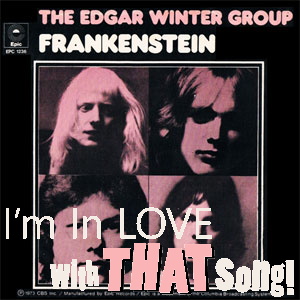
Frankenstein" (Edgar Winter) Copyright 1972 EMI Longitude Music
In our previous episode, we looked at the history of instrumental songs that topped the pop charts. For my money, there’s never been a more unlikely hit instrumental than the synth-infused, riff-heavy stomper that is Edgar Winter’s “Frankenstein”. This episode, we break down this instrumental classic featuring Edgar Winter on keyboards, sax and drums.
“Frankenstein” (Edgar Winter) Copyright 1972 EMI Longitude Music
— This show is part of the Pantheon podcast network — THE place for music junkies, geeks, nerds, diehards and fans!
The “Albums That Made Us” series continues as Brian Jacobs (Pods & Sods contributor, and one of the most thoughtful music-lovers I know) joins us with a look at two central albums that have grown with us over the years. The older we get, the better these albums get: “Shoot Out The Lights” by Richard & Linda Thompson, and Bob Dylan’s “Blood on The Tracks“.
— This show is just one of many great podcasts on the Pantheon Podcasts network. There’s something there for every rock fan!
"In the Meantime/Some Other Time" (Mike Gibbins, Joey Molland) Copyright 1974 WB Music Group ASCAP
Nothing came easy for Badfinger. Though they had success with their first few albums (all of them are must-have classics), they soon had a tough time, thanks to terrible management, record label indifference and bad timing. In 1974, worn-down & exhausted from the non-stop touring/recording/touring again grind, they dragged themselves into the studio… and, with help from producer Chris Thomas, made one of their best albums. Many fans say it IS their best. Unfortunately, few people heard it as it was withdrawn from stores shortly after its release, thanks to legal shenanigans. Things only got worse after that. But this record is a masterpiece; let’s celebrate it with a look at the song “In the Meantime/Some Other Time”.
“In the Meantime/Some Other Time” (Mike Gibbins, Joey Molland) Copyright 1974 WB Music Group ASCAP
Oh, I can’t live if living is without you friends– this is the “I’m In Love With That Song” podcast on the Pantheon Podcast Network. I’m your host, Brad Page, and this episode, we’re digging into a deep track back by Badfinger: “In The Meantime/Some Other Time”.
Most people, if they know Badfinger at all, it’s from their Beatlesque power pop hits like “Baby Blue”, “No Matter What”, “Come And Get It”, and “Day After Day”. We covered “Day After Day” on this show, way back in episode number nine. But Badfinger had a heavier side too, late in their career. After they had fallen off the pop charts, they released one of their best albums. And we’re going to listen to a track from that album, actually a blend of two songs called “In The Meantime/Some Other Time”.
Rock history is littered with artists who suffered bad management, financial disasters, misfortune and untimely death. But by any measure, the story of Badfinger may be the most tragic. It’s the one that breaks my heart the most. With Badfinger, everything that could go wrong did go wrong. And yet they managed to leave behind some incredible music.
The story of Badfinger begins in 1961 with a band called the Iveys. After years of paying their dues, in 1968 they signed to the new record label started by the Beatles, Apple Records. In fact, they were the first act signed to Apple. Pete Ham and Tom Evans on guitars, Ron Griffiths on bass and Mike Gibbons on drums, and all four members shared vocals. The Iveys recorded a couple of singles and an album, but they didn’t have much success. In 1969, Paul McCartney agreed to contribute three songs to the film “The Magic Christian”, starring Ringo Starr. McCartney had written one song for the film already, “Come And Get It”. And he offered that song to the Iveys. They recorded their version of it and it was featured in the film, along with two of their original songs. Before the songs were released, the band changed their name to Badfinger.
The first Badfinger album was issued in January 1970, and it included the three songs from the film, some other new material, and some tracks recycled from that previous Ivey’s album. After the release of that record, Ron Griffiths was pushed out of the band. Tom Evans switched to playing bass, and Joey Molland joined on guitars and vocals. This would be the classic Badfinger lineup. In November 1970, they released their next album, “No Dice”. “No Dice” is one of my favorite albums; it shows all the strengths of this band. All four members could write and all four members could sing. Pete Ham in particular was really coming into his own as a songwriter and singer during this period.
But 1970 also saw the band signing on with a new manager, Stan Polley. This turned out to be a bad move. Polley got them to sign a series of bad deals that would eventually cost the band everything. But the music kept getting better.
In May of 1971, they started work on their next album, and though they had to change producers three times before the album was done, “Straight Up” was released in December 1971, and it was their biggest success yet. “Straight Up” is universally considered a classic, and it spawned two big hits: “Day After Day,” which we talked about on the show before, and “Baby Blue”.
Unfortunately, in a case of one step forward and two steps back, they couldn’t capitalize on the success of the album, because Apple Records was falling apart. The Beatles had split, everyone was suing everybody else, and the cash dried up. Apple wasn’t able to promote the album. Whole situation was just a bummer.
But Badfinger was still under contract for one more album for Apple, so they recorded their last Apple album in 1972. They called that album “Ass”, as in “jackass”. But this time, the album was tied up in legal issues at Apple and it was put on hold. Stan Polley set them up with a new recording contract at Warner Brothers with a $3 million advance. Polley told them that they were all going to be millionaires, and it sounded great to them… unless you looked at the details. They were committed to do six albums in three years. That meant a new album every six months– a punishing schedule, and they had to pay to produce each of those albums out of that advance money. So after you deducted Polley ‘s cut as the manager, there was barely anything left for the band.
Six months after finishing the “Ass” album, they went back into the studio to make their first album for Warner Bros, simply titled “Badfinger”. That album was released in February 1974. But right before that album was released, Apple finally issued the “Ass” album, essentially putting two new Badfinger albums on sale at the same time… which confused everyone, including the buying public, which pretty much ensured that both albums were a commercial disappointment. Still, there were gigs to perform and contracts to fulfill, so after a US tour, the band headed back into the studio again, completely exhausted to work on another album. With no time to prepare new material, they barely had any finished songs, just a bunch of fragments and ideas. Thank God for producer Chris Thomas.
This would be Thomas’ third time working for Badfinger. He had produced the last two albums. He had also worked with the Beatles, Pink Floyd and Roxy Music. Chris Thomas knew what he was doing, so he sat down with the tired and dejected members of Badfinger and said, “the only way to beat this is to make the best album that anyone has ever made in the history of the world”. And damned if they didn’t come close.
Thomas worked with each band member to put the songs together. He asked them for any and every idea they could come up with. Partly inspired by side two of Abbey Road, he took different song ideas and worked out how to combine some of them. And that’s how we ended up with the song we’re going to listen to today. Drummer Mike Gibbons had an unfinished song called “In The Meantime. Guitarist Joey Molland had some fragments for a song he was calling “Some Other Time”. Producer Chris Thomas took those two ideas and found a way to blend them into one coherent song. It’s a masterful work of arranging.
Chris Thomas brought in Anne Odell to write string arrangements for some of the tracks, including this one. Odell created a dramatic crescendo to open.
Now we build to the first part of the song, Mike Gibbons contribution, “In The Meantime”. Pete Ham plays some nice lead guitar fills over an insistent piano part that’s filled with nervous energy. The vocal in this section is sung by Mike Gibbons.
Let’s stop to take a look at the music underneath the vocal here. The drums are doing a typical beat snare on the two and four. The bass is playing one note on each beat. The piano is playing two notes for every beat, twice as many as the bass. And then there’s a guitar hitting one chord every four beats. All of this mathematical playing gives the sense of an unrelenting movement forward, just like time itself. An unstoppable march forward like the ticking of a clock.
On top of that, the strings move in and out, swirling in the currents of time. Intricate little guitar part, before we return to the main section, Pete Ham on lead guitar. Now that guitar part returns to lead us to a new, much slower section.
Badfinger always had great vocal harmonies. Let’s see if we can bring those up in the mix a bit and listen to that again.
I love that arpeggiated guitar part there.
Nice little guitar part there, but it’s buried in the mix. Let’s listen to an alternative mix of this track where we can hear that a little clearer. There’s so much going on in this track, it’s easy for parts like that to get lost. This is one of those songs where every time you listen, you can hear something new.
There’s another variation of that guitar part in the background there.
Now the tempo rises and we’re introduced to a new section of the song. Listen for what sounds like castanets in the center, right. Such a great guitar. If there’s actually two guitars there, one playing a high part and one playing a lower part, that’s kind of hard to hear. Let’s bring both of those to the front section from earlier in the song.
Listen to how the strings embellish this section from earlier. You’ll hear a slight change in the guitar riff as we transition to the second part of the song.
Low in the mix there the backing vocals sing hold on echoing the lead vocal.
And here comes the big finale.
And some backwards guitar.
“In The Meantime/Some Other Time” by Badfinger.
The band released this song, along with eight other tracks, on an album called “Wish You Were Here”. Not to be confused with the Pink Floyd album of the same name, Badfinger’s “Wish You Were Here” was released in November 1974, and this album is a masterpiece.
But the Badfinger bad luck struck again. A large amount of cash that Warner Brothers had provided had gone missing. And Stan Polley was not responding. So, Warner Brothers sued the band’s management and then pulled the album out of the stores before it even had a chance to catch on. That just killed the album.
That was enough for Pete Ham. He quit the band. He eventually returned, but then Joey Molland quit, and they tried to make another album, but that wasn’t released.
By March 1975, all of their paychecks were bouncing, and Pete Ham was told that all his money was gone. On April 25, Tom Evans and Pete Ham went out for drinks. When Pete got home, he went out to his garage and hung himself. He was 27. He left a suicide note that read, “Stan Polley is a soulless bastard”.
The band eventually reformed and released a couple more albums that are pretty good, but just not the same without Pete Ham. There was conflict within the band, and at one point both Tom Evans and Joey Moland fronted two competing versions of Badfinger.
In November 1983, angry and frustrated, Tom Evans took his own life. He hung himself, too, just like Pete Ham. Two great singers, two brilliant songwriters and two good friends, both crushed by the heartlessness and cruelty of the business part of the music business.
Drummer Mike Gibbons went on to do quite a bit of studio work and released four solo albums. He died from a brain aneurysm in 2005.
Joey Moland is still out there. I saw him perform a set of Badfinger material a couple years ago. That was a great show. These songs, though, they carry the heavy weight of history. It’s hard to imagine a band with more heartbreak and tragedy than Badfinger. But the songs– the songs rise above it all. If you don’t have Badfinger’s “Wish You Were Here” album in your collection, go get it now. You will not be disappointed.
That’s it for this episode of the “I’m In Love With That Song” podcast. What’s your favorite Badfinger song? Visit our Facebook page to post your comments and feedback. Just search for the “I’m In Love With That Song” podcast and you’ll find us there. Or share on our website, lovethatsongpodcast.com.
We are part of the Pantheon Network of podcasts; check out some of their other shows when you get a chance.
Thanks again for listening to this episode on Badfinger and “In The Meantime/Some Other Time”. We’ll see you next time.
RESOURCES:
Badfinger https://en.wikipedia.org/wiki/Badfinger
Pete Ham: https://en.wikipedia.org/wiki/Pete_Ham
Apple Records https://www.applemusic.com
The Magic Christian (Film) https://www.imdb.com/title/tt0064622/
Paul McCartney https://www.paulmccartney.com
The Beatles https://www.thebeatles.com
Warner Brothers Records https://www.warnerrecords.com
Stan Polley: https://en.wikipedia.org/wiki/Stan_Polley
Chris Thomas (Producer) https://www.allmusic.com/artist/chris-thomas-mn0000775910
Anne Odell (String Arranger) https://www.discogs.com/artist/
"Kings And Queens" (Tom Hamilton, Joey Kramer, Steven Tyler, Brad Whitford and Jack Douglas) Copyright 1977 Daksel Music Corp. and Song And Dance Music Co. All rights administered by Unichappel Music, Inc.
Aerosmith was a band on the brink of self-destruction when they set up in an old convent to record their next album in 1977. But despite the tension, drug abuse and general bad behavior, they managed to lay down a few great tunes, including “Kings And Queens“. Let’s dig into this Aerosmith classic.
“Kings And Queens” (Tom Hamilton, Joey Kramer, Steven Tyler, Brad Whitford and Jack Douglas) Copyright 1977 Daksel Music Corp. and Song And Dance Music Co. All rights administered by Unichappel Music, Inc.
TRANSCRIPT:
Welcome, jesters, minstrels, and Knights of the Round Table. This is the “I’m In Love With That Song” podcast on the Pantheon Podcast Network. I’m your host, Brad Page, and on this episode, we’ll be traveling back through the mists of history to the time of “Kings And Queens” with Aerosmith.
Aerosmith and I have one small thing in common: I was born in New Hampshire and grew up in Massachusetts– and you could say the same thing for Aerosmith. The band members met around Lake Sunapee, a vacation area in New Hampshire where families from the Boston area, and as far away as from New York, would vacation for the summer. In the 1960’s, with all the teenagers in town just looking for something to do, the area became a place where a half-decent band could get steady gigs during the summer, and that’s where Joe Perry, Tom Hamilton, and Steven Tyler met. They eventually moved to Boston, Massachusetts, and over time, Joey Kramer and Brad Whitford joined the band, and that became the classic lineup of Aerosmith.
By 1977, Aerosmith was one of the biggest rock bands in the country. The days of struggling to make it, sharing a house together, and scrounging up enough cash just to get by– those days were over, but success brought with it a whole bunch of other problems, especially the drugs.
When Aerosmith began work on what would be their new album, the situation was not great. From the start, Joey Kramer, Tom Hamilton, and Brad Whitford had spent a month prior doing some pre-production, working up new material and some ideas. But Steven Tyler and Joe Perry were nowhere to be found. They never showed up.
Looking to try something different, to get out from the traditional studio into a different environment, the band rented an estate in New York, an isolated place in the mountains on 100 acres with a half mile long driveway. It was called The Cenacle. Built in the 1920s, it had been most recently used as a convent.
Tom, Brad, Joey, along with producer Jack Douglas, moved into the house, and eventually Joe and Steven showed up separately, and promptly disappeared into their rooms and didn’t come down for days. For the recording, Jack Douglas set up each band member in a different space in the house; Joey’s drums were set up in the chapel. Joe Perry’s guitar was recorded in a big walk-in fireplace, and Steven Tyler’s vocal booth was on the second floor. But not a lot of work was getting done. The days were spent shooting guns, driving their cars around the area at dangerous speeds, and just getting loaded. Cocaine and heroin were the drugs of choice.
The fractures were clear. Joey Tom and Brad, who did more than their share of partying, would still be able to pull it together enough in the evenings to work on recording, but Joe and Steven would rarely show up. Joe Perry was clearly dopesick. He’d work for a couple of hours and then disappear back to his room for days at a time. In later years, Joe Perry would describe this period as “we were drug addicts dabbling in music, rather than musicians dabbling in drugs”.
After six long weeks of recording at The Cenacle, the album was still unfinished, but the band packed up and headed home. On the way back to Boston, Joey Kramer crashed his Ferrari doing 135 on the highway, and shortly after Joe Perry crashed his Corvette. That’s what life was like for Aerosmith in the late seventies, like a series of car wrecks.
They would eventually finish the album at the record plant in between gigs. One of the songs that they worked on at the Cenacle and would finish later was “Kings And Queens”.
Now, most of the classic Aerosmith songs were written by Joe Perry and Steven Tyler, but “Kings And Queens” was written by Brad Whitford, Tom Hamilton and Joey Kramer. Later, Steven Tyler and Jack Douglas would come up with the lyrics together. So all five of them share writing credit. But it was really Whitford, Hamilton and Kramer that put the music together back at The Cenacle when Steven and Joe were nowhere to be found– Joe Perry is barely on the track at all.
So, let’s get into the song. It begins with the main riff: classic guitar, bass and drums.
Build into the first verse.
First, let’s look at Steven Tyler’s vocals here. I think he sounds great on this song. Some of his best work is when he’s singing lyrics that are on the darker side. He’s really able to nail that eerie, foreboding mood here.
This song doesn’t have a traditional song structure. There’s no chorus really. And this next line is one of the few times he actually uses the song title. It comes around at the end, but there it’s buried in the mix. This is the only time “Kings And Queens” is up-front in the mix.
Let’s take a listen to some of the other things going on in this track. The bass part couldn’t be more simple. It doesn’t sound like much on its own, but when you combine that with the drums, guitars and other parts, it creates the essential foundation for the feel of the song. Other bass players wouldn’t be able to resist the temptation to gussy up their part. But Tom Hamilton surrenders his ego for the benefit of the song. And as we’ll hear later on, he gets his moment to shine.
Besides the guitar, bass and drums, there’s some other instruments here too. Most interesting, I think, is the banjo, played by Paul Prestopino.
Now, one instrument I don’t associate with medieval England is the banjo, but they really make it work here. For those of you already familiar with this song, I wonder how many of you noticed the banjo before?
And notice they’ve added harmony vocals here.
Another instrument in the mix is a mandolin, played by producer Jack Douglas. It’s a little harder to hear in the mix, but you can kind of pick it out. Listen to the channel on the right.
At this point, the main riff returns and this time, they’ve added a screeching guitar part on top of it. It’s reminiscent of that classic soundtrack to the movie “Psycho”.
In concert, Joe Perry would play that part. I’m not sure who plays it on the recording. And if you listen closely, it sounds to me like Steven Tyler is also singing that note.
Check out this great drum fill by Joey Kramer. As the drum fill reaches a crescendo, a new element is added, a string section. The chord changes are also a little different.
In this next verse, let’s hear what one of Brad Whitford’s guitars is doing under this.
And if we take the guitars and the bass out of the mix, you can hear a little more clearly what the string section is doing.
Brad Whitford doubles Tyler’s vocal line there.
I love the way that guitar slides up into that riff.
That little pinging sound there, that’s Brad Whitford’s guitar. He’s doing some nice stuff that’s deep in the mix here. Let’s listen to some of that.
And now, here’s where things get even more interesting. Almost a little bit of Prog Rock, Aerosmith-style. I love this section.
The song breaks for an interlude that features the bass and a piano, which is an instrument we haven’t heard up until this point. Let’s just listen to Tom Hamilton’s bass part.
Now let’s go back and listen to the piano part. It’s Steven Tyler playing the piano here. Notice how it’s recorded. The high notes played with the right hand are in the right channel. The low notes played with the left hand are in the left channel.
You can hear how the low notes on the piano are duplicating exactly what the bass guitar is doing. By doubling those up, it really punches up both parts. They’re stronger together than each part playing individually. Let’s listen to the finished mix here.
Then the whole band comes in for a very ethereal solo section. Now, Joe Perry is lauded as the guitar hero in Aerosmith, but Brad Whitford is always overlooked and underrated. He may be overshadowed by Joe Perry’s rock stardom, but Whitford is every bit an equally talented player. It’s Whitford who takes the solo on this song. And it’s a great one.
Brad Whitford. That’s a great solo. It’s an interesting guitar sound too. A notched EQ tone. If I had to guess, I’d say he’s probably using a wah-wah pedal in a fixed position to get that tone. Something that David Bowie’s guitarist Mick Ronson used to do all the time. It’s what they call a “cocked wah” tone coming out of the guitar solo.
The band plays this cool little passage leading into the next section. After the guitar solo, we enter the final section of the song where Steven Tyler sings kind of a vocal round as the band churns away underneath.
And let’s take a closer look at the arrangement here, especially the layers of guitars. Here are the drums, vocals and at least two guitar tracks panned left and right.
And then we have these guitar tracks layered on top. Let’s bring everything back into the mix.
Aerosmith – “Kings And Queens”.
Steven Tyler said “the band comes up with the licks and then the music talks to me and tells me what it’s about.This one was just about how many people died from holy wars because of their beliefs or non-beliefs. With that one, my brain was back with the knights of the roundtable and all that.”
Well, thanks for joining me for this epic journey into a great song. We’ll be back in two weeks with another episode. Be sure to join me on Facebook, just look for the “I’m In Love With That Song” podcast, where you can keep up with what’s happening on the show. And if you’d like to leave a review or a comment on the show, head over to podchaser.com. Podchaser is the best place to leave your feedback. Of course, all our past episodes are available there and on our website, lovethatsongpodcast.com.
We are also just one of a bunch of amazing podcasts on the Pantheon Podcast Network. Whatever music you’re into, there’s more great podcasts for you on Pantheon, so check them out.
As I head back into my castle and pull up the drawbridge behind me, I’ll leave you with one last look at “Kings And Queens” by Aerosmith.
If you’re anything like me, after listening to a deep dive like this, you’ll want to hear the whole song again. So go buy the album or the CD, or the MP3 files and support the music you love.
After 50 years locked away in a vault, the world finally got to see and hear some of the abandoned footage from the Beatles “Let It Be” sessions. The new documentary “Get Back” gives us almost 8 hours of never-before seen film and an unprecedented look at The Beatles at work. It was worth the wait. On this Special Edition of the podcast, we’re joined by 3 of the biggest Beatle fans I know– Ken Mills, Craig Smith and Brian Jacobs— to discuss this fascinating look at the most important band in rock history.
— This show is one of many great music-related podcasts on the Pantheon network. You should check them out! And remember to follow this show, so you never miss an episode
"Sister Change" (Frank Marino) Copyright 1979 Daksel Music Corp BMI
When Frank Marino announced his retirement in 2021 due to a medical condition, his fans were shocked. “Tales Of The Unexpected”, indeed. So let’s take a few minutes to appreciate this great guitar player with a look at one of his funkiest tracks.
“Sister Change” (Frank Marino) Copyright 1979 Daksel Music Corp BMI
— This show is just one of many great Rock Podcasts on the Pantheon Podcasts network. Get ’em while they’re red hot!
Contains information related to marketing campaigns of the user. These are shared with Google AdWords / Google Ads when the Google Ads and Google Analytics accounts are linked together.
90 days
__utma
ID used to identify users and sessions
2 years after last activity
__utmt
Used to monitor number of Google Analytics server requests
10 minutes
__utmb
Used to distinguish new sessions and visits. This cookie is set when the GA.js javascript library is loaded and there is no existing __utmb cookie. The cookie is updated every time data is sent to the Google Analytics server.
30 minutes after last activity
__utmc
Used only with old Urchin versions of Google Analytics and not with GA.js. Was used to distinguish between new sessions and visits at the end of a session.
End of session (browser)
__utmz
Contains information about the traffic source or campaign that directed user to the website. The cookie is set when the GA.js javascript is loaded and updated when data is sent to the Google Anaytics server
6 months after last activity
__utmv
Contains custom information set by the web developer via the _setCustomVar method in Google Analytics. This cookie is updated every time new data is sent to the Google Analytics server.
2 years after last activity
__utmx
Used to determine whether a user is included in an A / B or Multivariate test.
18 months
_ga
ID used to identify users
2 years
_gali
Used by Google Analytics to determine which links on a page are being clicked
30 seconds
_ga_
ID used to identify users
2 years
_gid
ID used to identify users for 24 hours after last activity
24 hours
_gat
Used to monitor number of Google Analytics server requests when using Google Tag Manager
1 minute
Marketing cookies are used to follow visitors to websites. The intention is to show ads that are relevant and engaging to the individual user.
Facebook Pixel is a web analytics service that tracks and reports website traffic.

 Click here to play the episode