"Lonely Is The Night" (Billy Squier) Copyright 1981 Songs Of The Knight
It Came From Boston (Vol. 2): Local boy from Wellesley, MA pays his dues in & around Boston and New York; eventually becomes a solo artist and strikes gold on his 2nd solo album, Don’t Say No. “Lonely Is The Night” was the 2nd single and my favorite track from the album, so let’s have a listen to this classic track from the early ’80’s.
“Lonely Is The Night” (Billy Squier) Copyright 1981 Songs Of The Knight
— This show is part of the Pantheon network of music-related podcasts. Check out their other shows!
"X-Ray Spex" (Peter Sweval, Joe X. Dube, Michael Lee Smith, Brendan Harkin & Richie Ranno) Copyright 1978 Starzongo Music, Inc/Rock Steady Music, Inc/ASCAP
On this episode, we revisit the great ’70’s hard rock/power pop album Attention Shoppers! by Starz. “X-Ray Spex” is a blast of punky pop with some interesting use of studio effects. Turn it up!
“X-Ray Spex” (Peter Sweval, Joe X. Dube, Michael Lee Smith, Brendan Harkin & Richie Ranno) Copyright 1978 Starzongo Music, Inc/Rock Steady Music, Inc/ASCAP
"Just What I Needed" (Ric Ocasek) Copyright 1978 Lido Music, Inc.
It Came From Boston: 5 experienced musicians come together to make something new: keyboard whiz Greg Hawkes; the bassist with the killer voice, Benjamin Orr; drummer David Robinson from the legendary Modern Lovers; one of the tastiest guitarists in the business, Elliot Easton; and singer/songwiriter/guitarist & mastermind Ric Ocasek. Merging classic guitar rock with the burgeoning synth-pop sounds to bring New Wave to the masses, The Cars defined that sound for the late-70’s/Early ’80’s. It all started on local Boston radio with this song.
“Just What I Needed” (Ric Ocasek) Copyright 1978 Lido Music, Inc.
"Gimme Shelter" (Mick Jagger & Keith Richards) Copyright 1969 ABKCO Music Inc.
There’s no shortage of great songs in the Rolling Stones catalog, but “Gimme Shelter” may be the song that tops them all. Dark and foreboding as only the Stones can do, this track has all the hallmarks of the Rolling Stones at their best: iconic guitar riffs by Keef, Jagger at the top of his game, and the Watts/Wyman rhythm section doing what they do best (plus Nicky Hopkins on piano). But what pushes this one from merely brilliant into sublime is the vocal performance by Merry Clayton– for my money, one of the greatest moments on record. All together, this one belongs on the Mount Rushmore of Rock.
“Gimme Shelter” (Mick Jagger & Keith Richards) Copyright 1969 ABKCO Music Inc.
TRANSCRIPT:
We all need someone we can lean on, and if you want it, you can lean on the “I’m In Love With That Song” podcast. I’m Brad Page, your host, and each episode, I pick one of my favorite songs and we listen to it together– uncovering the elements that make it a great song. Maybe you’re a musician or a music lover, or just a casual fan; we all get to be musical explorers on this show, discovering something new each time we listen.
On the previous episode of this podcast, we talked about The Beatles, so I think it’s only fair that this time we tackle The Rolling Stones and one of their greatest moments on record: “Gimme Shelter.”
(Music)
1969 was a rough year for the Rolling Stones. They fired Brian Jones in June, and one month later he was dead. Mick Jagger’s relationship with Marianne Faithful took a turn for the worse when she attempted suicide with an overdose on sleeping pills that left her in a coma for a week. Earlier in the year, Jagger had an affair with Keith Richards’ girlfriend, Anita Pallenberg, and I’m sure that didn’t help Mick and Keith’s relationship.
The band was anxious to get out of their agreement with their manager, Allen Klein, and then in December of ‘69, the Stones were at the center of the disastrous concert in Altamont, California, where four people died, including Meredith Hunter, who was stabbed to death.
There was one upside, though, to 1969 for the Stones. It was the year they released the album, Let it Bleed. A masterpiece that’s a nearly perfect album, chock full of some of the Rolling Stones’ best work. The album opens with the apocalyptic “Gimme Shelter”.
The song was largely composed by Keith Richards in the apartment of Robert Fraser, where Keith was living with his girlfriend, Anita Pallenberg. “Gimme Shelter” is the first song on the album, so both the song and the album open with the sound of Keith Richards’ guitar. Keith plays all of the guitars on this song. This was recorded after they had fired Brian Jones, but before they hired his replacement, Mick Taylor, so Keith handled all the guitar parts on this song.
His guitar comes in softly, like someone tiptoeing in the dark, afraid of what might be waiting for them in the darkness.
(Music)
If you listen to Keith Richards’ guitar part, you’ll notice that there’s a subtle, but significant, change in what he plays during the intro. He starts by playing the part like this.
(Music)
But after a couple of times around, a few passes through the changes, he adds a few more notes, part gets a little bit more complex.
(Music)
By constantly tweaking the part, evolving it every few iterations, it’s a subtle but effective way of keeping it fresh throughout the song. So let’s pick it up where we left off, with the introduction.
(Music)
Here’s what we’ve got so far. The rhythm guitar, which I believe he’s playing in open E tuning, with a lot of reverb on it, and also a tremolo effect.
(Music)
The drums also come in, but they’re holding back a bit, and there’s a lead guitar part that’s added.
(Music)
It’s a very simple part when you hear it on its own, but it’s so effective when you hear it in the mix.
(Music)
There’s also some percussion, and a female vocal off in the distance.
(Music)
The bass comes in here as well, and he’s only playing one note.
(Music)
Some deep and ominous piano chords played by Nicky Hopkins.
(Music)
The drums come in with a beat, and we head into the first verse.
On this song, Keith was using guitar amplifiers made by a company called Triumph, and they discovered that if you got these amps to overheat, on the verge of burning out, they produced this fantastic guitar sound. The amps had lights along the top that would start to dim as the amplifiers overheated, so they would watch those lights to gauge when the amps were ready to be recorded.
(Music)
In the first verse, Mick sings about a storm that’s brewing. When Keith came up with the song, sitting in that apartment, he was watching out the window at people scurrying to get out of a rainstorm, so that’s where the idea of the storm came from, but the song evolved to become about so much more.
(Music)
“Gimme Shelter” features one of Mick Jagger’s all-time greatest vocal performances. Let’s listen to the vocal track for this verse.
(Music) Oh, a storm is threat’ning My very life today If I don’t get some shelter Oh, yeah, I’m gonna fade away
Here’s the first chorus: “War, children, it’s just a shot away.” I think that resonates more now than it did in ‘69.
(Music)
Originally, the Stones planned to release two albums in 1969, but with the end of the year approaching, and a U.S. tour starting on November 7th, they barely had time to finish one album. They were out of time. Most of the album, including the tracks for “Gimme Shelter”, had been recorded in England, but now with the U.S. tour looming, they moved to a recording studio in Los Angeles for the final stages of recording.
One of the last things to be recorded were the backing vocals for “Gimme Shelter”. Mick Jagger asked the recording engineer, Bruce Botnick, if he knew any singers, and Bruce recommended Merry Clayton. That’s Merry, m-e-r-r-y, not Mary. On some pressings of the album, they misspelled her name as Mary.
Merry Clayton’s vocals are so crucial to this song. We’re going to focus on them a lot as we listen to this song. Here’s the second verse.
(Music)
They’re using that tried-and-true vocal arrangement technique of: first line – lead vocal by itself; second line – backing vocal joins in; third line – lead vocal by itself again; and the fourth line – the backing vocal joins in once more. You’ve heard this a million times in a million songs, but it’s super effective.
(Music) Ooh, see the fire is sweepin’ Ooh, our very street today Burn a red tool carpet, mad bull lost his way
Let’s listen to what the lead guitar and the piano are doing behind that verse. Nicky Hopkins’ piano is mixed pretty far down, it’s hard to hear in the final mix, but it’s a really driving part.
(Music)
All right. Let’s hear that second chorus.
(Music) Oh, oh, oh, child It’s just a shot away It’s just a shot away Oh, oh, oh, child It’s just a shot away It’s just a shot away Yeah!
Mick Jagger plays some great blues harp harmonica on this track. That gritty, distorted sound was produced by playing the harmonica into a microphone plugged into a Dynacord tape loop machine, and then overdriving that amp. Then they run it through some studio limiters to compress it, and squeeze it, to get that really intense sound.
(Music)
Nice little guitar solo from Keith Richards. Remember, he’s playing all the guitars on this track.
(Music)
Now, they let Merry Clayton step to the front for what I think is one of the greatest vocal performances ever recorded.
When they called Merry Clayton to come down to the studio that night, it was late, and she was very pregnant. She was getting ready for bed, she had curlers in her hair. They get her on the phone and say, “We need you to come down to the studio and do some vocals,” so she goes down to the studio, with her silk pajamas on and a scarf around her head. She did one take, and it was great. Mick Jagger said, “Do you want to have another go?”, and she said, “Sure, I’ll do a second take.”, and in her head, she says to herself, “I am going to blow them out of this room.”, and so she sang this part.
(Music) Rape, murder! It’s just a shot away! It’s just a shot away! Rape, murder! It’s just a shot away! It’s just a shot away! Rape, murder! It’s just a shot away! It’s just a shot away! Yeah, yeah, yeah!
Listen to how her vocals get more intense each time around. Let’s listen to just her vocal track. Listen to how each time she sings the chorus, she pushes her voice harder, until it starts to crack. This is raw emotion. Rape, murder, you can feel the weight of those words in this performance.
(Music) Rape, murder! It’s just a shot away! It’s just a shot away! Rape, murder! It’s just a shot away! It’s just a shot away! Rape, murder! It’s just a shot away! It’s just a shot away! Yeah, yeah, yeah!
I want to go back and play that last chorus when Merry hits the word “murder” with such intensity that her voice cracks for the second time, and you can hear Mick Jagger let out a “whoo”. He, he clearly can’t help himself, she’s so good. And then at the end of the line, as she finishes, you can hear another “whoa!” from someone in the studio. They are clearly blown away. Can you imagine standing next to Merry Clayton as she’s singing this part?
(Music) Rape, murder! It’s just a shot away! It’s just a shot away! Rape, murder! It’s just a shot away! It’s just a shot away! Yeah, yeah, yeah!
Remember, this is Merry Clayton in the middle of the night, pregnant in her pajamas, singing a song that she’s never heard before, with a band she’s never met. This is among the most thrilling 30 seconds of music you will ever hear in your life.
(Music) Rape, murder! It’s just a shot away! It’s just a shot away! Rape, murder! It’s just a shot away! It’s just a shot away! Rape, murder! It’s just a shot away! It’s just a shot away! Yeah, yeah, yeah! The third and final verse.
(Music) Flood is threat’ning My very life today Gimme, gimme shelter Or I’m gonna fade away (Singing with enthusiasm)
This dark song ends on a more hopeful note as Mick and Merry tell us that “love is only a kiss away.”
(Music) I tell you love, sister It’s just a kiss away It’s just a kiss away It’s just a kiss away It’s just a kiss away It’s just a kiss away It’s just a kiss away It’s just a kiss away Yeah!
“Gimme Shelter” by the Rolling Stones. Epic!
The legendary music critic, Greil Marcus, said “Gimme Shelter may well be the greatest single rock and roll performance.”
There’s a documentary called 20 Feet from Stardom about the lives and careers of background singers. It includes some of the greatest backing vocalists of all time, including a great segment on Merry Clayton. It’s a fantastic documentary. If you’ve never seen it, go watch it, right now. I’m not kidding– do it.
I’d also like to acknowledge a book by Sean Egan, called Rolling Stones and the Making of Let it Bleed. It’s part of the Vinyl Frontiers book series, and I used that for quite a bit of research on this episode, so thank you, Sean Egan.
To learn more about the show, check out our Facebook page, and to hear more episodes of the podcast, just search for the “I’m In Love With That Song” podcast. And please, post a review for the show. The more five-star reviews we get, the easier it becomes for more people to find the show, so I really appreciate your reviews and your comments.
I’ll be back in two weeks with another episode. Until then, thanks again for listening to the Rolling Stones and “Gimme Shelter”.
(Music)
Go listen to the whole song by downloading it, or buying it, or streaming it from your favorite source of legit music. Always support the music that you love!
“Rain” was the first glimpse of The Beatles exploration of psychedelia. Perhaps more than any other Beatles track, this song highlights the rhythm section with brilliant performances by Ringo Starr and Paul McCartney. Add Lennon’s lyrics and great vocals, and you’ve got one of the best songs to come out of the trippy, mind-expanding ’60’s. On this episode, we take a closer look at the individual performances and studio trickery– backwards, forwards, sped up & slowed down– that went into this classic track.
"Autumn Almanac" (Ray Davies) Copyright 1967 Davray Music Ltd. Carlin Music Corp.
The Kinks earned their place in Rock History on the basis of “You
Really Got Me”, “All Day & All Of The Night”, and “Where Have All
The Good Times Gone” alone. But it didn’t take long for Ray Davies to
stretch out beyond riff-driven, teenage anthems to write songs that
could only have come from his imagination. “Autumn Almanac” is one of
the first Kinks songs to show Davies reaching for a whole new level of
songwriting– both musically and his interest in writing about
characters, which would become the focus of his songwriting over the
ensuing years.
“Autumn Almanac” (Ray Davies) Copyright 1967 Davray Music Ltd. Carlin Music Corp.
"Owner Of A Lonely Heart" (Trevor Rabin, Jon Anderson, Trevor Horn & Chris Squire) Copyright 1983 Carlin Music Corp, Unforgettable Songs And Affirmative Music
Few bands have changed their sound as drastically as Yes did on their 90125 album, a radical departure from their previous progressive rock style. But it ended up giving them their one & only #1 hit, “Owner Of A Lonely Heart”. In this episode, we follow the song’s evolution from Trevor Rabin’s solo demo to the final production, including its innovative production techniques (such as being one of the first rock songs to use samples). This was the most challenging episode I’ve done yet, but I think it was worth it. If you enjoyed it, share it with your friends!
“Owner Of A Lonely Heart” (Trevor Rabin, Jon Anderson, Trevor Horn & Chris Squire) Copyright 1983 Carlin Music Corp, Unforgettable Songs And Affirmative Music
"Space Oddity" (David Bowie) Copyright 1969 Onward Music Limited
50 years ago today — July 16, 1969 — Apollo 11 was launched and
human beings first stepped on the moon. Let’s celebrate that occasion
with the most famous song about space travel: David Bowie’s “Space
Oddity”, a song that exploits our fear and wonder of the final
frontier.
In lesser hands, this track could’ve been nothing more than a goofy,
one-joke song for the Dr. Demento crowd, but the clever songwriting,
brilliant production and a vocal performance that captures Bowie’s
innate other-worldly, alienated style makes this track so much more than
a novelty song.
“Space Oddity” (David Bowie) Copyright 1969 Onward Music Limited
TRANSCRIPT:
Take your protein pills and put your helmet on– it’s time for the “I’m In Love With That Song” podcast. On July 16, 1969–50 years ago today– NASA launched Apollo 11 and humans set foot on the moon for the first time. For the 50-year anniversary of one of the greatest achievements of our species, let’s listen to the most famous song about space travel, David Bowie’s “Space Oddity”.
My name is Brad Page, and what I try to do on each episode of this podcast is to get inside of a great song, to listen closely and uncover the elements that make a song work. We don’t get into music theory here, so you don’t have to be a musician to enjoy this podcast. We’re focusing on the performances, the arrangement, and the production choices that make a song great.
“Space Oddity” was released on July 11, 1969, five days before the launch of Apollo 11. The story of an astronaut marooned in space was always a common science fiction trope, explored in countless Sci-Fi novels, short stories, and films. “2001 A Space Odyssey” was obviously a major influence on this song. Clearly the source for the song title, “Space Oddity”.
Left alone, Major Tom drifting in space, the song is a meditation on alienation and isolation. Though Bowie is credited as the sole songwriter on this track, he was working with a musical partner named John Hutchinson at the time, and you can detect some of Hutchinson’s influence in the composition of this track. In fact, when the song was first recorded in February of 1969, it was a duet between Bowie and Hutchinson, with Hutchinson portraying the ground control parts, while Bowie played the role of Major Tom in space. Here’s a sample of that original version.
That’s Hutchinson on the lead vocal, with Bowie providing the harmony.
By April of ‘69, Hutchinson had left, and Bowie was back to being a solo act. He signed a record deal with Phillips Mercury Records in June, and the song was re-recorded as the version we know today. Bowie had been working with producer Tony Visconti, who would eventually produce many of Bowie’s classic albums. He was producing this album for Bowie, but Visconti declined to work on the song “Space Oddity” because he thought it was a lame novelty song. So, a producer named Gus Dudgeon was brought in to produce just this one song, and he did a brilliant job. By the way, Visconti would eventually regret that decision.
Dudgeon mapped out the song on paper. Since he couldn’t read music, he used color-coded sections to indicate where certain instruments or the string section would come in. Paul Buckmaster created the actual string arrangement, translating Dudgeon’s color-coded pages into actual string charts for the orchestral musicians.
Bowie plays acoustic guitar on the track, along with Herbie Flowers on bass, Mick Wayne on electric guitar, Terry Cox on drums, and Rick Wakeman on Mellotron. Wakeman would go on to become one of rock’s greatest keyboard players with Yes, but at this time he was relatively unknown.
The song begins with Bowie’s acoustic guitar, I believe it’s a twelve-string, slowly fading in, primarily in the right channel. The bass will slide down from a high note. Then we get some militaristic snare drums and harmonics played by the electric guitar. Bowie also plays an instrument called the Stylophone on this track. Invented in 1967, the stylophone is a tiny keyboard that you play with a stylus. It was primarily sold as a children’s toy. And it sounds like this.
Let’s remove the bass, drums and guitar so you can hear the stylophone more clearly.
They’ve added a harmony vocal along with that lead vocal. And now we’re going to hear a voice in the background doing the countdown as we approach liftoff.
Notice how the lead vocal shifted to the right channel.
Now we’ve reached liftoff, and we get the sense of taking flight as the instruments climb in pitch. I’m sure this section was inspired by the middle of “A Day In The Life” by The Beatles.
Let’s listen to what some of the individual tracks are doing in this section. Check out the guitar part. I bet he’s using a bottleneck slide here to get that sound. This is also the first point in the song where the string section comes in. So let’s hear what they’re playing in this party.
Pure Bowie. The line about Major Tom making the grade and the papers all wanting to know whose shirts he wears. Bowie was always keenly aware of the power of advertising and the influence of media. As we play that part back, notice how the string section has been replaced by the Mellotron, which is emulating the sound of a string section. In essence, we’ve replaced a real human orchestra with an artificial reproduction. As we move further into space, we leave humanity behind.
I also want to listen to the bass guitar part behind the second verse. Because Herbie Flowers is doing some great stuff on the bass here. At this point in the second verse, the perspective changes from ground control to Major Tom. And we begin to see things from his point of view.
I always like how he says the word “peculiar” there.
This is the bridge, and it shifts to a different feel here. These chord changes, in conjunction with the arrangement, really give you the feeling of floating freely, untethered. It’s almost disorienting in a way.
Let’s have a closer listen to some of these parts. Here’s the vocals with the strings. And this time it’s the Mellotron. That’s replaced by the orchestra as soon as we hit the first chord of the bridge.
Now let’s hear what the bass and drums are doing during the bridge. That is some pretty cool stuff. As we come out of the bridge, there’s a break for an acoustic guitar part. Which leads into the guitar solo.
Hand claps. That’s Mick Ronson on the guitar solo. The guitar solo ends in dramatic fashion. And we’re into the third verse.
That’s my favorite line in the whole song. I think it’s the most human moment in the song.
You can really hear the stylophone there, too. I really like those little guitar touches there, those chords. Let’s see if we can listen to those. And there’s the stylophone. Sounds like it’s tapping out Morse code. Okay, let’s go back and listen to that in context.
This time there’s a seamless transition between the verse and the bridge.
The acoustic guitar break returns one last time before the final long fade. The solo is kind of buried in the mix, so let’s just listen to that for a bite.
Major Tom drifts off into the void, and the song follows him.
David Bowie – “Space Oddity”
“Space Oddity” peaked at number 5 on the British charts, making it his first top ten hit. But it wasn’t a hit in America until 1972. Major Tom was also Bowie’s first successful mythic character, years before Ziggy Stardust or the Thin White Duke.
David Bowie, always contradictory, even about his own work, said he wanted “Space Oddity” to be the first anthem on the moon. But in the same interview, he also said the song was an antidote to “space fever”.
I was five years old when Apollo 11 landed on the moon. “Space fever” was a real thing. Everyone was caught up in the excitement. It was like the complete opposite of September 11. The country, the whole world really, was united by hope and what we could do together. For that brief time, it seemed like anything was possible.
Thanks again for sharing your time and listening to the podcast. Please join me again soon. There’s another “I’m In Love With That Song” podcast right around the corner. In the meantime, you can email me at lovethatsongpodcast@gmail.com. Or find the podcast on Facebook– just search for the “I’m In Love With That Song” podcast.
And please, it really helps the podcast if you leave a review on iTunes, Facebook, or wherever you listen to the show. So thanks.
Let’s celebrate the 50th anniversary of man’s first journey to the moon with David Bowie and “Space Oddity”.
To listen to the song again, complete and uninterrupted, stream it, download it, or buy it and support the music you love.
RESOURCES:
NASA https://www.nasa.gov
2001: A Space Odyssey https://www.imdb.com/title/tt0062622/
"Station To Station" (David Bowie) Copyright 1976 EMI Publishing Ltd., Tintoretto Music and Moth Music
Among the many high points in David Bowie’s catalog, “Station To Station” stands as one of his most epic compositions. Written when Bowie’s life was at its most fractured point– having split with his longtime manager, suffering from cocaine psychosis and obsessed with the occult, “Station To Station” transcends the insanity to become one of his most monumental works.
This episode, we’re taking a deep dive into the live version of “Station To Station” from the 1978 Isolar II Tour, as captured on the Stage live album featuring brilliant guitar work from Adrian Belew.
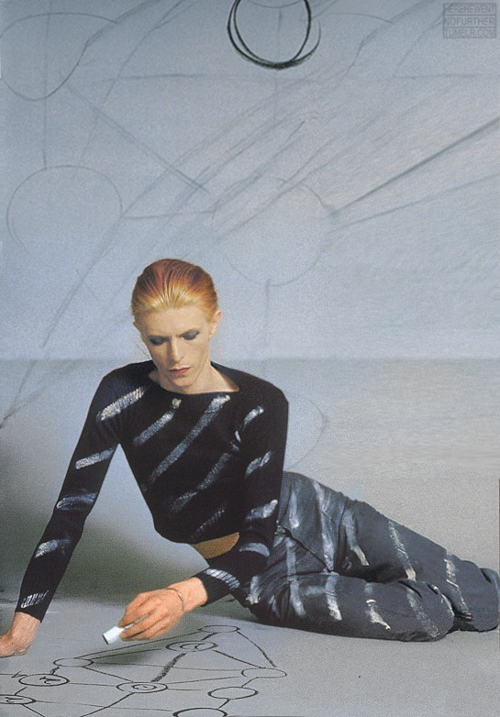
David Bowie, circa 1976, drawing the Tree Of Life, a mystical diagram referred to in “Station To Station”
"Little Lamb Dragonfly" (Paul & Linda McCartney) Copyright 1973 Administered by MPL Communications Limited
Another overlooked song in the McCartney catalog, “Little Lamb Dragonfly” is an emotional piece, composed of 3 sections in different keys that effortlessly moves between each segment. A wistful, haunting song about loss and the struggle to accept it. How does this song affect you? Let me know– write a review, post on Facebook, and share this episode with your friends.
“Little Lamb Dragonfly” (Paul & Linda McCartney) Copyright 1973 Administered by MPL Communications Limited
Contains information related to marketing campaigns of the user. These are shared with Google AdWords / Google Ads when the Google Ads and Google Analytics accounts are linked together.
90 days
__utma
ID used to identify users and sessions
2 years after last activity
__utmt
Used to monitor number of Google Analytics server requests
10 minutes
__utmb
Used to distinguish new sessions and visits. This cookie is set when the GA.js javascript library is loaded and there is no existing __utmb cookie. The cookie is updated every time data is sent to the Google Analytics server.
30 minutes after last activity
__utmc
Used only with old Urchin versions of Google Analytics and not with GA.js. Was used to distinguish between new sessions and visits at the end of a session.
End of session (browser)
__utmz
Contains information about the traffic source or campaign that directed user to the website. The cookie is set when the GA.js javascript is loaded and updated when data is sent to the Google Anaytics server
6 months after last activity
__utmv
Contains custom information set by the web developer via the _setCustomVar method in Google Analytics. This cookie is updated every time new data is sent to the Google Analytics server.
2 years after last activity
__utmx
Used to determine whether a user is included in an A / B or Multivariate test.
18 months
_ga
ID used to identify users
2 years
_gali
Used by Google Analytics to determine which links on a page are being clicked
30 seconds
_ga_
ID used to identify users
2 years
_gid
ID used to identify users for 24 hours after last activity
24 hours
_gat
Used to monitor number of Google Analytics server requests when using Google Tag Manager
1 minute
Marketing cookies are used to follow visitors to websites. The intention is to show ads that are relevant and engaging to the individual user.
Facebook Pixel is a web analytics service that tracks and reports website traffic.
 Click here to play the episode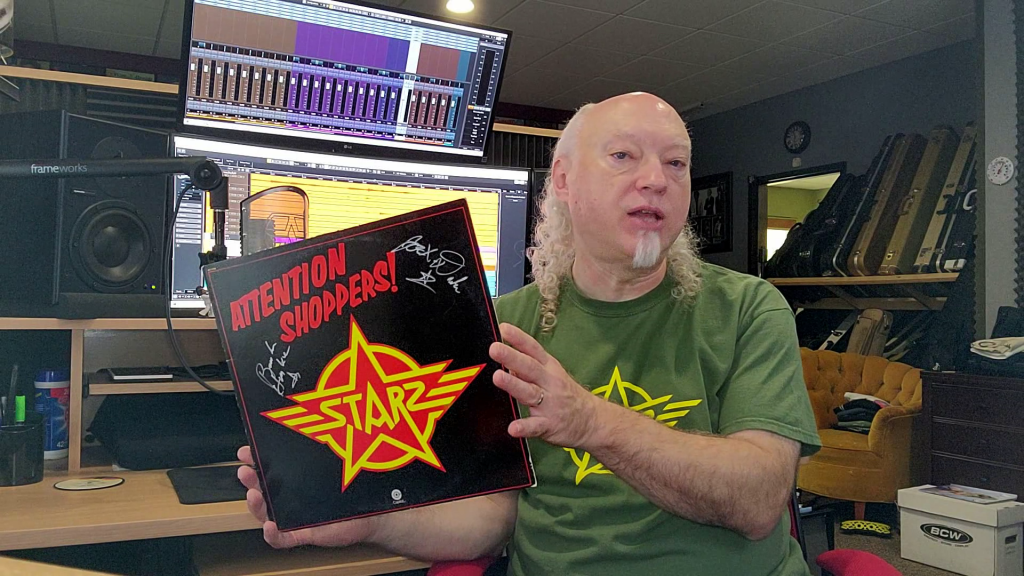
 Click here to play the podcast