Inspired by Andrew Grant Jackson's book, "1965: The Most Revolutionary Year In Music"
For the 50th episode of the podcast, we’re mixing it up a bit. I just finished reading a fascinating book by Andrew Grant Jackson where he lays out his opinion that 1965 was “The Most Revolutionary Year In Music”. Let’s have a listen to some of the sounds from ’65 and see if we agree. The Beatles, the Stones, the Byrds, James Brown, Marvin Gaye, Motown… it’s all here in 1965.
— This show is just one of many great music-related podcasts on the Pantheon network. Check them all out!
"Airscape" (Robyn Hitchcock) Copyright 1986 August 23rd/Bug Music
A Robyn Hitchcock song is so unique, it could only come from the mind of Robyn Hitchcock. From his first recordings with The Soft Boys in the ’70’s through to his solo work today, Robyn is a singular artist with a vision all his own. This is a track from my favorite Hitchcock album, Element Of Light.
“Airscape” (Robyn Hitchcock) Copyright 1986 August 23rd/Bug Music
As mentioned during the podcast – the Glass Harmonica:
"In Every Dream Home A Heartache" (Bryan Ferry) Copyright 1973 Careers-BMG Music Publishing (BMI)
Wealth and excess go together; emptiness and detachment are right around the corner. This song delves into all of that, along with a particular obsession. What do you do when money no longer buys you a thrill? Bryan Ferry has some thoughts…
NOTE: Though there’s no profanity used in this episode, the discussion does involve sexual activities so be warned… you might wanna listen to this one on headphones.
“In Every Dream Home A Heartache” (Bryan Ferry) Copyright 1973 Careers-BMG Music Publishing (BMI)
This podcast makes multiple references to Marie-Hélène de Rothschild’s “Surrealist Ball”. More details on the infamous event here, if you’re interested:
Guy de Rothschild and Marie-Hélène de Rothschild at the Surrealist Ball, Dec. 12, 1972 (Image courtesy of Legendary Parties by Prince Jean-Louis De Faucigny-Lucinge)
The song as used in the opening scene of “Mindhunter” Season 2, Episode 1 on Netflix:
The “I’m In Love With That Song” Podcast just one of many great music-related shows on the Pantheon network. Check them all out!
"Subdivisions" (Music by Geddy Lee & Alex Lifeson, Words by Neil Peart) Copyright 1982 Core Music Publishing
To say Rush has a devoted fan base would be an understatement. I know, because I was a card-carrying member of the “Rush Backstage Fan Club” back in the ’80’s. Perhaps no Rush song connected so directly with their fans as “Subdivisions”. On this episode, we celebrate Neil Peart with a deeper look at this fan favorite.
“Subdivisions” (Music by Geddy Lee & Alex Lifeson, Words by Neil Peart) Copyright 1982 Core Music Publishing
TRANSCRIPT:
Welcome to the “I’m In Love With That Song” podcast. Hold your fire, check your vital signs, and listen to the mystic rhythms as we celebrate one of the greatest bands of all time with an exploration of “Subdivisions” by Rush.
I’m your host, Brad Page, and together on this podcast we listen to one of my favorite songs, uncovering all the elements that make it a great song. You don’t have to be a musician or know anything about music theory to enjoy this show. We don’t get into a lot of that technical stuff here. This show is for anyone who loves music. So, let’s have a listen to one of my favorite bands, Rush, with “Subdivisions”.
(Music)
I’m recording this episode on January 12th, 2020. Just a few days ago, on January 7th, we lost Rush’s drummer and lyricist, Neil Peart. He died after a long bout with brain cancer. There are many fans, musicians and fellow drummers who believed that Neil Peart was the greatest drummer in history. Not just as a rock drummer, but across all musical genres, the greatest drummer ever, period. But he was also one of my favorite lyric writers. He wrote fantasy and sci-fi epics for those early Rush records, but his lyrics became more personal and meaningful as the years went on.
So let’s celebrate Neil and his bandmates, who are no musical slouches either, with a song that shows all of their brilliant musicianship, along with one of Neil’s most powerful lyrics that spoke directly about the lives of his millions of fans. After many years of slowly building an audience, in 1981, Rush released their eighth studio album, Moving Pictures, which would become their biggest selling album. After a massive world tour and a live album that followed, all eyes were on guitarist Alex Lifeson, bassist-vocalist Geddy Lee, and drummer Neil Peart. What would they do for album number nine?
There was a year and a half gap between Moving Pictures and the next album. Doesn’t seem like that much today, but a break that long was pretty uncommon back in those days. Rush’s sound had steadily evolved over each album, and this next record was going to follow in that tradition.
When the album, called Signals was released in September 1982, it was perhaps their biggest change yet. Back in 1977, Geddy Lee had started playing keyboards along with his bass guitar, but on Signals, the keyboards had moved from being just an added spice to now being one of the main ingredients.
They were also avid listeners of new wave bands, and they incorporated a lot of those sounds into their sound. The reggae-tinged sounds of the Police were a particular big influence, and you can hear a lot of that on the Signals album. One thing that was missing from Signals was the epic length, long song. Signals was the first Rush album where none of the tracks passed the seven-minute mark.
“Subdivisions” is the song that opens the album. It was one of the first songs written for the record. Music by Geddy Lee and Alex Lifeson, lyrics by Neil Peart. The song opens with a synthesizer played by Geddy Lee. This intro is in 7/4 time, which would be thought of as an odd time signature. Most popular music has four beats per measure, or maybe three beats per measure if you’re talking about a waltz. But here, there’s seven beats per measure. Let’s count it out.
(Music) 1 2 3 4 5 6 7, 1 2 3 4 5 6 7
What’s kind of cool about this intro is that even though it’s in an odd time signature, they play it in a way that feels completely natural, so even the most rhythmically challenged among us can tap your foot to it and not even notice the odd time.
(Music) Now, after six measures of 7/4 time, they switch to a traditional 4/4 time, or four beats per measure. See if you can feel the change. Don’t count it, just see if you can feel that shift in the groove.
(Music) With this chord change, the sound gets bigger.
(Music) Here, the guitar and keyboards play quick alternating chords.
(Music) We’re going to pay close attention to these lyrics because this was some of Neil’s most effective and affecting songwriting.
The first verse: “Sprawling on the fringes of the city, in geometric order An insulated border in between the bright lights and the far, unlit unknown.”
(Music) Sprawling on the fringes of the city In geometric order An insulated border Between the bright lights and the far unlit unknown
Usually laid out in cookie-cutter developments, or geometric order, the suburbs sit between the urban and the rural areas, insulated from both.
The next lines: “Growing up it all seems so one-sided, opinions all provided The future pre-decided, detached and subdivided in the mass production zone.”
(Music) Growing up, it all seemed so one-sided Opinions all provided The future pre-decided Detached and sub-divided In the mass production zone
The uniformity, the pressure to conform, to live up to somebody else’s definition of success, go to work, go to college. That’s how it felt when I was a kid in school, I’m sure kids feel the same today. Neil’s setting the table here for the line that follows.
(Music) Nowhere is the dreamer or the misfit so alone
“Nowhere is the dreamer or the misfit so alone.” I believe that most great songs have one key line or phrase that captures the essence of the song in that one expression, and this is it. With this one line, Neil encapsulated how millions of kids felt. If you were a Rush fan back in those days, you weren’t exactly swimming with the tide. With this song, Rush created an anthem for every intelligent, creative kid who felt stifled, misunderstood, and alone.
(Music) Nowhere is the dreamer or the misfit so alone
This leads us into the chorus, and Geddy plays a smokin’ little bass lick here.
(Music)
Let’s hear just that bass part.
(Music) It’s worth noting that up until this point, all the bass parts have actually been played on keyboards, not on a bass guitar.
(Music) It’s only at this point that an actual bass guitar comes in, and boy, does it make its presence known with that lick.
(Music) ah yes, the clicks, the gangs, the in-crowds, the mean girls, call them what you will. The chorus goes: “Subdivisions, in the high school halls, in the shopping malls Conform or be cast out Subdivisions, in the basement bars, in the backs of cars Be cool or be cast out”
Man, how many of us can relate to that? Brings you right back with those feelings of high school anxiety.
(Music)
“And the escape might help to smooth the unattractive truth But the suburbs have no charms to soothe the restless dreams of youth”
Once again, the bass guitar is replaced by the bass keyboards while Geddy plays a melodic synthesizer part over the top.
(Music)
This far, we’ve been focusing mostly on the lyrics, but let’s listen to some of the musical parts that are happening here.
(Music)
Here’s Alex’s guitar part for this section. He’s doubled or tripled the same part with different guitar tones. You can hear at least one clean guitar in there, along with the distorted guitar. Overdubbing the same part multiple times with different tones is a great way to thicken up a part.
(Music)
And let’s hear what the master was playing on the drums here.
(Music) Check out that intricate work on the symbol.
(Music)
This is a great little drum fill.
(Music) Let’s back up a bit and play into the second verse.
(Music) Drawn like moths we drift into the city The timeless old attraction Cruising for the action Lit up like a firefly Just to feel the living night
Okay, let’s take a closer look at this verse. One thing that surprised me is that when you strip away the keyboards and just listen to the guitar and drums, there’s almost a punky feel to it.
(Music)
They’re also doing some subtle time signature changes during the verse. The first two lines are four beats per measure.
(Music)
1 2 3 4, 1 2 3 4 Then it changes to seven beats per measure here.
(Music) 1 2 3 4 5 6 7, 1 2 3 4 5 6 7 And then back to four beats per measure here.
(Music) Just to feel the living night
Let’s listen in on those drums again.
(Music) Somewhere out on the memory of lighted streets on And here comes another great bass part.
(Music) The chorus is in yet another time signature: 6/4, or six beats per measure. (Music) 1 2 3 4 5 6 1 2 3 4 5 6 I think it’s really brilliant how they mix these different time signatures throughout the song, and yet it seems to flow so naturally. It’s not herky-jerky at all. It’s really clever.
(Music) And let’s listen to what Alex is doing during the chorus. This is a great example of how he works with chords.
(Music)
And here’s Alex’s guitar solo. Let’s listen to it by itself first.
(Music)
And here it is in context with the rest of the song.
(Music)
And behind the solo, Neil and Geddy are really working it. Let’s listen to the bass and drums here.
(Music)
“Subdivisions” by Rush.
Also, on the Signals album is a song called “Losing It”. In that song, Neil writes about two people, a dancer in the first verse, and a writer in the second, who were once masters of their craft, but now, aging, they’re losing their skills. They’re past their peak, they just can’t perform like they used to. There’s a line in that song: “Sadder still to watch it die than never to have known it.” Whether you agree with that or not, Neil definitely did, and he retired from playing drums before his skills diminished. He wanted to leave while he was still on top before we had a chance to watch him decline.
Neil Peart lived a full life, with all the success and tragedy that that entails. On August 10th, 1997, his teenage daughter, Selena, left their home, heading to Toronto to start her first year at college. She never made it. She died in a car accident on the way. Of course, that left a hole in Neil’s heart and his soul, but for Neil’s wife, Jackie, losing their only child took something more. Jackie never recovered from the loss. She was diagnosed with cancer, and died June 20th, 1998, only 10 months after the death of their daughter. Though it was cancer that took her life, Neil believed that it was a broken heart that really killed her.
Neil himself died from brain cancer just a few days ago. But look, Neil had a natural gift, and he worked hard at it, becoming one of the acknowledged masters of his instrument. He recorded dozens of successful records, toured the world multiple times, and became wealthy. He earned that money. That afforded him the luxury to travel around the world on his motorcycle and live the life that he wanted. He eventually fell in love again, married, and had another daughter, who was born in 2009. So Neil’s life is more than just the tragedies. That should not define him, nor should his drumming. He was more than just the world’s greatest drummer, as great as that achievement may be.
Neil wrote seven books during his lifetime. My favorite one is Ghost Rider: Travels on the Healing Road. It’s about the aftermath of his personal losses, and how he found his way back. Another book I’d like to mention is Rush: Album by Album by Martin Popoff. It’s one of the books that I used for reference for this show. It’s a good book. And Martin is also a fellow podcaster right here on the Pantheon Podcast Network, so check out his show.
Thanks for listening to the “I’m In Love With That Song” podcast. You can find out more about the show on our website, lovethatsongpodcast.com. You can find us on Facebook by searching for the “I’m In Love With That Song” podcast, and you can tweet at us at @PopstaffTweets. I’ll be back in two weeks with another episode. Remember to support the music and the artists you love by buying their music. And thanks for being part of this special episode on “Subdivisions” by Rush.
(Music)
Go listen to the whole song by downloading it or buying it, or streaming it from your favorite source of legit music. Always support the music that you love.
"X-Ray Spex" (Peter Sweval, Joe X. Dube, Michael Lee Smith, Brendan Harkin & Richie Ranno) Copyright 1978 Starzongo Music, Inc/Rock Steady Music, Inc/ASCAP
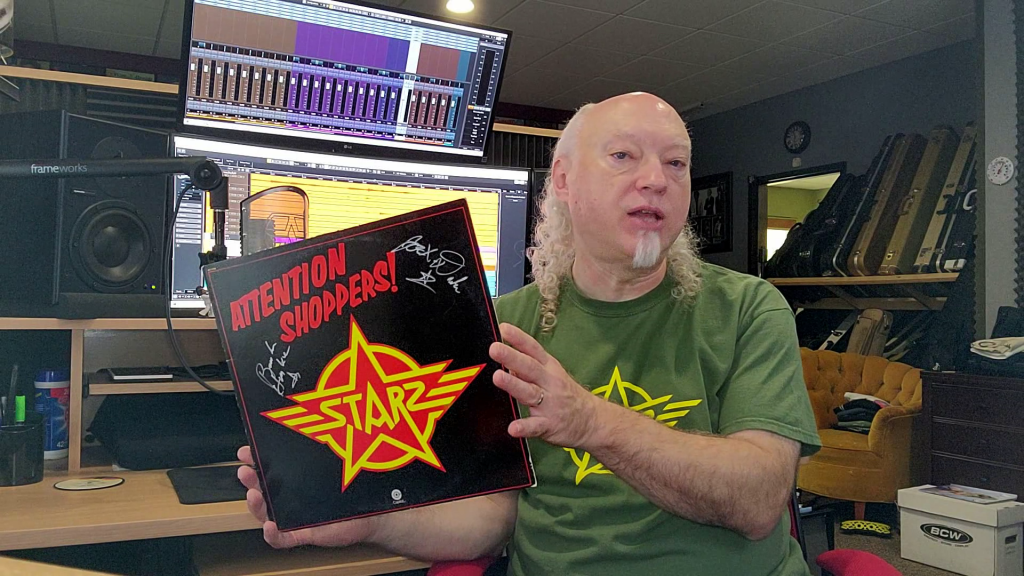
On this episode, we revisit the great ’70’s hard rock/power pop album Attention Shoppers! by Starz. “X-Ray Spex” is a blast of punky pop with some interesting use of studio effects. Turn it up!
“X-Ray Spex” (Peter Sweval, Joe X. Dube, Michael Lee Smith, Brendan Harkin & Richie Ranno) Copyright 1978 Starzongo Music, Inc/Rock Steady Music, Inc/ASCAP
"Kings Of Orient (We Three Kings)" (Traditional) Odds, 1991
On this special Bonus podcast, it’s time for another holiday pick. Here’s an ol’ Christmas classic with a power pop twist: “We Three Kings” by Odds. Happy Holidays, everyone!
“Kings Of Orient (We Three Kings)” (Traditional) Odds, 1991
"Kailee Anne" (Michael Carpenter) Copyright 2000 Michael Carpenter; Copyright 2000 Not Lame Recording Company
Michael Carpenter is a multi-instrumentalist, songwriter, producer & engineer from Australia who, in a better world, would be a lot more famous. A master of hooks & harmony, he’s one of the best modern power pop artists out there. Here’s a track that’s a personal favorite of mine. Check it out & then go buy some of his music.
“Kailee Anne” (Michael Carpenter) Copyright 2000 Michael Carpenter; Copyright 2000 Not Lame Recording Company
"Just What I Needed" (Ric Ocasek) Copyright 1978 Lido Music, Inc.
It Came From Boston: 5 experienced musicians come together to make something new: keyboard whiz Greg Hawkes; the bassist with the killer voice, Benjamin Orr; drummer David Robinson from the legendary Modern Lovers; one of the tastiest guitarists in the business, Elliot Easton; and singer/songwiriter/guitarist & mastermind Ric Ocasek. Merging classic guitar rock with the burgeoning synth-pop sounds to bring New Wave to the masses, The Cars defined that sound for the late-70’s/Early ’80’s. It all started on local Boston radio with this song.
“Just What I Needed” (Ric Ocasek) Copyright 1978 Lido Music, Inc.
"Gimme Shelter" (Mick Jagger & Keith Richards) Copyright 1969 ABKCO Music Inc.
There’s no shortage of great songs in the Rolling Stones catalog, but “Gimme Shelter” may be the song that tops them all. Dark and foreboding as only the Stones can do, this track has all the hallmarks of the Rolling Stones at their best: iconic guitar riffs by Keef, Jagger at the top of his game, and the Watts/Wyman rhythm section doing what they do best (plus Nicky Hopkins on piano). But what pushes this one from merely brilliant into sublime is the vocal performance by Merry Clayton– for my money, one of the greatest moments on record. All together, this one belongs on the Mount Rushmore of Rock.
“Gimme Shelter” (Mick Jagger & Keith Richards) Copyright 1969 ABKCO Music Inc.
TRANSCRIPT:
We all need someone we can lean on, and if you want it, you can lean on the “I’m In Love With That Song” podcast. I’m Brad Page, your host, and each episode, I pick one of my favorite songs and we listen to it together– uncovering the elements that make it a great song. Maybe you’re a musician or a music lover, or just a casual fan; we all get to be musical explorers on this show, discovering something new each time we listen.
On the previous episode of this podcast, we talked about The Beatles, so I think it’s only fair that this time we tackle The Rolling Stones and one of their greatest moments on record: “Gimme Shelter.”
(Music)
1969 was a rough year for the Rolling Stones. They fired Brian Jones in June, and one month later he was dead. Mick Jagger’s relationship with Marianne Faithful took a turn for the worse when she attempted suicide with an overdose on sleeping pills that left her in a coma for a week. Earlier in the year, Jagger had an affair with Keith Richards’ girlfriend, Anita Pallenberg, and I’m sure that didn’t help Mick and Keith’s relationship.
The band was anxious to get out of their agreement with their manager, Allen Klein, and then in December of ‘69, the Stones were at the center of the disastrous concert in Altamont, California, where four people died, including Meredith Hunter, who was stabbed to death.
There was one upside, though, to 1969 for the Stones. It was the year they released the album, Let it Bleed. A masterpiece that’s a nearly perfect album, chock full of some of the Rolling Stones’ best work. The album opens with the apocalyptic “Gimme Shelter”.
The song was largely composed by Keith Richards in the apartment of Robert Fraser, where Keith was living with his girlfriend, Anita Pallenberg. “Gimme Shelter” is the first song on the album, so both the song and the album open with the sound of Keith Richards’ guitar. Keith plays all of the guitars on this song. This was recorded after they had fired Brian Jones, but before they hired his replacement, Mick Taylor, so Keith handled all the guitar parts on this song.
His guitar comes in softly, like someone tiptoeing in the dark, afraid of what might be waiting for them in the darkness.
(Music)
If you listen to Keith Richards’ guitar part, you’ll notice that there’s a subtle, but significant, change in what he plays during the intro. He starts by playing the part like this.
(Music)
But after a couple of times around, a few passes through the changes, he adds a few more notes, part gets a little bit more complex.
(Music)
By constantly tweaking the part, evolving it every few iterations, it’s a subtle but effective way of keeping it fresh throughout the song. So let’s pick it up where we left off, with the introduction.
(Music)
Here’s what we’ve got so far. The rhythm guitar, which I believe he’s playing in open E tuning, with a lot of reverb on it, and also a tremolo effect.
(Music)
The drums also come in, but they’re holding back a bit, and there’s a lead guitar part that’s added.
(Music)
It’s a very simple part when you hear it on its own, but it’s so effective when you hear it in the mix.
(Music)
There’s also some percussion, and a female vocal off in the distance.
(Music)
The bass comes in here as well, and he’s only playing one note.
(Music)
Some deep and ominous piano chords played by Nicky Hopkins.
(Music)
The drums come in with a beat, and we head into the first verse.
On this song, Keith was using guitar amplifiers made by a company called Triumph, and they discovered that if you got these amps to overheat, on the verge of burning out, they produced this fantastic guitar sound. The amps had lights along the top that would start to dim as the amplifiers overheated, so they would watch those lights to gauge when the amps were ready to be recorded.
(Music)
In the first verse, Mick sings about a storm that’s brewing. When Keith came up with the song, sitting in that apartment, he was watching out the window at people scurrying to get out of a rainstorm, so that’s where the idea of the storm came from, but the song evolved to become about so much more.
(Music)
“Gimme Shelter” features one of Mick Jagger’s all-time greatest vocal performances. Let’s listen to the vocal track for this verse.
(Music) Oh, a storm is threat’ning My very life today If I don’t get some shelter Oh, yeah, I’m gonna fade away
Here’s the first chorus: “War, children, it’s just a shot away.” I think that resonates more now than it did in ‘69.
(Music)
Originally, the Stones planned to release two albums in 1969, but with the end of the year approaching, and a U.S. tour starting on November 7th, they barely had time to finish one album. They were out of time. Most of the album, including the tracks for “Gimme Shelter”, had been recorded in England, but now with the U.S. tour looming, they moved to a recording studio in Los Angeles for the final stages of recording.
One of the last things to be recorded were the backing vocals for “Gimme Shelter”. Mick Jagger asked the recording engineer, Bruce Botnick, if he knew any singers, and Bruce recommended Merry Clayton. That’s Merry, m-e-r-r-y, not Mary. On some pressings of the album, they misspelled her name as Mary.
Merry Clayton’s vocals are so crucial to this song. We’re going to focus on them a lot as we listen to this song. Here’s the second verse.
(Music)
They’re using that tried-and-true vocal arrangement technique of: first line – lead vocal by itself; second line – backing vocal joins in; third line – lead vocal by itself again; and the fourth line – the backing vocal joins in once more. You’ve heard this a million times in a million songs, but it’s super effective.
(Music) Ooh, see the fire is sweepin’ Ooh, our very street today Burn a red tool carpet, mad bull lost his way
Let’s listen to what the lead guitar and the piano are doing behind that verse. Nicky Hopkins’ piano is mixed pretty far down, it’s hard to hear in the final mix, but it’s a really driving part.
(Music)
All right. Let’s hear that second chorus.
(Music) Oh, oh, oh, child It’s just a shot away It’s just a shot away Oh, oh, oh, child It’s just a shot away It’s just a shot away Yeah!
Mick Jagger plays some great blues harp harmonica on this track. That gritty, distorted sound was produced by playing the harmonica into a microphone plugged into a Dynacord tape loop machine, and then overdriving that amp. Then they run it through some studio limiters to compress it, and squeeze it, to get that really intense sound.
(Music)
Nice little guitar solo from Keith Richards. Remember, he’s playing all the guitars on this track.
(Music)
Now, they let Merry Clayton step to the front for what I think is one of the greatest vocal performances ever recorded.
When they called Merry Clayton to come down to the studio that night, it was late, and she was very pregnant. She was getting ready for bed, she had curlers in her hair. They get her on the phone and say, “We need you to come down to the studio and do some vocals,” so she goes down to the studio, with her silk pajamas on and a scarf around her head. She did one take, and it was great. Mick Jagger said, “Do you want to have another go?”, and she said, “Sure, I’ll do a second take.”, and in her head, she says to herself, “I am going to blow them out of this room.”, and so she sang this part.
(Music) Rape, murder! It’s just a shot away! It’s just a shot away! Rape, murder! It’s just a shot away! It’s just a shot away! Rape, murder! It’s just a shot away! It’s just a shot away! Yeah, yeah, yeah!
Listen to how her vocals get more intense each time around. Let’s listen to just her vocal track. Listen to how each time she sings the chorus, she pushes her voice harder, until it starts to crack. This is raw emotion. Rape, murder, you can feel the weight of those words in this performance.
(Music) Rape, murder! It’s just a shot away! It’s just a shot away! Rape, murder! It’s just a shot away! It’s just a shot away! Rape, murder! It’s just a shot away! It’s just a shot away! Yeah, yeah, yeah!
I want to go back and play that last chorus when Merry hits the word “murder” with such intensity that her voice cracks for the second time, and you can hear Mick Jagger let out a “whoo”. He, he clearly can’t help himself, she’s so good. And then at the end of the line, as she finishes, you can hear another “whoa!” from someone in the studio. They are clearly blown away. Can you imagine standing next to Merry Clayton as she’s singing this part?
(Music) Rape, murder! It’s just a shot away! It’s just a shot away! Rape, murder! It’s just a shot away! It’s just a shot away! Yeah, yeah, yeah!
Remember, this is Merry Clayton in the middle of the night, pregnant in her pajamas, singing a song that she’s never heard before, with a band she’s never met. This is among the most thrilling 30 seconds of music you will ever hear in your life.
(Music) Rape, murder! It’s just a shot away! It’s just a shot away! Rape, murder! It’s just a shot away! It’s just a shot away! Rape, murder! It’s just a shot away! It’s just a shot away! Yeah, yeah, yeah! The third and final verse.
(Music) Flood is threat’ning My very life today Gimme, gimme shelter Or I’m gonna fade away (Singing with enthusiasm)
This dark song ends on a more hopeful note as Mick and Merry tell us that “love is only a kiss away.”
(Music) I tell you love, sister It’s just a kiss away It’s just a kiss away It’s just a kiss away It’s just a kiss away It’s just a kiss away It’s just a kiss away It’s just a kiss away Yeah!
“Gimme Shelter” by the Rolling Stones. Epic!
The legendary music critic, Greil Marcus, said “Gimme Shelter may well be the greatest single rock and roll performance.”
There’s a documentary called 20 Feet from Stardom about the lives and careers of background singers. It includes some of the greatest backing vocalists of all time, including a great segment on Merry Clayton. It’s a fantastic documentary. If you’ve never seen it, go watch it, right now. I’m not kidding– do it.
I’d also like to acknowledge a book by Sean Egan, called Rolling Stones and the Making of Let it Bleed. It’s part of the Vinyl Frontiers book series, and I used that for quite a bit of research on this episode, so thank you, Sean Egan.
To learn more about the show, check out our Facebook page, and to hear more episodes of the podcast, just search for the “I’m In Love With That Song” podcast. And please, post a review for the show. The more five-star reviews we get, the easier it becomes for more people to find the show, so I really appreciate your reviews and your comments.
I’ll be back in two weeks with another episode. Until then, thanks again for listening to the Rolling Stones and “Gimme Shelter”.
(Music)
Go listen to the whole song by downloading it, or buying it, or streaming it from your favorite source of legit music. Always support the music that you love!
“Rain” was the first glimpse of The Beatles exploration of psychedelia. Perhaps more than any other Beatles track, this song highlights the rhythm section with brilliant performances by Ringo Starr and Paul McCartney. Add Lennon’s lyrics and great vocals, and you’ve got one of the best songs to come out of the trippy, mind-expanding ’60’s. On this episode, we take a closer look at the individual performances and studio trickery– backwards, forwards, sped up & slowed down– that went into this classic track.
Contains information related to marketing campaigns of the user. These are shared with Google AdWords / Google Ads when the Google Ads and Google Analytics accounts are linked together.
90 days
__utma
ID used to identify users and sessions
2 years after last activity
__utmt
Used to monitor number of Google Analytics server requests
10 minutes
__utmb
Used to distinguish new sessions and visits. This cookie is set when the GA.js javascript library is loaded and there is no existing __utmb cookie. The cookie is updated every time data is sent to the Google Analytics server.
30 minutes after last activity
__utmc
Used only with old Urchin versions of Google Analytics and not with GA.js. Was used to distinguish between new sessions and visits at the end of a session.
End of session (browser)
__utmz
Contains information about the traffic source or campaign that directed user to the website. The cookie is set when the GA.js javascript is loaded and updated when data is sent to the Google Anaytics server
6 months after last activity
__utmv
Contains custom information set by the web developer via the _setCustomVar method in Google Analytics. This cookie is updated every time new data is sent to the Google Analytics server.
2 years after last activity
__utmx
Used to determine whether a user is included in an A / B or Multivariate test.
18 months
_ga
ID used to identify users
2 years
_gali
Used by Google Analytics to determine which links on a page are being clicked
30 seconds
_ga_
ID used to identify users
2 years
_gid
ID used to identify users for 24 hours after last activity
24 hours
_gat
Used to monitor number of Google Analytics server requests when using Google Tag Manager
1 minute
Marketing cookies are used to follow visitors to websites. The intention is to show ads that are relevant and engaging to the individual user.
Facebook Pixel is a web analytics service that tracks and reports website traffic.

 Click here to play the episode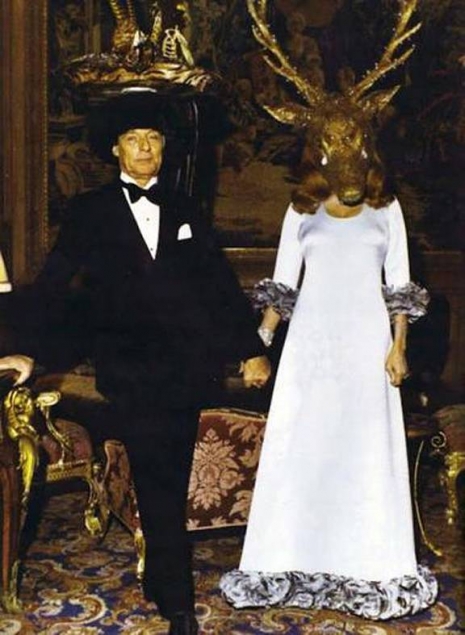
 Click here to play the podcast