We talk a lot about Mixing on this podcast, but we’ve never explained what that actually means– until now. Join me and my guest, recording engineer & producer Drew Townson, as we look at the differences between “recording”, “mixing” and “mastering”. Get a behind-the-scenes look at the decisions made in the studio, the challenges faced, and why you can’t really “fix it in the mix”.
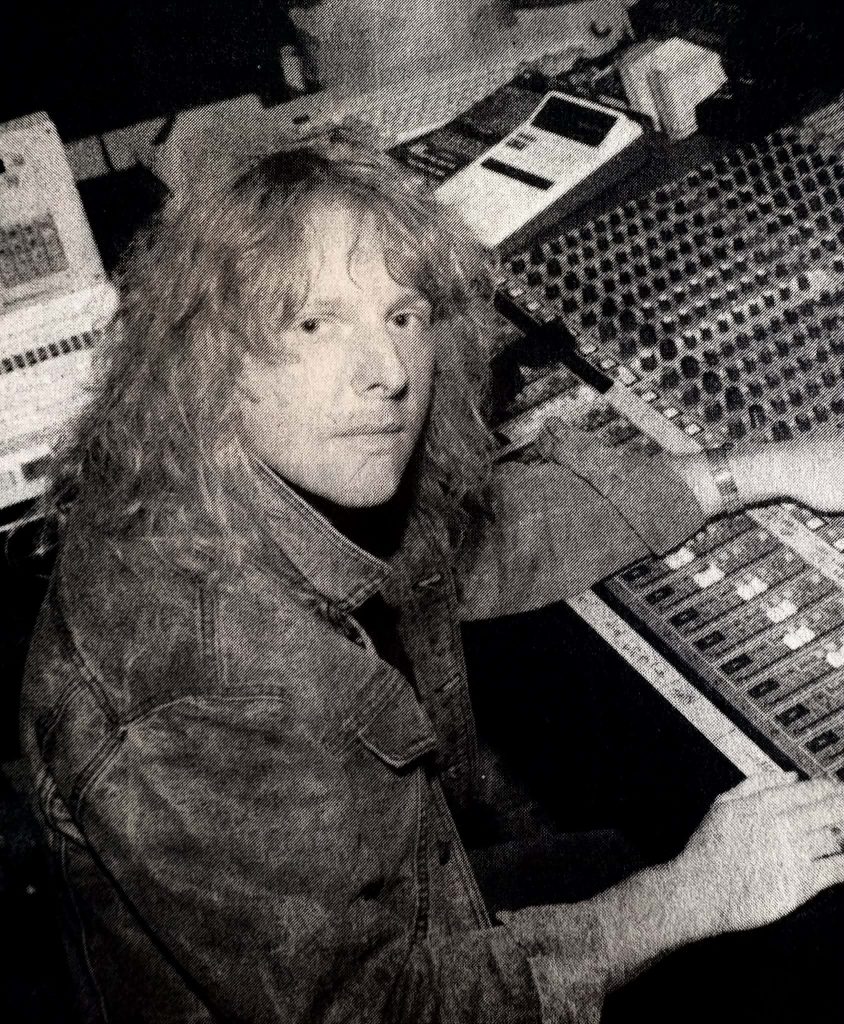
Drew Townson in the studio, Newbury Sound, Boston, 1990

TRANSCRIPT:

Greetings, and welcome to another edition of the “I’m In Love With That Song” podcast. I’m your host, Brad Page, coming to you on the Pantheon Podcast Network.

A while ago, I got an email from a listener who said that we talk a lot about mixing the show, but we have never really explained what mixing is, or how mixing differs from recording. So, let’s do that.

And if we’re going to talk about recording and mixing, I can think of no better person to discuss it with than my old friend Drew Townson. Drew is a brilliant guitarist and songwriter, but he’s also been a professional recording engineer, a studio owner, and a producer. And he’s got the best ears of anyone I know. So I invited Drew to come on and talk with me about recording and mixing, and we touch on producing and mastering as well.

This conversation is a little more technical than we usually get on this show, but not by much. And I think you can all follow along, whether you’re a musician or not. So, let’s take a peek at the inner workings of the recording studio.

Here’s my conversation with Drew Townson.

Brad Page: Well, Drew Townson, thank you so much for joining me on the “I’m In Love With That Song” podcast to talk about the art of mixing, I think, first, just kind of give a general explanation to our listeners, who may or may not be familiar with, what exactly is mixing? When we talk about mixing, what are we doing?

Drew Townson: Well, you know, I’ve been listening to a lot of Miles Davis lately, and Miles Davis was a jazz musician back in the 1950s and 60s. And when those kind of groups went in the studio to record, they recorded live. And what I mean by live is, their band stood in the studio and all of them played the song together. And that’s how records were made.

The Beatles would go in the studio, stand just like they did on stage, and play their songs, and the studio would record it. And that started to change in the 60s, to where you could record parts of songs, because they had a new invention called multi-track recording, which is, as you and your listeners already know, is being able to record multiple tracks, not necessarily at the same time. You could record, like, the drum track, and then you could add the bass guitar track and then you could add the guitar track, et cetera. And so the need for mixing these tracks back to make them sound like a live performance again was a big deal. Like, learning how to mix became a thing you had to do.

Brad Page: Right. As you said, back in the original times, the mixing was literally done by, you know, if it was time for the trumpet solo, the trumpet player would step closer to the mic and then when he was done, he would step back, and it was… there was no such thing as “mixing” the way we think of mixing today. As technology went on, it’s a whole different world, where you start to have the ability to record different instruments on different parts of the tape.

Drew Townson: Right.

Brad Page: So you know, if the bass player made a mistake, well, you could go back and fix the bass part without having to re-record all the rest of the parts all over again.

Drew Townson: Exactly.

Brad Page: But then at the end of it, all those pieces have to be put together in a way that makes sense.

Drew Townson: Sounds real.

Brad Page: It sounds real.

Drew Townson: Yeah, yeah, right. Well, you know, if somebody in Miles Davis’s band hit a clam at like, you know, 20 minutes into the song– stop the tape, rewind, let’s record it again, we have to start the song again. You know, that’s what it was like. The whole band had to play the song over again if somebody made a mistake.

Brad Page: Right.

Drew Townson: And so that was what they were trying to get rid of with this kind of mixing and multi-track recording. So what they started doing was they’d record the drums on a track, they’d record the bass on a track, then they’d record the trumpet on a track. So if the trumpet made a mistake, he’d just fix his mistake on his track and that wouldn’t affect what would happen to the bass and the drums.

Brad Page: So recording and mixing, they go together, but they’re two different things. Maybe talk about how you think of those two things, the recording part of it and then the mixing part of it. Because mixing comes after you’ve recorded all of your tracks.

Drew Townson: Right, right. So basically I was a very recording-oriented engineer, which means that all my tracks had to be– you have to have a good microphone, you have to have a good saxophone or whatever your instrument is, and you have to play well. And so, basically, my job was to do, to get the band to record the best possible version of the song. And if you do that, and a good recording engineer knows the right microphones, where to put them, you can have people record at the same time. See, that’s one myth: you can still have people Recording together at the same time. And their instruments all still go on separate tracks.

Brad Page: Right. And you can argue that that’s still the best way to do it, right? Because of the interplay.

Drew Townson: You know, what that did was that allowed bands to go in the studio, play the music of the track, but not have a vocal. And the singer was, you know, the singer sits in the control room of the studio, smoking a cigarette, while the band is in the main room recording the track. And then later, you can add the vocal track, and it has its own track. And if there’s a mistake, you fix it, whatever. So it’s a way of recording each instrument separately and giving it its own most personal attention. Get that great vocal track, get that great bass track. Uninhibited by anything else. You just play until it’s right.

Brad Page: I think of it as kind of like a cooking analogy. When you’ve got a recipe, there’s two sections to the recipe, right? There’s the ingredients, and that’s the recording side of it…

Drew Townson: Right.

Brad Page: …you know, one cup of drums, a teaspoon of guitar, those kind of things, Right?

Drew Townson: Exactly. Yeah.

Brad Page: And then the instructions– you know, “beat the sugar and the eggs until they’re foamy” or whatever. That’s the mixing part of it. Right? So, the ingredients is, that’s when you’re recording the individual tracks and you’re getting them together. And the mixing part is when you’re actually combining these things in the proper way, and they each have their own kind of unique elements to it.

Drew Townson: That’s right.

Brad Page: And the reality is, if the ingredients that you’re starting with are no good, then the finished product is going to stink.

Drew Townson: Right.

Brad Page: No matter how good the mixing, the combining part of it is.

Drew Townson: Oh, right, right. You can be the world’s best engineer. But if you’re working with a bad, you know, with a low-quality band or artist or whatever, you know, you can’t save it.

Brad Page: Right.

Drew Townson: You can’t fix it in the mix. “Fixing it in the mix” is a myth that does not happen. It really doesn’t.

Brad Page: That’s kind of an in-joke that you hear engineers and producers say all the time, oh, “just fix it in the mix”. But you, you know, there’s only much you can do. It’s garbage in, garbage out.

Drew Townson: Right, exactly. So now you’ve got a reel of tape, okay. You’ve recorded a song on a reel of tape. 20 years ago, that tape had 24 tracks on it. Now it’s digital and there is no limit to the number of tracks that you can record.

Brad Page: There’s literally no limit. You could have, you know, 300 tracks.

Drew Townson: There’s literally no limit to how many tracks you can record. And sometimes you go and see– and it’s like the simplest stupid song and it’ll have like, you know, 100 tracks or something. And it’s, I think it’s more than you need. But that’s just my opinion on that. Yeah, so you’ve got the performance of the song all on different tracks. And people need to know this, too: When you’re recording like a rock band with drums and bass and guitar and vocals, it’s not one track of drum set– it’s one track of kick drum, then the next track is the snare drum, then the next track is the hi-hat, and the next track is the cymbals. And so, it’s not just like drums mixed with bass mixed with guitar; it’s drums mixed with drums, and then guitar mixed with guitar. You know, you do that, you hone each sound. That’s before you actually do the mix. You go into every track, and you work on that sound to make it sound the best it can be.

And to do that, you use something called an equalizer, which I’m sure you guys know what that is” treble, bass, middle, right? So every mixing board has an equalizer on every track, so you can get the best possible sound of that track. And you might want to add a reverb or a delay or an effect or something like that. And those are all easily done when you’re mixing.

That’s, those are mixing techniques. You may say, you know, I want that lyric right there to echo a couple times. And then you can, while you’re mixing, you add the echo to the lyric.

So that’s what all the mixing is. It’s all combining the instruments to make the song sound correct. Again, it has to sound right. You’ve got drums, bass, guitars, whatever, vocals, and then any effects that you want to use.

And you know, I don’t want to get into a whole discussion of effects, because there’s a lot of that. And one of the things that I’m really good at was an effect called Compression. It’s a volume limiting effect that takes the loud parts and makes them quieter, and makes the quiet parts louder. And that’s what compression does. And so, when you hear a vocal on a record, nine times out of nine, it’s compressed. If you notice when, you listen to a record, all the instruments on the record are essentially the same volume, and they stay the same volume, they don’t change. That’s part of the mixing technique.

You basically have to rebuild the band playing the song, right? You get the drums, bass guitars, everybody’s playing, and then you’ll add like the vocal track in, then you can add some reverb or some effects or whatever, and that completes the song. And then what we used to do was, when we would do that mix, you have to mix to stereo, right, because you’ve got, what, 24 mono tracks and you’re making a stereo mix. So, we would mix onto a stereo tape recorder and that would be our finished mix, would be the stereo mix of the 24 track song.

Brad Page: So you’ve got a machine with a tape on it… or these days, it would all be digital, but however many tracks you’ve got, let’s say 24, you are essentially mixing those down to a final product, which is two tracks: a left channel and a right channel. Yeah, that would be a separate tape machine back in the day. Of course, it’s all digital now, but the essential idea is the same.

Drew Townson: Yeah. You know, there are things about modern technology I like, and things I don’t like. But one of the things I really love about modern technology is that you can make that mix, and then you can copy it. You know, you can make many, many copies of it. And then if you decide, oh, you know, that one vocal little part right there, you can actually go in and tweak– not after it’s already printed onto a CD or anything like that, obviously– but while it’s still in the mixing process, basically, even if you’re done with a mix, you can recreate it. That’s one thing that the digital does, it, will recreate your exact mix. Like every single thing you do gets remembered by the computer. And so you can bring that up anytime you. Five years from now, I can play that mix back and it’ll sound exactly like the way I mixed it.

Brad Page: Yes. Now we’re starting to talk a little bit about automation, which is basically the software in the computer can track the movement of the virtual knob, so as you turn something up or down, the bass or treble up or down or whatever, that movement of that knob can be remembered and saved into the program so that it’s reproducible. So, like, you said, you can pull that mix up, that song, five years from now, and if you don’t remember all the little tweaks you did, that’s okay because they’re all saved within that file.

Drew Townson: They’re all saved.  Let me tell you a funny story: There was a company in Great Britain called SSL– Solid State Logic. They build the world’s best mixing consoles. And a “console” is a mixer, it’s a big board, right? With lots of knobs and stuff on it. And they invented “Recall” many years ago.

They actually started out by programming church organs to be able, like if the organist died, there was nobody to take their place. In England, in the 70s, the old lady who had been playing the church organ for, you know, 30 years dies because she’s 85 years old now and nobody could take her place. So this company, SSL, learned how to, “Okay, come on in, Doris, and play all your songs, and we’ll record them into the memory of the organ.” So they built these organs that could remember what you played, and play it back. That’s how they started with church organs in England. It’s funny, isn’t it?

Brad Page: Yeah, yeah, yeah.

So let’s talk about maybe some examples of mixing. Some, you know, when you think of like, just a great mix, who do you think of?

Drew Townson: You know, there’s certain producers I like, and George Martin happens to be one of them. And I’m not necessarily talking about the Beatles either. Like, after the Beatles, he continued his career and he was a really good engineer.

Brad Page: Sure, yeah. Besides the Beatles, he produced Jeff Beck; the “Blow By Blow” album, which is my favorite Jeff Beck record.

Drew Townson: That Jeff Beck “Blow By Blow” album is one of my favorite George Martin records. I mean, it is such a good record. It’s such a good record.

And here’s another guy that I’m really a big fan of. Bob Clear Mountain.

Brad Page: Mhm.

Drew Townson: And Bob Clearmountain, he produced Roxy Music’s “Avalon”, which I think is one of the best-sounding records ever made in the history of music.

Brad Page: Amen.

Drew Townson: It really is.

Drew Townson: That was Bob Clearmountain who did Roxy Music “Avalon”. That’s one of the best-sounding records you’ll ever hear. Despite the fact you can’t understand any of the vocals. You know, I tend to like records where you can’t understand the vocals. I don’t know why that is, but like, I love the first three, four REM albums, and I hate everything they did after that. And I realized the first three or four ones was when you couldn’t understand a word he was singing!

Brad Page: Let’s talk about some of the tracks that you’ve worked on, and maybe use those as some examples of some mixing challenges, or what you were going for and how you were able to get to the end result that you wanted.

Drew Townson: Well, I think a good one to start with might be The Nines. They’re called Muck And The Mires now. Evan Shore, from Muck And The Mires.  I recorded one of his earlier albums and the first, the opening track is “I Can’t Keep a Secret”. And that is just straight ahead, two guitars, bass, drums, rock band playing live in the studio. And they were just rocking out. It was so good. But one thing you’ll notice is the drums, all the sounds are pristine. I mean the drums sound incredible. And you know that, that took some time and some doing. There’s a woman drummer, really good drummer.

And one of the problems that we had was the two-track stereo tape machine that we normally mix to was broken. And here’s just a little bit of 101 information for you: in the world of analog recording, tape recording, the faster the tape goes and the wider the tape is, the better the sound quality. So I had this 30 inches-per-second, half-inch wide stereo tape deck, made in Germany by Studer. I don’t know if it was Germany or Switzerland or wherever Studer is made… Made in Europe somewhere. Gorgeous machine. Went twice as fast as a lot of machines, and the tape was twice as wide as other machines. And that machine sounded stellar.

So I’m mixing this record, and that machine is broken and it’s time to do the mix. And we had this old quarter-inch wide Otari tape machine there that I just pulled out of the closet, and you know, 15 inches per second was the fastest speed.

Brad Page: It’s half the speed of what you wanted.

Drew Townson: It was half the speed and half the width of the tape that I wanted. And so I was just listening to that CD this morning– and it sounds friggin’ great, man! I forgot how good that machine ended up sounding at half speed, half width or whatever.

Drew Townson: You know, that’s what most people did mix to. I was lucky. I worked in a studio Nebury Sound in Boston, which had the half-inch Studer machine to mix to. Most studios didn’t have that nice, those were very expensive machines. And when I say expensive, let’s talk by today’s standards, that stereo recorder in 1988 would have sold for about $32,000.

Brad Page: And required regular maintenance, too.

Drew Townson: Oh, yeah, yeah, Regular maintenance.

Brad Page: They were not inexpensive devices to own and maintain.

Drew Townson: No, that’s the thing. It was broken that day that I needed it.  And we got it fixed and it cost, you know, like a bunch of money to get it fixed.

Brad Page: What other things did you work on that would stand out as maybe some challenges you had to face?

Drew Townson: Some of my challenges were performers that made a mistake, or hit a flat note or a sharp note or whatever. So you’re listening to this song, and you’re hearing there’s a goof in there. You’d have to try to fix that. And the only way to fix it is to either play the bass yourself or call that bass player to come back in and rerecord that part. I mean, that’s what I did sometimes, was re-record stuff as opposed to trying to fix it in the mix. Because as we all know, “fixing it in the mix” is not a real thing. You know, you can’t really fix stuff in the mix. You can make it sound better. You can make it sound better, but you can’t fix it, you know?

Brad Page: Right.

Drew Townson: You know, my specialty was the band would say, “Hey, Drew, we want to record with you.” “Okay, I’ll see you tomorrow. Come in the studio.” And they’d come in, they’d set up and they just play and we would record it. That’s what I did a good portion of my life. Live in the studio, recording and then remixed by me later. So, you know, that’s one thing I always liked, was the live recording. Because even when you mix, you know, you’re not going to lose that live feel; that always, that sticks with it.

Brad Page: And that’s important.

Drew Townson: Yeah, it really is. We used to do these blues records that were on a label in New Orleans. And then the guy from the label would come up to our studio in Boston and, you know, he’d stay in Boston for a few weeks, and the artist would stay in Boston for a few weeks, and we’d bring him in the studio and they just set up their gear and play. Like it was just a gig. They just play their stuff, and I would put the microphones up, and I would record every instrument onto its own track and then remix it. But they wouldn’t be doing, like, separate recording. They would just play together all at the same time.

Brad Page: That sounds a lot more simple than it really is. I mean, there’s a skill to capturing that, right? Because you are trying to capture the sense of a performance.

Drew Townson: Right.

Brad Page: And the energy of a performance.

Drew Townson: Right.

Brad Page: And knowing when the take is right.

Drew Townson: Right.

Brad Page: And then being able to translate that to the final product, the final mix, if you will; it sounds easier than it really is. There’s a whole skill there that you have to master.

Here’s a track that Drew recorded with blues Legend Luther Guitar Jr. Johnson, in 1994, recorded live in the studio. There are a lot of instruments on this song, but notice where each instrument is placed in the stereo spectrum so that each instrument has its own space to occupy. They blend together to create that massive sound of a big band. But if you listen for each instrument, the bass or the horns or the piano, for example, you can easily find them. Capturing the energy and fire of the live band that was part of the recording process; making sure that each instrument blended in but also retained its individual place, that was done during the mixing process.

Here’s Luther Guitar, Jr. Johnson with “Walking With You Baby”.

Drew Townson: Let me tell you something: the most important thing in the studio, in recording, is knowing what mic to use and where to put it. And it’s not the same as your live mics. Studio mics are studio mics, and they start about $1,000 or so for one microphone, and it goes up from there. You can easily spend 20 Grand on a good studio mic. And so, you have to know where to put those mics to capture the sound. Otherwise, forget it, you’re not going to accomplish anything.

Brad Page: And so what are some examples of choices that you would make for microphones? Just to give people an idea of what’s the thought process…

Drew Townson: Sure. Well, these days, most drummers prefer a microphone called an AKG D112. And the D112 is a newer mic, and it was invented to capture super low frequencies. I mean, it captures frequencies below what you want. So I never liked that mic because I always thought it sounded real flabby and tubby. So I use the AKG D12E for the kick drum. It has the most punch, it has a little bit of the click that you’re looking for. You know, everybody wants that like little snap on the top of the kick. If you can find one, they’re cheap nowadays, you can probably get one for like a hundred bucks. And that’s a really good kick drum mic. And then, like a snare drum mic, hat is where you do use like a Shure SM57, because the way that mike is tuned is really good for a snare drum– but not for other stuff, you know, in the studio.

Brad Page: Right, right. And these are the kind of choices that a recording engineer has to make up front.

Drew Townson: Right.

Brad Page: And even choosing, you know, you would choose different mics for vocals, but you would choose maybe one mic for a female voice and another mic for a male voice. So these are all, they’re tools of the trade. Think about microphones as being tools, and each tool has its applications and where it’s appropriate and not appropriate.

Drew Townson: The AKG C12 is the best female mic. Look up that and see how much that mic will cost you to buy now. I’m going to say 12 Grand, minimum.

And then there’s one called the Neumann U47 and the Neumann U67. Those are German microphones. Those are really great for guys.

Or like Linda Ronstadt always used the AKG414. So, we tend to think of AKGs as more female mics and the Neumann’s as more male-oriented mics. But that’s, that’s an important thing to know, right?

Brad Page: As an engineer, these are the things you’ve got to know your tools.

Drew Townson: Right? Right. Here’s what you do. You get the singer in the studio; your first time working with that singer, you put three, four, five microphones in front of him, let him sing, and you listen to each mic and you go, “Wow, that’s the one right there”. You can tell by the sound, you know which one is going to be. And you have to do stuff like that. You can’t just pull up some junk mic and say, “Okay, let’s do the vocal track”. You can’t do that. You’ve got to really listen. You have to.

The number one thing you have to do as a recording engineer is use your ears, not your eyes. That’s one thing the digital guys have not figured out. All the digital engineers, they look at their screen and what they see is what they do.

I used to– actually, this is true, Brad, and it’s kind of silly, but we used to put tape over the meters of the outboard gear in the studio. We would literally cover up the meter with a piece of tape, so you couldn’t see the level that was going into it or coming out of it.

And you know what– I love doing that. Because you’re using your ears only; you know, try to do a mix without your eyes. That’s my recommendation for anybody who’s doing this now is try to do a mix with your ears only.

I did a record a few years ago by a Boston band that was at the time called Girls, Guns and Glory. I forget what they’re called now, they have a different name now. But we did that the first day in the studio; we took masking tape and we covered up every friggin’ meter in the studio because I didn’t want to see any of it. I wanted to hear it only.

Brad Page: Mhm.

Drew Townson: And the record sounds friggin’ great. It’s a great-sounding record.

Well this band, Girls, Guns and Glory, had gotten a small record deal. I think they got about $15,000 to do the record, which was nothing at the time, but it was still enough to, you know, I spend a week in their rehearsal space with them before the record started and the record came out incredible.

But you have to know what to do. Like when you record a drum kit. Does it sound like a recorded kit when you first record it? Probably not. It probably sounds pretty bad. You know, it’s, it’s, that’s what you have to learn is, when you record something, how do you make it sound even better? And that’s hard. That takes some years, that takes time.

Then I have a record I did on the Rounder label by Mickey Honeycutt, and it’s called “Soul Deep”. And she had been a junkie and the whole nine, had lived on the street and everything. And she was in recovery at the time. We did this record in 1989 and it has, her band was Sugar Ray and the Blue Tones, which was a great band from Providence that I had also produced their album at that time. And then we had horns and the whole nine. So this was a big, you know, full-blown blues band with saxophones, trumpets, the whole nine. And we did that record live too, including her vocals.

And one of the things that we couldn’t stop her from doing in this studio was smoking. Like at that time, even back then, we didn’t allow smoking in the studio. But she was a chain smoker and man, she just smoked through like two or three packs while we were recording. It was funny, but she was great. And she has, you can hear, I hear the cigarettes in her voice… but maybe you can, maybe you can’t.

Brad Page: What are the challenges, as a mix engineer, when you’ve got that many instruments, because you don’t want things to step on each other, you want each one to kind of occupy its own space, right?  How do you approach that kind of challenge?

Drew Townson: That is a great question. That is a truly great question. And my answer is– I didn’t. I wasn’t really that aware of that kind of stuff until probably around 1990 or so, early 90s. I worked with a producer, Daniel Rey, who produced, he produced the Ramones. And he was producing a record, and I was engineering, and he told me to record that guitar.

So there was a guy out there, you know, with an electric guitar. And so I did, I recorded it and Daniel Rey stopped me, he said, “No, that’s not how you record guitar.” And then he went to the equalizer and he rolled off all the low end out of the guitar, and then said, “That’s the sound. That’s the sound you want.” And I said, “Why?” He goes, “Because the bass and the kick need to fill the bottom and really punch. And you’ve got to get that guitar basically out of there.”

Brad Page: Right.

Drew Townson: And I was like, “Wow, man, I never knew that”. You know, that was a really big thing for me to learn.

Brad Page: Yeah.

Drew Townson: And as years went on, I learned how to do that. And there isn’t much low end that you use. You take out a lot of bass out of all the instruments except the bass and the kick, and the toms and stuff.

Brad Page: Here’s a song Drew recorded with the legendary Boston guitar player Ronnie Earl and his band the Broadcasters. This track also features guest guitarist Duke Robillard. It’s another fairly large band. You’ve got bass, drums, two guitars, organs and a horn section. But listen to how each instrument is clearly discernible. They don’t step on each other or cover each other up. You can clearly hear each part. Even the two guitars are distinct from each other. That’s what we’re talking about here. This is Ronnie Earle and the Broadcasters with the instrumental “Backstroke”.

Drew Townson: So on January 1st, Y2K, I recorded an album with a band from Salem called the Vic Morrows. And you know, like anything else, I forgot all about it, you know, over the years. And this past summer, the leader of the Vic Morrows who still– I guess they still play out once in a while, they still are friends and they still play out once in a while– he said, “Drew, we put this out on CD back in 1990. I want it to come out on vinyl this time. I want to re-release the album on vinyl.” And I said, “Okay man, give it to me, I will get it ready for you.” And, you know, mastering a record for vinyl is completely different than mastering for CD. And, so, I spent hours remastering this record by the Vic Morrows, and it sounds in friggin’ incredible. It really does.

Brad Page: You led us to the mouth of a pretty big rathole when you were talking about “mastering”. And I don’t really want to go down that rathole, but that’s kind of the third piece, right, where you have the recording, you have the mixing, and then you have what is called “mastering”. And if you could just kind of sum up for the listeners what is mastering, and what is different about mastering than the recording or the mixing piece of it, if you could?

Drew Townson: Okay, sure. First off, if you’re going to do mastering, you have to have really good ears. If you have any issues with your hearing at all, you cannot be a mastering engineer. You have to have perfect hearing to be a mastering engineer. And that’s what I’m doing now, much more than before, is mastering. I like mastering because you’re taking, you know, sometimes it was recorded by somebody else. You know, very often mastering engineers are different guys, because in an ideal world, you don’t want the same guy recording, mixing and mastering your stuff. You know, you want different ears to get involved.

And so what mastering is, is essentially taking those final track mixes and putting them on CD or record or whatever the, whatever the final format is. You have to prepare the tracks for that format. And it’s, there’s something to it, it’s not just, “Let me just track this up.” No, you have to know what you’re doing. So, you have to EQ and compress and all that stuff. And it’s a whole nother level of, after the mix is done. We don’t have to get into it, but…

Brad Page: Yeah, yeah, but it is a really specific specialty and there’s not a lot of people that. do it.

Drew Townson: There are many fewer people doing mastering than anything else.

Brad Page: Right, right.

Drew Townson: And with the resurgence of vinyl, and I should say, you know, I still have a really nice record collection, and I listen to it every day. You know, with the resurgence of vinyl, mastering has started to grow again. Because, you know, when records were gone, there weren’t nearly as many mastering engineers. Because mastering, that’s one thing. Like, if you were going to not master for something, it would be CD that you would not master for. Vinyl is more specific. You know, tape is all those things are more, they have a sound of their own that you have to deal with.

Brad Page: Right.

Drew Townson: You know, vinyl has a sound that you have to compensate for, basically.

Brad Page: Yeah. Limitations that are different than a CD, that it’s different from a cassette tape or an eight-track or whatever it was at the time.

Drew Townson: Right.

Drew Townson: Producing– Let’s talk about what that is for a second.

Brad Page: Sure.

Drew Townson: Producing is telling the musicians, you know, help them play the song or help them develop the song. You know, if the song needs a backup vocal here, or a chorus goes too long, or not long enough, or it needs a bridge or… you know, you’re actually working with the song itself. That’s what a producer does, is develop the song.

So I produced the Vic Morrows album. And what that means is, I didn’t just sit there twiddling knobs. I actually play guitar on the record. You know, I was part of the making of the music. And I really like the way the record came out. I really do.

Brad Page: Yeah. A producer, it’s somewhat analogous to a director of a film. But not exactly.

Drew Townson: Right.

Brad Page: Not exactly…

Drew Townson: Not exactly.

Brad Page: …but a producer, you know, it’s a big picture thing.

Drew Townson: Right.

Brad Page: Whereas the recording engineer is more in the weeds, right? Like the director of a film will say, “Okay, I want a wide shot here and a close up here.” But it’s the director of photography and the cameraman who figure out, “Okay, what lens do I use and how do I light the scene?” The director doesn’t typically get involved in that level of detail.

Drew Townson: Exactly.

Brad Page: He’s stepped back and looking at the big picture. And that’s kind of what a producer does versus a recording engineer.

Drew Townson: Right.

Brad Page: A producer can help to choose the songs that end up on the record. You know, you might record 20 songs, but only 12 of them are going to end up on the album. And the producer helps to figure out what are the best, you know, help to choose the song. Like you said before, is going to help in the arrangements. Like “I think this song needs a better intro” or, you know, “What you have as the chorus would be a better verse. Why don’t you use that as the verse and then write something new for the chorus.”

Drew Townson: Or as often happens, they’ll have a chorus, then they’ll have a verse and then they’ll have another part of the song which sounds as good as another. It could be a whole nother song.

Brad Page: Uh-huh.

Drew Townson: You know that chorus right there, that extra chorus that you have in this song, is another song. So let’s drop it out of this song and let’s build a whole nother song around that chorus.

Brad Page: Right.

Drew Townson: I mean, I would meet, I would get together with a band up to two weeks before we go in the studio, and I’d start going to their rehearsals with them. You know, every night, I’d go to their rehearsals and we just sit there going through every song.

Brad Page: And that kind of work that you’re talking there, that’s what you’d call “pre-production”, right?

Drew Townson: That’s pre-production. Right.

Brad Page: Before you even get in the studio, a smart producer, a smart band would do that work so that you’re not wasting time in the studio and burning money.

Drew Townson: Exactly.

Brad Page: Anything else you want to add or wrap up with?

Drew Townson: The most important thing for any– I’m not going to say “engineer”, because I’m going to use the word “recordist”, because I wasn’t even really an engineer… before me, like, the 1960’s is when guys that worked at Abbey Road and whatever, like those guys were actual sound engineers. They had gone to school for engineering and all that.

So I’m not saying an engineer, I’m saying recordist: you need to make sure the tracks are good.  Do all your hard work recording the tracks, getting the tracks to sound good. Because if the tracks don’t sound great, forget it, you’re done already. That’s my biggest number one bit of advice. Yeah, mixing is great, but recording is even greater.

Brad Page: Yeah. Again, when it comes to mixing, if somebody just hands you a bunch of poorly recorded tracks, you can only do so much. You know, if somebody hands you a bunch of really well-recorded, really well-balanced tracks, the mix gets so much easier, right? It almost mixes itself.

Drew Townson: If you’ve got tracks that are good, it almost mixes itself. That is very true. It almost mixes– It doesn’t quite mix itself, but it almost makes it itself.  It needs you for, like that last 10% or whatever, you know?

Brad Page: Right, right.

Drew Townson: Yeah, but it really does. It’s amazing when you, you know, when you’re recording a band. This is one of the things I used to do. I’d be in the studio, I’d be recording a band; push up the faders and get it to sound like a band where I’m sitting. Get it to sound like I’ve got the best seat in the house, and I’m just, you know, listening to the band playing. That’s the best thing you can do, is just really capture it, you know?

Brad Page: Yeah.

Brad Page: Drew Townson, thank you so much for joining me on this episode for this conversation. This has been a lot of fun. I could talk for another hour.

Drew Townson: Me too.

Brad Page: But I think we’ve given people a good idea of what a recording engineer does, what mixing is, what producing is, all of those kind of things. I hope this answers some questions that people may have had and were afraid to ask.

Drew Townson: Yeah, like producing is more musical, mixing is more technical. Just make it simple like that, you know?

Brad Page: Yeah. Well, this has been great. Thank you so much, Drew. I love you, man.

Drew Townson: Love you too, buddy. Great, great talking to you.

Brad Page: Thanks to Drew Townson for joining us for this episode. It’s always great to catch up with an old friend, and I hope that this gave you some insight into the recording process and the thinking behind what goes into a mix. And I hope you enjoyed listening to some of those great records that Drew worked on.

I’ll be back again in about two weeks with another new episode. Until then, you can catch up with all of our previous episodes on our website, lovethatsongpodcast.com. You can also find all of our shows on your favorite podcast app, whether it’s Apple, YouTube, Amazon, Spotify, Google, Pandora, PocketCasts, we’re available on all of them.

Support this show by going to oldglory.com and buying a T-shirt or some merch from your favorite bands. They’ve got a ton of stuff on their site, and if you use our discount code LoveThatSong, you’ll get 15% off and you’ll help to support this show. That’s oldglory.com, discount code LoveThatSong.

And don’t forget to tell a friend about this show. Your word-of-mouth support is worth a lot. So thank you.

On behalf of everyone here on Pantheon, I thank you for listening, and I’ll see you next time here on the “I’m In Love With That Song” podcast.

Let’s close out this episode with one last track that Drew worked on. This is from an album that Drew recorded and produced for The Fathoms. They’re a Surf Rock band out of Boston, and this is one of my favorite records that Drew worked on. Recorded in his studio back in 2007, and just listen to how good this recording is! Enjoy and I’ll see you back here next time.

ADDITIONAL RESOURCES:

Drew Townson:
https://soundcloud.com/drew-townson

George Martin:
https://en.wikipedia.org/wiki/George_Martin

Bob Clearmountain:
https://www.mixthis.com/

AKG D112:
https://www.akg.com/microphones/dynamic-microphones/D112MkII.html

Neumann U47:
https://www.neumann.com/en-us/products/historical/u-47

Solid State Logic (SSL):
https://www.solidstatelogic.com

Studer:
https://evertz.com/solutions/studer/

The Fathoms:
https://thefathomsofficial.bandcamp.com/

Luther “Guitar Junior” Johnson:
https://en.wikipedia.org/wiki/Luther_Johnson_(Guitar_Junior)

Welcome to the 200th episode of the “I’m In Love With That Song” Podcast. To mark the occasion, we’re celebrating the 75th anniversary of the Fender Precision Bass: the bass guitar that would revolutionize the role of the bass in all forms of popular music– Rock, Jazz, R&B, Country and beyond.

On this episode, I’m joined by Joe Branton (host of the “Guitar Nerds” podcast) to delve into the rich history of the electric bass, particularly the Fender Precision, which would have a profound impact on all the music we love.

Join us for this special milestone episode as we celebrate the legacy of the electric bass guitar and the vibrant community of bass players who continue to push the boundaries of music. Whether you’re a seasoned musician or a casual listener, this episode offers insights and stories that will resonate with anyone who appreciates the art of music.

WATCH THE VIDEO EPISODE HERE:

TRANSCRIPT:

Brad Page: Welcome once again to the I’m in Love with That Song podcast. I’m your host, Brad Page. We’re here on the Pantheon Podcast Network to bring you the 200th episode of this show. That’s right, this is our 200th edition of the I’m in Love with That Song podcast. So, of course, I thought we should do something a little different, something a little special for this auspicious occasion.

2026 also happens to be the 75th anniversary of the Fender Precision Bass guitar. That’s the instrument that would revolutionize the performance and the role of the bass in popular music. So, I thought we could celebrate our 200th episode with a salute to the bass guitar.

And if we’re going to feature the bass guitar, then we should have an expert join us on the show. And I can think of no one better to talk bass with than the marvelous Mr. Joe Branton. Joe is the bass player for the band Polymath, a fascinating prog-rock band from the UK, and he’s also the host of the Guitar Nerds podcast—an absolutely fantastic podcast that I am a huge fan of. Joe is well-versed in the history of the Fender Precision Bass and bass guitar in general, so he was the perfect guest for this show.

And to make this 200th episode even more special, I’m doing a video version of this show. It’s the first time ever. I will admit, Joe and I do get a little more geeky than I usually do on this podcast, but if you watch the video, you can see pictures and examples of what we’re talking about. So, anyone can follow along with this conversation; you don’t need to be a musician.

So, turn up the bottom end, and let’s rediscover the history of the bass guitar.

Brad Page: All right, Joe Branton, thank you so much for joining me here on the I’m in Love with That Song podcast to talk about the history of the Fender Precision Bass and electric bass in general.

Joe Branton: Well, thank you very much for having me, Brad. It’s an honor to be on your podcast, on the 200th episode, no less.

Brad Page: Yeah, well, thanks for coming on. So, the electric bass kind of had a lot of false starts. It really—the whole reason for its existence, really back in the day, was volume, right? Because it was an instrument that was very difficult to hear over drums and horns and all that stuff on the classic big band stage. Prior to that, we had what we called the double bass, right? Which most people would be familiar with. That’s the stand-up bass, an acoustic bass.

Joe Branton: Upright bass, yeah.

Brad Page: Right, upright bass. That was developed around the 1500s, I think. And it wasn’t until the 50s that we had a successful electric bass. But to get us there, Gibson had experimented with an electric upright bass in the 1920s. 1930s, Rickenbacker sold electric basses. There were a couple of other companies, but they just—they were not successful.

Joe Branton: Did you ever see the “Foot Bass”?

Brad Page: The Foot Bass? No, tell me about the Foot Bass.

Joe Branton: Imagine the body of an upright bass—so just that oversized cello, upright bass—sitting upright. Attached to it, maybe 10 or 15 foot pedals, all with strings attached to it. The idea was—it was invented in, I think, the late 40s, early 50s by a fellow who was in a one-man band. And the idea was to bring some of that, like a halfway house. I just remember that being at the time… and I know that’s not the electric bass, but those early 50s… they hadn’t decided yet how bands were going to work out, and that’s why it’s so amazing what ended up happening with the electric bass.

Brad Page: Right. And just all of this stuff—guitars and amplifiers—this was really the kind of the “Wild West” in terms of innovation and discovery and a lot of crazy inventions and a lot of failures to get us to the successes that we’re all super familiar with now.

One of the ones that fascinated me was a guy named Everett Hull, who invented a microphone that you would mount inside the stand-up bass on the peg. You know, you have the peg that sticks out of the bottom…

Joe Branton: Yeah, yeah.

Brad Page: …and that extends inside the instrument. And he created a microphone that would mount on that. And that was called the “Ampeg.” And that’s where we get the name of a brand that still exists today, Ampeg. But that’s how it literally started—with an “amp on a peg.”

Joe Branton: Oh, I love that story. I did not know that! That’s fantastic. That makes so much more sense now, and I love it.

Brad Page: Yeah, it’s great!

But none of these things were particularly successful until Fender—Leo Fender—comes out with the bass that he calls the Fender Precision in, I believe, October of 1951. Does that sound right?

Joe Branton: That’s right.

Brad Page: Let’s talk about why they called it the “Precision” in the first place.

Joe Branton: Well, it’s the first time that a bass had been fretted. Bass was not a fretted instrument prior to Leo Fender in 1951. I think it’s amazing. The electric guitar is something other people were really messing with; it kind of already existed by the time Leo Fender’s doing the Telecaster or the Broadcaster. All of those things are already there. He just made a really cool one, and then a load of really cool ones for various companies. But for bass, he actually invented a new type of instrument that changed how music was recorded. Bass was not fretted until October of 1951.

Brad Page: Yeah, that’s so important. A.) the fact that it’s the first fretted bass, and B.) the fact that it’s a bass that you played like a guitar. Because a lot of those earlier inventions that we just kind of talked through, those were primarily based on the stand-up model versus a bass that you would play like a guitar. And that was pretty revolutionary and fairly controversial at the time, too, because there were a lot of detractors who felt that it wasn’t, quote-unquote, a “real” bass because you didn’t play it standing up and it had frets and all of those things. So there was initial resistance to that.

Joe Branton: Yeah, it was an established instrument. Upright bass was established. That’s what the bass players did. So people who were trained upright bass players didn’t want to play electric bass. It didn’t work out so well; you only play with three fingers on an upright, so moving to a guitar style was tricky. And other companies didn’t buy into it. You mentioned Ampeg—Ampeg were still making upright basses until the early 70s. And you think of Ampeg… they were making basses that could be used as both. 1953, two years after Fender released the Precision Bass, Gibson is still there going, “I don’t think this is going to work,” and they released the EB-1, one of my favorite basses. The EB-1, a solid-body violin bass—looks like a Hofner bass, dear listener, but it’s actually solid. It can be played in this quirky modern way like a guitar, or it comes with a telescopic tailpiece so you can play it like an upright, meaning you get the precision of the frets, which they liked the idea of, but they’re like, “But bass players, you don’t want to relearn. Why not play upright?”

Brad Page: Right, exactly. So it was a really innovative move for Fender to come out with the Precision in 1951, and it took a little while to catch on. The original Fender Precision looked a little different than the one people may be familiar with today. It was actually based on the Telecaster design, but it was a double-cut, ash body, 20-fret maple neck, single-coil pickup, a 34-inch scale length—which was something that I understand took some development. I believe they tried 30, 32, 36-inch before they settled on the 34-inch. And if I remember correctly, it retailed for around $199 US dollars, which was still a lot of money back then. I think that equates to about $1,800 in today’s money.

Joe Branton: Really? Wow.

Brad Page: Yeah, so not an inexpensive proposition.

Joe Branton: The 34-inch scale that Fender went for is extra interesting as well, because, whilst today that is the industry standard—99% of electric basses are going to be a 34-inch scale—at the time, no one went with this. Not one company went with this for years. Everyone messed around with a 30-inch scale, like Burns were doing it right into the 60s, Gibson… what you call the “short scale” bass. That was the scale that the competition almost universally went with. Fender were the only ones going 34, and at that time for the bulk of the 50s… not really until that 1957 body switch for Fender where it became the Precision Bass we know today, not until then did other companies start catching on and mimicking the 34-inch scale. It was a complete anomaly.

Brad Page: It’s amazing that so many of the things that Fender settled on became the industry standard. He just got it right the first time.

Some of the early pioneers of playing the electric bass… there was a guy named Joel Price, who was a country player. Bob Manners, who played with Liberace, believe it or not, who had a TV show at the time in the U.S. So people would see the Fender bass on TV; that was good exposure for it.

Lionel Hampton, the jazz player, had a couple of key bass players in his band: Roy Johnson initially and then Monk Montgomery, who was the brother of legendary jazz guitarist Wes Montgomery. Monk Montgomery is one of the first pioneers of playing the electric bass under Lionel Hampton’s guidance or influence.

One of the first rock records to feature the electric bass was a band called The Treniers—a guy named Shifty Henry.

Joe Branton: Such a good name. That is pure 50s right there.

Brad Page: Played on a song called “Rock-a-Beatin’ Boogie” from 1953.

One of the, I think, forgotten pioneers of the electric bass was actually a woman named Joan Anderson, who played with a country band called Bill Peer and his Melody Boys and Girls, which also featured Patsy Cline before she went solo. It’s interesting; there were a couple of women playing electric bass very early on, written out of history unfortunately, as these things tend to happen.

You mentioned the Gibson EB-1, that’s their first stab at the electric bass, right, 1953?

Joe Branton: That’s right, yeah.

Brad Page: The Hofner bass comes out in 1956.

Joe Branton: Yeah, and again, another bass with a 30-inch scale. See, no one is going with Fender’s 34-inch scale at this point in time. It’s wild to think that it didn’t catch on, not really until the dawn of the 60s did people start copying it.

Brad Page: There was a British trade embargo against a lot of U.S. products from 1951 to 1959 that cut off your access to a lot of American brands, including the electric bass. So that was kind of Hofner’s “in,” I think, to the British market. They really didn’t have competition from Fender.

Joe Branton: Yeah, Hofner and Framus… Burns, for the UK companies, these were the things that we were playing. Rapier as a smaller brand that were existing over here. But yeah, those were the things people were playing. The P-Bass definitely took its time over here. I don’t think British music was especially exposed to it, really, until the 60s when you saw those trade embargos go away. But then you also saw the birth of soul, so you had like Stax and Motown Records. And then you’ve got Donald “Duck” Dunn, you’ve got James Jamerson… those two guys alone, they are like the P-Bass players. They’re the people that bring it to this whole new level. They essentially defined an entire genre by the sound of a Precision Bass with flat-wound strings. And I think at that point, probably more universally, it became accepted as the industry standard.

Brad Page: Right, right. And we’ll talk more about those guys as we get further along. I believe the first recorded electric bass solo was by a British band, The Shadows. Jet Harris, a song called “Nivram.”

Joe Branton: But he’d have been playing a Burns, one of his famous signature Shadows basses.

Brad Page: Right, that would have been 1961. Jet Harris was voted the NME Readers’ Poll number one solo instrumentalist in 1962, which is interesting for a bass player, right?

Joe Branton: Wow, that’s impressive.

Brad Page: Of course, around that time you started to have some of the things like what they would call the “Tic-Tac” bass that you’d hear on Duane Eddy songs like “Rebel Rouser.”

Joe Branton: The Bass VI, so you know, that sort of early 60s… of course, Gretsch had already introduced their version of the Bass VI by then, but the Fender Bass VI turned up in the 60s. Leo was always trying to work out where the bass would sit.

Brad Page: Yeah, let’s step back a little bit and talk a little bit more about the Precision Bass. In ’54, they introduced the contoured body, a little bit of a design change. I think that’s when the sunburst came out and the white pickup. And then in ’57… ’57, I believe, is when really the definitive look of what we think of when we think of a Precision today with that very distinctive pickup, the bridge, a different pickguard, larger headstock—all of that came about in ’57, I believe.

Joe Branton: That’s right. ’57 is when we got that. We didn’t get rosewood boards, though, until a little later, so we’re still on maple boards at that point. ’59, I think, for rosewood. So sort of ’57… that’s really quintessential: two-tone sunburst (not three-tone yet), gold anodized plate, great big baseball bat maple neck, and the new headstock. And that, of course, is, I guess, what we think of as a Precision Bass today. They moved away from that single-coil pickup towards the split-humbucking pickup.

Brad Page: Right. And then in March of 1960, they introduced the Jazz Bass, which I know you’re a big fan of the Jazz Bass. Why don’t you maybe explain to people what the difference is between a Precision and a Jazz Bass?

Joe Branton: Yeah, I guess they do look kind of similar from a layman’s perspective. The Jazz Bass was great because it was the first time Leo Fender really listened to people and listened to what people wanted from an instrument. The necks on P-Basses were obviously big and fat, so he decided to make a Jazz Bass neck very slender. It has a really aggressive taper, so the strings are very close together at the nut. The idea was making it more comfortable to play, faster to play. And instead of just having one pickup bang in the middle of the body—that’s what the P-Bass has, that split humbucker—you’ve got two single coils: one in the middle of the body (so you can still make a Jazz Bass sound like a P-Bass), but then you’ve got one wedged closer to the bridge. Two volume controls, so you can blend between them, and that’s when we really got those kind of honkier sounds coming out of bass. And certainly, I would say the 80s is defined by bridge pickups on Jazz Basses and that sort of thing. The body was different; it was offset to mimic the other instruments coming out at the time, the Jazzmaster, the Jaguar. Fender were going through their “offset Beach Boys” phase.

Brad Page: Yeah, define “offset” for the folks at home.

Joe Branton: Oh, of course. So, probably a slightly angled body. Rather than it being straight as you look at it standing up, think of it as being slightly off-kilter and extended in the lower bout and the upper horn.

Brad Page: Now you play both a P-Bass and a Jazz Bass. I know you’ve owned many basses over the years. What’s your personal preference?

Joe Branton: Oh… it’s… I have a Jazz Bass that, you know, I definitely end up using probably more than any other instrument. It’s probably been on more records I’ve ever recorded and done a few more tours than anything else. I love the versatility of a Jazz Bass; having those two pickups is fantastic. But I would never, ever choose it as my favorite. My favorite thing is a very, very simple Precision Bass with flat-wounds. If you just want to sound fantastic, then a P-Bass is the answer. And there is no world where I would ever choose a Jazz Bass over a P-Bass. If you asked me what was the best bass, it’s obviously a Precision Bass. Everything about a P-Bass seems to be spot on. He just got it right. That was the thing; he just got it right.

Brad Page: In ’61, Gibson introduced the EB-3, which is kind of now… was that short scale or long scale? I forget.

Joe Branton: Short scale. They did, at this time, for the first time ever, introduce a Fender-scale bass, so they introduced the EB-3L as well, but not initially. You can get very few 60s EB-3Ls; they more commonly appeared in the 70s. But of course, the EB-3, dear listener, was on an SG-type body shape—so a really small body—so the problem was when they started using 34-inch scale necks, the neck dive was horrendous. You would snap that bass in half as soon as you let go of it.

Brad Page: Yeah, neck-heavy, so once you let go of the neck, it would immediately drop to the ground. The Gibson Thunderbird comes out in ’63, and that’s a long scale, full scale, however you want to refer to it.

Joe Branton: Yeah, that’s right. Fantastic, fantastic bass.

Brad Page: Yeah, oh, I love them. And they just look super cool.

Joe Branton: They do. I can’t pull them off. You can’t wear them up high because they’re so wide. So, difficult for me, but I do love them objectively.

Brad Page: In ’65, Fender is purchased by CBS, which kind of changes things, and eventually, the CBS-era Fenders kind of have a bad rap, right?

Joe Branton: Yeah, yeah, they do. They weren’t the same. But I mean, they’re still fantastic instruments. It’s one of those things I think there’s more in the rumor than there is in the fact.

Brad Page: I would agree. I’ve owned a few 70s Fenders and Gibsons, and I think they’re perfectly great guitars.

In 1966, Ampeg released the AUB-1, which I believe was the first electric fretless.

Joe Branton: Yeah, I didn’t know that. First electric fretless… it is such a great, great bass.

Brad Page: Now, do you play fretless much?

Joe Branton: I do, yeah. Probably about a quarter of the time. I love it. I play upright as well; I’m trying to play upright more this year—I started lessons on that. I’d really like to play upright more. But I do have a couple of fretlesses. I always record bits and pieces on records. I love it as a more expressive instrument than a fretted bass. It’s just… you’ve got to find the right track where it’s applicable, I guess. The AUB-1 bass was incredible. The fact that it was… if you’ve never seen one, dear listener, it’s a solid bass with f-holes, like you get on a cello or an upright bass, but they go the whole way through the body. Which just looks amazing. They’re incredibly cool-looking, hard to come by, and expensive.

Brad Page: Yeah. Once we get into the 70s, then we start to see an explosion of kind of more… I don’t know if I would necessarily call them “boutiquey,” but more kind of customized, custom-type basses. Alembic in 1971… what were some of your favorite oddball 70s basses?

Joe Branton: Well, the 70s is a wonderful time because Japan steps into the ring in the 70s and kind of takes a little bit of that American dominance of the music instrument manufacturers. Sure, they take the bulk of the 70s to really get it right—the 80s is where Japan comes alive—but throughout the 70s you start to see kind of more things: Ibanez becomes a pretty big player; certainly towards the late 70s you get the Roadster, the Roadstar, the Musician. These are all fantastic basses, most of which offered fretted or fretless. They also started exploring things like ebony wood for fretboards, as well as using maple, which is great on fretless instruments. Stuff like that was fantastic. I think also a brand that we didn’t mention in the 60s, you had Silvertone, Danelectro, making fantastic Sears catalog guitars. Affordable but incredible in their own right, and they were doing their own thing on the bass front as well. But yeah, in the 70s, what would be my favorite sort of type of bass? It’s still so dominated by Fender at this point. The Fender Precision Bass is still absolutely king.

Brad Page: It’s the one to beat, right?

Joe Branton: Yeah, exactly. The problem is towards the late 70s, active circuitry arrives. And this will come into play more in the 80s, but people kind of fall out of love towards the end of the 70s with that classic Fender bass tone. They want something more aggressive, more sparkly, more clear, more clinical. And so they start cutting huge holes in the back of their, by today’s standards, very expensive vintage Fender basses, putting batteries and active preamps in them, and throwing away their, sort of now sought-after, original Fender pickups.

Brad Page: Right. And you’ve got, like we mentioned, Alembic. You look at some of those basses and they have six knobs and five switches and all kinds of extra stuff on there.

Joe Branton: This is it. This is it. And it becomes standard in the 80s. We start seeing active circuitry, so having a preamp where you’d have bass, middle, and treble controlled on the bass itself becomes kind of a standard. By this point, the Precision Bass and the Jazz Bass are sort of “old hat.” It’s why people were modifying them so much. They didn’t have—that time period didn’t look as lovingly back at the 50s and 60s as we do now. Bass gear was “old tech” to be discarded or modified.

Brad Page: It’s interesting how, you know, the closer we are to something, we tend to undervalue it as opposed to once something gets to be 20 years old, and that’s constantly rolling, right? Like now instruments and amps and stuff from the 90s are now, quote-unquote, “vintage.”

Joe Branton: The other big brand, I guess, that came into play, who really brought in an instrument that was a frontrunner along with Gibson, along with Fender, is Yamaha with the Broad Bass, or BB as they’re more commonly known. That occurred at this time, which was very much a Fender-style instrument. This used the same pickups—it was a PJ split, so you got a Jazz pickup and a Precision Bass pickup in the bulk of them. So it did a bit of both. The body shape is very similar, although original in its own right, and it’s a 34-inch scale, similar headstock tuners in the same place. This was Yamaha stepping in and offering something that was along the same lines as a Precision and a Jazz, but with that incredible Japanese build quality that was occurring around the 70s and 80s.

Brad Page: Yeah, a lot of those brands started out making exact copies that sort of got them in some legal trouble, right? But that was kind of their… they were doing knock-offs and then eventually evolved into coming up with their own designs and innovations, and some of those are some of the best instruments you can get from the time and still to this day, in a lot of ways, I think undervalued or underappreciated.

Joe Branton: Yeah, there are still a few things that I think you can… less and less… older things that maybe have… that you can pick up for a reasonable price that people haven’t quite caught on to the fact that they’re really good. What happens is that you get priced out of the 60s stuff. And so then those CBS-era Fenders that you poo-pooed 10 years ago, now suddenly they become desirable just because the sheer fact that nobody can afford those 60s models. Everything goes up in price and you find yourself priced out, and so you start to look at things like Ibanez and Yamaha and stuff that really people weren’t so attracted to. Now those things have value, too.

You look at one of the best brands for high-quality Fender copies—and this, dear listener, is if you’re not aware of them, this is a brand to look out for: Tokai. And what Tokai were turning out throughout the 80s was absolutely incredible, in both guitar and basses, in both Gibson copies and Fender copies. But their “Jazz Sound” bass was their Jazz Bass and their “Hard Puncher” was their Precision Bass, and they are every bit the quality that Fender were putting out at that time. But until recently, you could pick up a good old Tokai for the best part of probably about 500 quid over here, probably about $700 over your way. But now we’re seeing them go for 1,100 pounds, so that’s $1,500, $1,600 U.S. I assume it’s probably maybe a bit cheaper for you just because of proximity to Japan, but still, they’re no longer the cheap way in, so to speak. They’ll cost you real money now, too.

Brad Page: I used to play a few Fernandes guitars back in the 80s that, again, were great Fender knock-offs that in many cases played as good, if not better.

Joe Branton: Well, you know, look at Green Day. Billie Joe Armstrong, the guitarist from Green Day, his guitar that made their first few records is a Fernandes Strat copy. That speaks volumes for that brand. They were great.

Brad Page: Yeah. We also see the first five-strings in the 70s. So, innovation continues.

Joe Branton: That’s interesting. Five-string, I guess, started to become people wanting a low B. I’ve always favored a high C on a five-string. I like it that way around, but low B, I guess, became very popular. Certainly that worked moving forward because heavier genres, metal bands, they wanted those lower tunings. Five-string is perfect for that. It was also great for soul and anything like that that just needed that sort of low register.

Brad Page: As we get into the 80s, we see on one hand, a company like Steinberger who kind of reinvents the bass…

Joe Branton: I love him. Ned Steinberger—what an absolute hero. Few people can claim to have offered more original, working ideas and design to the electric guitar and bass. I think the man is an absolute genius. I’ve loved everything he’s ever done.

Brad Page: I mean, you can go to the NAMM show every year and find all kinds of crazy inventions, but so few of them catch on. But what he did actually, multiple times, has stuck around. They were innovations that were valuable and influential. And of course, the headless bass is probably the thing that most people identify with him.

Joe Branton: Small rectangular body, headless bass. He was exploring carbon fiber as a material. That in itself was revolutionary at the time. Two-way truss rods, I think he was the first for that. But the guy was an absolute genius; all the stuff was fantastic. Of course, Steinberger later got bought by Gibson, and the instruments became a little cheaper, made out of wood. They still had the essence, but he went on to found NS Design instead, which is his company to today.

Brad Page: And on kind of the other side of that, Fender launches the Squier brand in 1982, which is kind of their budget or entry, beginner, however you want to say it. But that made a true Fender-style guitar available at a price point for beginners, which… we always need people coming into the business and picking up guitar for the first time.

Joe Branton: Yeah, it was great. That was a real change for Fender because obviously Squier were introduced to combat Japan’s sort of lawsuit-era instruments coming from Tokai and Fernandez and people like that. Squier was made in Japan at the time initially, and the idea was that they would have those entry-level instruments to kind of have a company owned by Fender so Fender can make the money from the knock-offs rather than not making the money from them. But Squier’s still out there today and actually making some great instruments today. I would recommend a Squier Strat or Tele or P-Bass or whatever to anyone who’s looking to get started. They’re fantastic.

Brad Page: As time goes on, there’s sort of less and less new ground to explore, but there are still people doing some innovative things. What are some of your favorite things that you’ve seen in the last couple of decades?

Joe Branton: Well, one of the things that I thought was kind of the, I guess, a movement that I think was one of the most innovative was, in many ways, the least innovative because it was looking back. For the first time over the last 20 years or so, we’ve started to get the concept of reissues, which is fantastic for someone like me who loves traditional stuff and I’m not really into sort of modern concepts, fan frets, vaulted, whatnots. Like Ned Steinberger is as far as I go. Everything that happened after that… it’s too modern for me. But past this point, we got all these brands releasing stuff that looked like the old things, but maybe took away some of those weirder quirks, so they’d have working truss rods, the pickups wouldn’t be microphonic, maybe they’ve refined the neck a little bit so it’s actually comfortable to play—lots of little things like that.

And it was great seeing… I love brands like… we talked about the Ampeg bass earlier. Eastwood– fantastic brand for making affordable guitars inspired by old instruments. They do a version of the Ampeg bass. You couldn’t pick up an AUB-1 probably for less than maybe 8,000 pounds at the moment, certainly not over here. But you can, for about 600 quid, get the Eastwood copy. And I think that’s wonderful that people have access to that. And you had other brands like Vintage doing a similar thing. Squier introduced their “Classic Vibe” range, which meant that they were doing things not 100% accurate to specific years of Fender’s past, but general copies of stuff that sort of existed back then.

Brad Page: Just capturing the feel and, as they say, the “vibe” of those vintage instruments.

Joe Branton: Exactly, exactly. So for me, I love that that’s become a thing. More than lots of people have looked forward; there are lots of brands doing really creative modern stuff. There’s a brand called Meta Basses—unfortunately named just before Facebook rebranded, so difficult to search for them now. But they’re a little French company and they make instruments out of carbon fiber. Their shapes are so elegant and interesting and the build quality is so extremely high. I love things like that; I think they’re really interesting.

Brad Page: Let’s talk—and you touched on it earlier—but let’s talk about some of the important ambassadors of the bass over the years. Of course, James Jamerson, Motown legend, hugely influential across almost all genres in that his technique and style really influenced so many people that it influences people today who don’t even know that they’re influenced by James Jamerson, right? So many great bass parts. “For Once in My Life” is one of my favorites from James Jamerson.

Joe Branton: Yeah, absolutely. And I think you can’t speak about Jamerson without talking about Duck Dunn. In many ways, they were… I often think of them only probably in my head, but like as these two nemeses of Stax versus Motown. Like early soul and R&B, they were just so different, but so similar in the same at the same time. I love Booker T. and the M.G.’s; I love everything they’ve ever done. And hearing the Stax records that Dunn played on and the Motown records that Jamerson played on, they just brought this vibe, this ability to groove but also solo on the bass, which was so uncommon at the time. They brought like a mojo, just a coolness to the bass guitar that probably hadn’t existed before those two men.

Brad Page: Duck Dunn is very much a groove player. Not fancy, not a lot of fills and things like that, but just the groove is what he was all about. Just always in the pocket. Jamerson had all of that, but he also had the flourish, you know? He was a little bit more fancy, if you will. And then you have guys like Bob Babbitt, who was kind of the number two chair at Motown, who played on a lot of those records too. Jamerson gets so much of the credit—well deserved—but you also had Bob Babbitt playing as well. And at Stax, originally you had a guy named Louis Steinberg, who was there before Duck Dunn, who played on a lot of that early stuff as well. And then you’ve got players like Carol Kaye in the Wrecking Crew out in LA. That’s hugely influential.

Joe Branton: Absolutely. Yeah, that time period really we started seeing the first “bass heroes,” I guess.

Brad Page: Yeah, in all using the electric bass still at a time when I think studios in particular were more inclined to go to the upright bass. The electric bass I think was adopted quicker for live performance just because it was so much easier to cart around and more sturdy and more reliable, right? Like a travel instrument at that time rather than it being a serious one. Right, I think that’s how a lot of particularly studio guys looked at it like, “Okay, you can play your electric bass live, but when we’re in the studio, we’ll do a stand-up bass.” But Carol Kaye, Jamerson, Duck Dunn—people like that really brought… and there is a very distinct sound and feel to an electric bass that you don’t get from the stand-up that became the defining sound of particularly soul music, but rock as well. And then you’ve got Paul McCartney, who’s hugely influenced by James Jamerson, but kind of develops his own sound that becomes incredibly influential and is my personal favorite bass player. I love McCartney’s stuff.

Joe Branton: Yeah, he’s incredible. His melody work’s amazing. If you ever look at… I studied The Beatles at college when I was studying bass there, and it’s so funny seeing any of Paul McCartney’s basslines. The guitarist would get their music and it would be a couple of pages because, you know, it’s a verse and a chorus looped. But Paul McCartney just played a different thing the whole way through. There were no repeats; they are full compositions. He’s not playing the same thing every chorus or every verse; he’s walking with the melodies. Everything about it was just a unique way of looking at the bass as an instrument.

But I think we talk about it versus the double bass. Early Precision Bass was designed—early bass and the Precision Bass—they wanted it to emulate the upright. Flat-wound strings emulated the sound of an upright bass.

Brad Page: You had the mutes, right?

Joe Branton: Exactly. They weren’t even on springs on originals; they were just stuck in the bridge plate of P-Basses. The foam was just in there. The idea was you would only ever want that sound, and that was the sound. And it wasn’t really until 1966 when John Entwistle helped Rotosound develop round-wound strings. Round-wound strings for bass did not exist until then. And so you didn’t get that driven, rock and roll P-Bass tone. And who’d have thought those two things would meld so well together—a Precision Bass and round-wound strings? Before then, it’s kind of been a different sounding instrument. And that one change changed everything. And then the P-Bass became a rock and roll instrument, not a great alternative for a double bass if you’re traveling, but a great rock and roll instrument.

Brad Page: An instrument in and of itself, right? Unique. Exactly. Yeah, and Entwistle, I mean, is another one of my favorite bass players—just a monster player and very influential and his use of like bi-amping and things like that really had of his time with a lot of that stuff.

Joe Branton: Totally, totally. And he had Fender make him a slab-body Precision Bass. So the slab body of the original ’51, but with the appointments of a modern P-Bass, so the split humbucking pickup and the modern headstock. He had Fender make him one of those, which was the bass that he put the first sets of round-wounds on. That was the first instrument that got round-wounds. It was a P-Bass, not anything else, because he’s not especially known for P-Basses—he’s known for lots of weird things—but it was a P-Bass that he designed round-wounds for.

And you mentioned him, I think of Entwistle, Chris Squire, but then around this time you start getting these incredible sort of lead bass players thanks to round-wounds. And for me, the number one who was a P-Bass player with round-wounds who just played into a big stack—it was always driven and he just used the dynamics of his right hand for, you know, to keep things less driven sometimes—was John Wetton, the original bass player of King Crimson. Vocalist and bass player, everything he did was incredible. I think he brought King Crimson alive for me. All his lines are just incredibly interesting. And a lot of the time, Robert Fripp’s actually doing just weird stuff in the background, and so much of early Crimson is John Wetton soloing, doing lead lines, improvising. And so much of that improvisation is kept on the records, whether it’s in time or not, and I love him for that. I think he was brilliant.

Brad Page: It’s funny; he’s mostly, I think, people think of him as the vocalist, right? And he doesn’t get listed among the great bass players as often.

Joe Branton: Just go and listen to “Starless.” If you want to hear an incredible bass solo, go listen to “Starless.” That is John Wetton at his absolute best. And that’s a P-Bass.

Brad Page: Then you have the funk revolution where Larry Graham and the whole pop and slap kind of thing… Bootsy Collins, all of that stuff.

Joe Branton: Jazz Basses definitely become more popular around this time because they suit that style a little more. Still some P’s, totally, but like a lot of those players, you know, Larry Graham, Bootsy Collins, they were on Jazzes.

Brad Page: Who are some of your other favorite bass players? People who you think, particularly maybe ones that don’t get enough recognition, who would you like to call out?

Joe Branton: My favorite bass player is a really obvious one, you know, for anyone who’s ever listened to my podcast, but it is Juan Alderete from The Mars Volta and Racer X as well. But he’s done countless other projects as well; he’s the bass player on most of Omar Rodríguez-López’s solo albums and a lot of his solo bands as well, which I think is where Juan does his best work. He had his own solo project called Vato Negro which you can barely find anywhere to listen to, but I think for interesting tones because he messes around a lot with effects, but also just for great lines, an incredible groove, and an ability to pin down the fundamentals of a band. When you’ve got a guitarist going crazy like Omar, the drummers that they worked with are normally very sort of crazy, chops drummers, and you’ve just got Juan Alderete there absolutely holding down the fundamentals and still keeping it interesting.

He was selling off a lot of his basses last year. He was actually, he was very sadly in a bike accident a few years ago and he was in a coma for a while. When he came out of that, he’s now cognitively impaired, and he was selling a lot of his bass collection in order to raise money for the continued sort of care that he now needs, which is very sad to have such an incredible bass legend have that occur to. But I managed to buy one of his fretless basses that he’d played on… it was actually, he sold a couple of basses that were on some of my favorite records and I didn’t quite get in quick enough to get some of those, which was a shame, but I did get his fretless Nordstrand Acinonyx, which is something he’d used. It was the first one made because Nordstrand made the fretless version of that bass for Juan because he was largely a fretless player. So it’s the first one of those. So I’m very happy to own… you know, he’s probably my biggest bass hero. So getting to own a bass owned and played by that man… that’s not something a lot of people get to do, so I’m very grateful for that.

Brad Page: Yeah, that’s fantastic.

Summing up sort of the history of bass, where do you think we’re going?

Joe Branton: Well, I think the great thing about bass is it still continues to look back as much as it looks forward. I think we have wonderful new innovations: active circuitry, fan frets, everything else that’s extended range, everything else that’s coming out. And that’s great; I love that modern people can get involved in bass in that regard. But it’s really nice to see there’s still loads of companies making great versions of the originals and those classic 50s and 60s basses that we revere so much. So I am just enjoying the… there seems to be a really good jazz and soul revival at the moment, and I’m seeing so many great melodic bass players playing old P-Basses or short scales with flat-wounds doing just really gorgeous, interesting melody work. So I’m really happy that that’s where bass seems to be going as an ensemble instrument that can offer a little bit more. So I hope that continues to be the case.

Brad Page: And in terms of where you are going in the future, of course, the Guitar Nerds podcast—one of my all-time favorite podcasts—that’s still rolling. Where’s the easiest place for people to find that?

Joe Branton: Well, yes, I mean, you can listen to the Guitar Nerds podcast wherever you get your podcasts, dear listener. So it’s available on all the streaming platforms. Don’t listen on Spotify—listen elsewhere, it’s much better. But you can listen to that wherever you get your podcast. You can check out any of the other stuff we do over on Instagram or Facebook. You can find us on Patreon, and there’s even a Discord if you want to get super nerdy.

Brad Page: And your band Polymath? Do you have new material coming out? I know you’ve got a tour coming up this spring in the UK or Europe?

Joe Branton: Yeah, that’s right. We’re doing—we’ve got about three weeks in Europe and the UK, and we’ve got a new album coming out around then that’s being put out by an American record label called The Lasers Edge, who are this fantastic prog label. We were really happy to get picked up by them, actually. So they’re putting out our new album, Something Deeply Hidden. But yeah, that’s—it’s a great record for interesting instrumental prog that’s largely inspired by like Ethiopian jazz. But heavy-ish.

Brad Page: All right, Joe Branton, it’s a pleasure to talk to you, to have you on the podcast. Thank you so much for coming on and sharing your bass expertise with us.

Joe Branton: It’s been wonderful to be on the podcast. Thanks so much, Brad. It’s been a lot of fun talking about the best bass in the world: the Fender Precision Bass.

Brad Page: Yes, sir. Thank you, Joe. Take care.

Brad Page: There you go. That’s our celebration of the bass guitar and our 200th episode. Thanks to Joe Branton for joining us for this episode. If you’re a guitar player or a bass player and you’ve never listened to the Guitar Nerds podcast, please make sure you do; I highly recommend it.

This podcast will be back in about two weeks with another new episode. You can catch up on all of our previous shows on our website, Lovethatsongpodcast.com, or find us in your favorite podcast app. If you’d like to support the show, the best thing you can do is to tell someone about it. Share it with your friends and family. The word-of-mouth support from people like you is worth more than any advertising or sponsorship, so thank you.

Let’s close out this episode with something from Joe Branton’s band, Polymath. This is the title cut from their current EP; it’s a track called “The Halting Problem.” And I will see you next time.

ADDITIONAL RESOURCES:

Fender Precision Bass:
https://www.fender.com

Joe Branton:
https://www.instagram.com/yoseph900

Guitar Nerds Podcast
https://www.guitarnerds.net

Polymath
https://www.poly-math.net

Alembic:
https://www.alembicguitars.com/

Ampeg
https://www.ampeg.com

Gibson:
https://www.gibson.com/collections/shop-all-gibson-bass-guitars

Hofner basses:
https://www.hofner.com/en/

Ibanez
https://www.ibanez.com

Meta Guitars:
https://metaguitars.fr/basses/

Rickenbacker
https://www.rickenbacker.com

Squier bass guitars:
https://www.fender.com/collections/squier-electric-basses

Tokai:
https://en.wikipedia.org/wiki/T%C5%8Dkai_Gakki

Yamaha:
https://usa.yamaha.com/products/musical_instruments/guitars_basses/index.html